Introduction
Urban living often comes with limited outdoor space, making it hard for city dwellers to enjoy fresh, homegrown vegetables. But with hanging gardens, balconies can become lush, productive vegetable spaces without needing a traditional garden.
A hanging garden is a vertical setup where planters or containers are suspended from ceilings, railings, or wall brackets. This setup maximizes small spaces, adds aesthetic appeal, and allows urban gardeners to grow a variety of vegetables even in compact areas. In this guide, we’ll explore beginner-friendly ideas, best plants for hanging gardens, care tips, and creative layouts that turn your balcony into a green oasis.
Why Hanging Gardens Are Perfect for Balcony Vegetables
Hanging gardens are more than decorative—they are practical and productive. Some key benefits include:
- Space Efficiency: Vertical setups free up floor space, allowing room for furniture, walkways, or additional plants.
- Better Sunlight Exposure: Hanging planters are often closer to natural light and avoid shadows from walls or buildings.
- Reduced Pests: Elevation protects plants from ground-dwelling pests, slugs, and weeds.
- Aesthetic Appeal: Cascading plants add greenery and create a peaceful, beautiful balcony atmosphere.
Urban gardening trends in 2026 highlight vertical gardens, tiered planters, and hanging systems as some of the most popular ways to grow vegetables in small spaces. (UrbanPlant)
Choosing the Right Vegetables for Hanging Gardens
Not all vegetables thrive in hanging setups. The best choices are lightweight, trailing, or climbing plants that adapt to container life. Here are some top options:
- Cherry Tomatoes: Ideal for baskets or railing planters; they love sunlight and produce abundant fruit. (Indiatimes)
- Lettuce and Spinach: Quick-growing leafy greens that require shallow containers.
- Herbs: Basil, mint, parsley, and coriander are perfect for hanging planters.
- Peppers: Compact varieties thrive in pots and add color to your balcony.
- Cucumbers and Peas: Use nets or trellises for vertical growth and trailing habit.
- Strawberries: Great in hanging baskets; they cascade beautifully while producing sweet fruit.
Selecting plants suited for hanging gardens ensures both productivity and visual appeal. (GardeningTips)
10 Amazing Hanging Garden Ideas
1. Suspended Baskets
Use hanging baskets to grow trailing vegetables like cherry tomatoes, strawberries, and herbs. Lightweight and easy to move, baskets save floor space while providing good sun exposure. (GardenBrisk)
2. Railing & Hook-Mounted Planters
Install planters along balcony railings or hang from hooks. This is perfect for leafy greens, herbs, and small root vegetables that benefit from airflow.
3. Multi-Tiered Hanging Towers
Stack multiple hanging pots vertically to grow a variety of vegetables, including peppers, lettuce, and radishes. Tiered arrangements maximize space and create a cascading green wall. (UrbanPlant)
4. Fabric Grow Bags
Breathable fabric bags are ideal for beans, radishes, and herbs. They’re lightweight, easy to hang, and promote healthy root growth. (AdorableHomeIdeas)
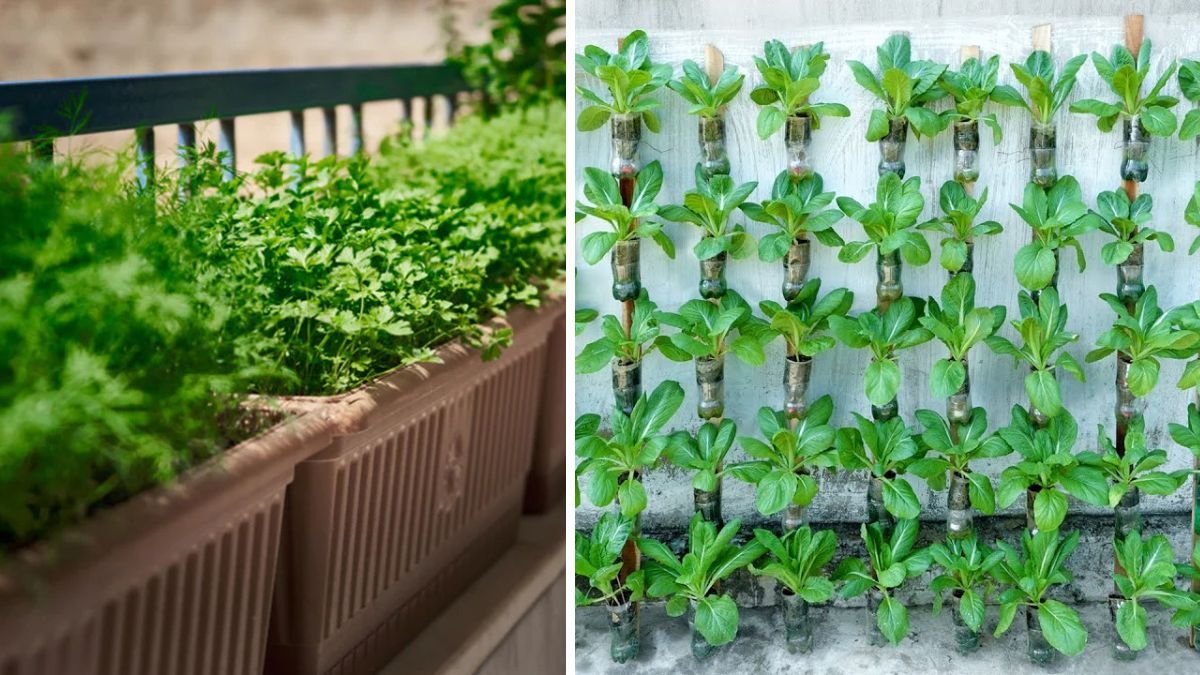
5. DIY Plastic Bottle Garden
Repurpose plastic bottles as hanging planters. Cut openings, add soil and seeds, and hang them with twine or hooks. This eco-friendly approach is great for herbs and leafy greens. (YouTube Tutorials)
6. Railbox Cascading Vegetables
Long railing boxes let trailing vegetables like cucumbers or spinach spill over edges. This “green wall” effect adds beauty and increases your yield per square foot.
7. Pocket Wall Planters
Vertical pocket planters fixed to a wall allow you to grow microgreens, spinach, and herbs. They’re compact, decorative, and maximize vertical space. (UrbanPlant)
8. Ladder Shelves With Hanging Pots
Combine ladder-style shelves with hanging baskets for a multi-level growing area. This method keeps plants at eye level and makes maintenance easier. (AdorableHomeIdeas)
9. Climber Nets
Train cucumbers, peas, and other climbers on nets attached above railings. This creates a vertical layer of growth while saving floor space. (GardenBrisk)
10. Self-Watering Hanging Planters
These systems reduce daily watering needs, ensuring vegetables remain hydrated. Perfect for busy gardeners or frequent travelers.
Placement and Sunlight Tips
Hanging vegetables need 6–8 hours of direct sunlight for optimal growth. Place planters on south or west-facing balconies if possible. For spaces with limited sun, rotate containers or supplement with small LED grow lights.
Good drainage is essential; always use high-quality potting mix and check that hanging planters have adequate holes. Watering frequency may be higher than in-ground planting because hanging pots dry faster. (Coohom)
Care and Maintenance
- Watering: Keep soil moist but not waterlogged; check containers daily.
- Fertilizing: Use organic compost or balanced liquid fertilizer every 2–3 weeks.
- Pruning: Trim dead leaves and spent flowers to encourage new growth.
- Wind Protection: Use mesh or balcony screens to shield lightweight hanging planters.
- Rotation: Turn planters occasionally to ensure all sides receive sunlight.
These steps ensure vegetables remain healthy, productive, and visually appealing.
Benefits Beyond Vegetables
A hanging garden does more than produce food:
- Aesthetic Appeal: Cascading greenery transforms your balcony into a serene, attractive space.
- Health Benefits: Access to fresh vegetables promotes better nutrition and a sustainable lifestyle.
- Urban Greening: Small-scale hanging gardens reduce heat absorption and improve air quality.
- Stress Relief: Gardening provides mental health benefits and a sense of accomplishment.
Even small balconies can feel like a lush oasis with vertical and hanging setups.
Authoritative Sources
- GardenBrisk – 15 Amazing Balcony Vegetable Garden Ideas
- GardeningTips – Creative Balcony Vegetable Garden Ideas
- Coohom – Balcony Vegetable Garden Ideas That Actually Work
- UrbanPlant – Stunning Balcony Garden Ideas
- AdorableHomeIdeas – Balcony Vegetable Gardens
Conclusion
Hanging gardens are a creative, efficient, and visually stunning way to grow vegetables on a balcony. Whether you use baskets, pocket planters, ladder shelves, or DIY bottle systems, these setups maximize vertical space, protect plants, and produce fresh, homegrown food.
By choosing suitable vegetables, ensuring proper sunlight and drainage, and maintaining your plants, even a small balcony can become a productive vegetable garden. Hanging gardens combine practicality with beauty, letting urban gardeners enjoy lush greenery and a bountiful harvest — all without a traditional garden. 🌿