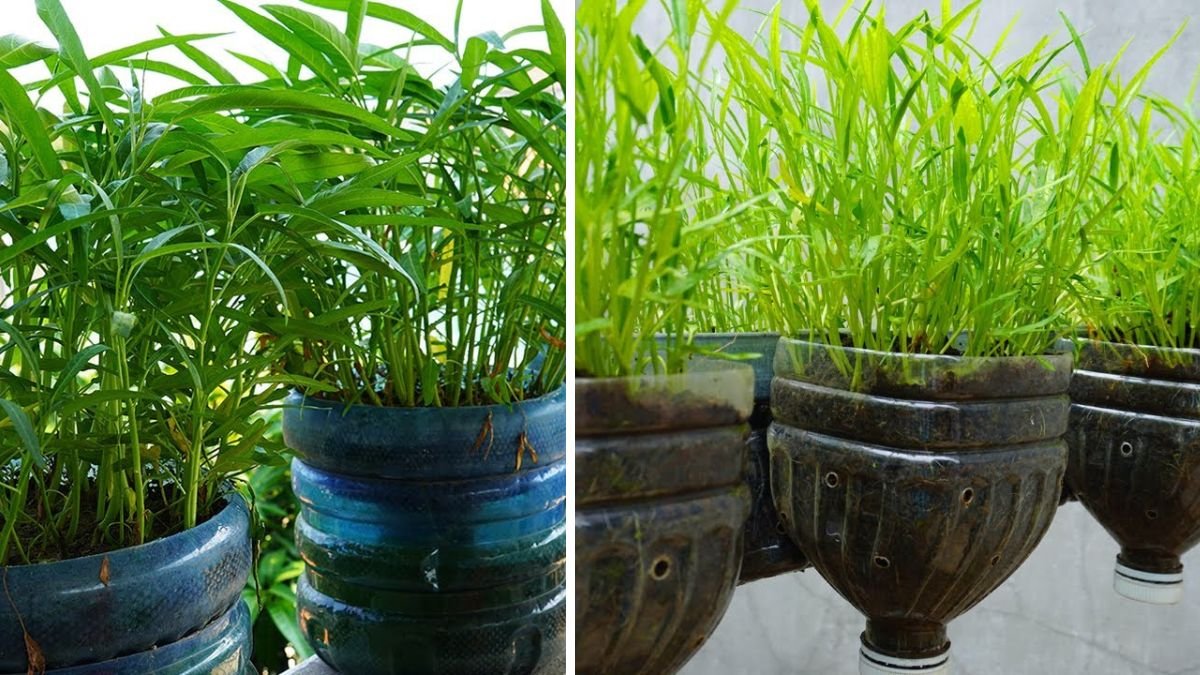
Introduction: Fresh Water Spinach at Home
Water spinach (Ipomoea aquatica), also known as kangkung or morning glory, is a fast-growing leafy green widely used in Asian cuisine. It is prized for stir-fries, soups, salads, and wraps, providing a rich source of vitamins, minerals, and antioxidants. Traditionally, water spinach grows in wet soil or aquatic environments, but you don’t need a backyard pond to cultivate it. With recycled plastic bottles, anyone can grow water spinach at home — even in small urban spaces.
This method supports sustainability by repurposing plastic bottles, reduces grocery trips, and provides fresh, nutrient-rich greens right from your balcony or kitchen window. Whether you choose a soil-based or hydroponic setup, water spinach thrives when provided with proper light, moisture, and temperature.
Why Grow Water Spinach in Plastic Bottles?
Using plastic bottles for home gardening has several benefits:
- Space-Saving: Perfect for apartments, balconies, or windowsills.
- Eco-Friendly: Recycles plastic bottles that would otherwise become waste.
- Multiple Growing Methods: Supports soil-based or hydroponic growth.
- Fast Growth: Water spinach grows quickly and can be harvested repeatedly.
- Beginner-Friendly: Minimal equipment and simple care steps make it ideal for novice gardeners.
Water spinach is an ideal plant for urban gardens due to its adaptability, fast growth, and ability to thrive in small containers. (Trucos Hogar Jardín)
Materials You’ll Need
To get started, gather the following items:
- Clean 1.5–2 L plastic bottles
- Sharp scissors or utility knife
- Water spinach seeds (fresh, high-quality)
- Potting mix or hydroponic nutrient solution
- Cotton, sponge, or coco coir (for hydroponic setups)
- Clean water (filtered or rainwater preferred)
- Optional: LED grow lights for indoor gardens
- Tray or stand for bottle placement
These materials are easy to source, low-cost, and sustainable, making this project accessible to almost anyone.
Step 1: Prepare the Plastic Bottle
Clean your bottle thoroughly and remove labels. Using a sharp knife:
- Cut the bottle in half horizontally.
- Invert the top half into the bottom half to create a simple reservoir system.
This design allows a wicking effect, ensuring that the planting medium stays moist without being waterlogged. For soil-based systems, make drainage holes at the bottom of the top half to prevent stagnant water.
Step 2: Choose Your Growing Method
Option A: Soil-Based Bottle Planter
- Fill the top part of the bottle with a well-draining potting mix.
- Sow 3–4 seeds about ½–1 cm deep in the soil.
- Cover lightly and water gently to avoid displacing seeds.
Soil-based bottles are ideal for those who prefer traditional planting techniques. Ensure that the soil remains moist but not soggy throughout germination and early growth.
Option B: Hydroponic (Soil-Less) Setup
- Place a moist cotton pad, sponge, or coco coir in the neck of the inverted bottle.
- Scatter seeds on the moist medium so they contact moisture evenly.
- Fill the bottom reservoir with diluted hydroponic nutrient solution, ensuring the bottom of the medium touches the water.
Hydroponic setups allow faster growth and reduce the risk of soil-borne pests. Regularly refresh the nutrient solution every few days to maintain plant health.
Step 3: Provide Light and Temperature
Water spinach thrives in warm temperatures and abundant light:
- Light: At least 4–6 hours of natural sunlight per day.
- Temperature: Optimal growth occurs between 20–30 °C (68–86 °F).
If natural sunlight is limited indoors, supplement with LED grow lights. Consistent light prevents leggy seedlings and promotes lush, green leaves.
Step 4: Daily Care
Proper maintenance ensures healthy water spinach growth:
- Moisture: Keep the soil or medium consistently damp but not waterlogged.
- Hydroponics: Maintain water levels and refresh the solution regularly.
- Humidity: Cover seedlings lightly with breathable fabric for the first 2–3 days to maintain humidity.
- Airflow: Provide adequate space between bottles to avoid mold and ensure strong stems.
Regular observation of your seedlings allows you to adjust watering and light, ensuring rapid and healthy growth.
Step 5: Harvesting Water Spinach
Water spinach grows quickly, and young leaves can be harvested in 10–14 days under hydroponic conditions. For soil-based bottles, growth may take slightly longer.
- Use clean scissors to snip stems or leaves about 1–2 inches above the base.
- Avoid cutting too close to the roots to allow regrowth.
- Water spinach can produce multiple harvests if maintained properly.
Frequent harvesting encourages new growth, keeping your plant productive and full. (Jogger’s Park)
Tips for Success
- Sunlight: Ensure at least 6 hours of direct light daily.
- Warmth: Keep plants in warm areas for rapid germination.
- Nutrients: Refresh hydroponic solutions regularly.
- Spacing: Thin seedlings to avoid overcrowding.
- Seeds: Use fresh, high-quality seeds for better germination.
Avoid common mistakes like using old seeds, overcrowding bottles, or allowing stagnant water, which can lead to mold or weak growth.
Sustainable Urban Gardening
Growing vegetables in plastic bottles is part of a zero-waste urban gardening trend. Small-space solutions like these allow apartment dwellers to grow fresh produce without soil beds or large garden plots.
- Eco-Friendly: Repurposes plastic bottles and reduces grocery waste.
- Accessible: Suitable for limited spaces and indoor environments.
- Educational: Teaches children and beginners about plant growth and sustainability.
Water spinach, in particular, adapts well to containerized environments and hydroponic methods, making it perfect for urban gardeners.
Considerations: Invasiveness
While water spinach is valuable for nutrition, it is considered invasive in some regions. Always contain your growing setup and avoid planting in open soil or waterways to prevent uncontrolled spread.
Recommended Authoritative Sources
- Trucos Hogar Jardín – Hydroponic Water Spinach in Bottles: Link
- Jogger’s Park – Soil-Less Bottle Gardening: Link
- Home Growth Ideas – Soil-Based Plastic Bottles: Link
- Seedy Farm – Water Spinach Growing Guide: Link
Conclusion
Growing water spinach from seeds in plastic bottles is a simple, eco-friendly, and productive gardening project. By following proper steps — from preparing bottles and choosing a growing method to providing light, moisture, and warmth — anyone can enjoy fresh, nutrient-rich greens year-round.
This DIY gardening method is perfect for urban dwellers, sustainability enthusiasts, and anyone looking to grow healthy food at home. With regular care and repeated harvesting, water spinach can provide a continuous supply of leafy greens directly from your balcony or windowsill.
By combining innovation, sustainability, and practicality, growing water spinach in plastic bottles transforms small-space gardening into a rewarding and eco-conscious hobby. 🌱