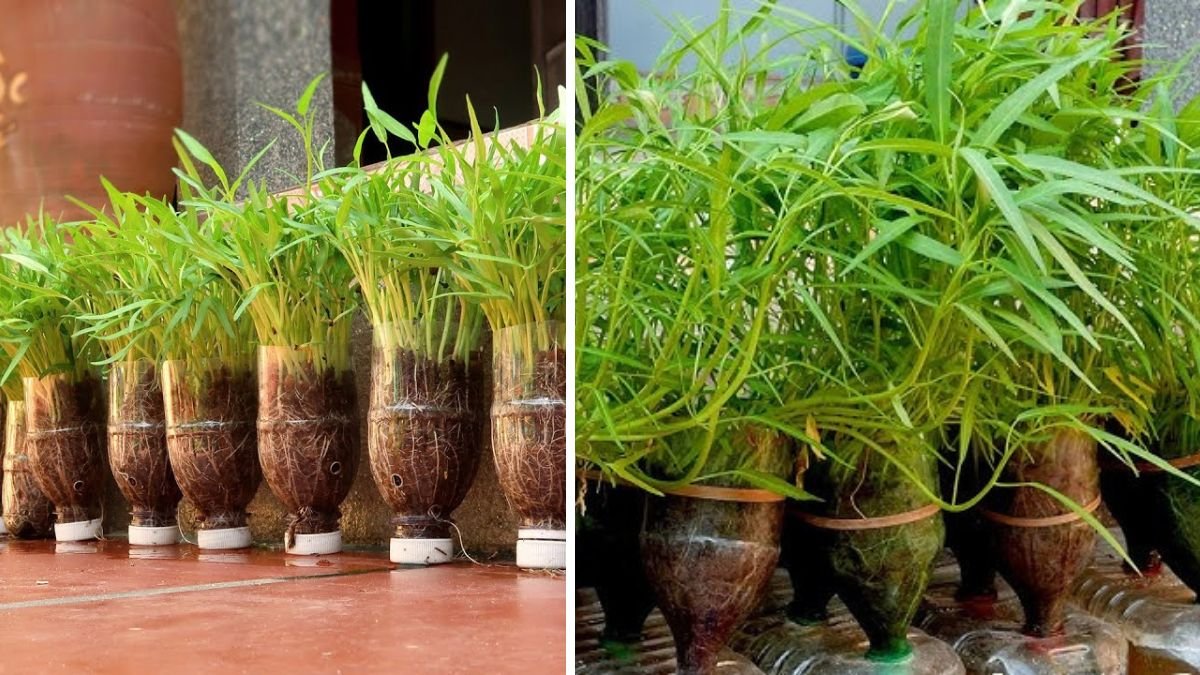
Urban gardening has become a popular way for people to grow their own fresh vegetables even in limited spaces. One of the most practical and sustainable methods is to grow kangkong (water spinach) in plastic bottles. This method is simple, affordable, and perfect for small apartments, balconies, or even windowsills. Not only does it recycle plastic waste, but it also ensures a continuous supply of fresh, nutrient-rich greens for your kitchen.
Kangkong, scientifically known as Ipomoea aquatica, is a fast-growing leafy vegetable commonly found in Southeast Asia. Known for its tender stems and flavorful leaves, it thrives in wet conditions, making it an ideal candidate for DIY hydroponic gardening. In this guide, we will show you how to grow kangkong at home using plastic bottles, step by step, while also sharing tips for optimal growth and harvest.
Why Growing Kangkong in Plastic Bottles is a Brilliant Idea
There are several reasons why growing kangkong in plastic bottles is both practical and sustainable:
- Reuses Plastic Waste: Single-use plastic bottles, instead of being discarded, can be turned into functional planters.
- Space-Saving: Perfect for urban gardening, balconies, small patios, or indoor spaces where traditional gardens are not feasible.
- Fast Growth: Kangkong grows rapidly, with seedlings ready for harvest in just days to weeks under ideal conditions.
- Low-Cost Gardening: No expensive equipment or large plots of land are needed — a few bottles, water, and light are enough.
- Sustainable Food Source: You can have fresh vegetables year-round while reducing your carbon footprint.
This combination of sustainability, convenience, and productivity makes bottle gardening a brilliant way to practice urban agriculture.
What You’ll Need to Start
To grow kangkong in plastic bottles, gather the following materials:
- Empty 1.5–2-liter plastic bottles (preferably transparent or lightly colored)
- Scissors or a craft knife to cut the bottles
- Kangkong seeds or young seedlings/cuttings
- Growing medium like coconut coir, sponge, or cotton (optional for seedlings)
- Clean water
- Hydroponic nutrient solution (optional, can be substituted with compost tea or plant-based liquid fertilizer)
- Natural sunlight or a bright grow light
These materials are inexpensive and often found around the house, making it easy for anyone to get started.
Step-by-Step Guide to Growing Kangkong in Plastic Bottles
Step 1: Prepare the Plastic Bottle
Start by washing the bottle thoroughly and removing any labels. Use scissors or a craft knife to cut the bottle horizontally about two-thirds from the bottom.
Next, invert the top portion so that the neck faces down into the bottom half. This creates a simple self-watering system, where water and nutrients can wick upward to the roots. The design also allows the bottle to be placed vertically or horizontally, depending on the available space.
Step 2: Add the Growing Medium (Optional)
If growing from seeds:
- Fill the inverted top half of the bottle with a moist growing medium such as cotton, sponge, or coconut coir.
- Sprinkle the seeds evenly over the surface and lightly press them into the medium.
If using seedlings or cuttings, you can skip the growing medium and place the roots directly into water for water propagation.
Step 3: Add Water and Nutrients
Fill the bottom half of the bottle with clean water. For faster growth, add a diluted hydroponic nutrient solution. Ensure the water touches the base of the inverted bottle neck so it can reach the roots via wicking.
For a more organic approach, you can use compost tea or natural plant fertilizers to provide essential nutrients.
Step 4: Provide Adequate Light
Kangkong thrives in bright, indirect sunlight. Place your bottle garden near a sunny window or on a balcony where it receives at least 4–6 hours of sunlight daily. If natural sunlight is limited, you can use LED grow lights to supplement.
Proper light is critical because it encourages fast growth, lush green leaves, and healthy stems.
Step 5: Watering and Daily Care
Regular care is simple:
- Check water levels daily and top up as needed.
- Replace water or nutrient solution every 3–4 days to prevent stagnation and algae buildup.
- Watch for pests such as aphids or powdery mildew. Use safe organic sprays or manual removal for pest control.
Maintaining clean water and a stable environment ensures your plants grow quickly and remain healthy.
Step 6: Harvesting Your Kangkong
The exciting part — harvesting — can happen within 7–10 days for seedlings or established cuttings. Use scissors to snip stems about 1–2 inches above the base. Frequent harvesting encourages new growth and allows multiple cycles from the same plant.
With proper care, your bottle garden can produce fresh kangkong continuously, providing a steady supply of greens for cooking.
Tips for Better Growth
- Sunlight is Key: The more light, the faster and healthier the growth.
- Keep Water Clean: Replace water frequently to avoid algae and foul odors.
- Leaves Above Water: Make sure only roots are submerged to prevent leaf rot.
- Vertical Arrangements: Hang bottles in a vertical setup to save space and increase plant density.
- Monitor Nutrients: Even in water-only setups, occasional nutrients boost leaf production and stem strength.
These small adjustments can significantly improve yield and plant health.
Background Context: Urban Gardening and Sustainability
Urban gardening has become essential for communities seeking food security and sustainability. Many cities have limited green spaces, but container gardening and vertical hydroponics offer practical solutions.
Using recycled plastic bottles for growing kangkong not only reduces waste but also provides fresh, homegrown vegetables. This approach aligns with broader movements in urban agriculture that aim to promote low-cost, high-yield food production in compact spaces.
In addition, growing food at home gives families control over their diet, reduces dependence on store-bought produce, and encourages eco-friendly habits. Kangkong, with its rapid growth and easy propagation, is particularly well-suited for urban gardeners.
Why This Method is Perfect for Beginners
- Simple Setup: No need for complex hydroponic systems; just bottles, water, and light.
- Affordable: Uses recycled materials and minimal supplies.
- Fast Results: Seedlings or cuttings can be harvested in days to weeks.
- Minimal Maintenance: Easy to care for even with limited gardening experience.
- Flexible Space: Works on windowsills, balconies, patios, or small backyards.
For anyone starting with home gardening, this method is both educational and rewarding. It allows beginners to see results quickly while learning the basics of hydroponics and plant care.
Recommended Authoritative Sources
For readers seeking additional guidance, consider linking to these reputable sources:
- Waterwereld – Water Spinach (Ipomoea aquatica): Overview of growth requirements and propagation techniques (waterwereld.nu)
- HomeGrowthIdeas – How to Grow Water Spinach in Plastic Bottles: Practical DIY guide (homegrowthideas.com)
- The Better India – DIY Vertical Garden with Plastic Bottles: Sustainable gardening design ideas (thebetterindia.com)
- SunStar Philippines – Urban Gardening Initiatives: Background on community food security (sunstar.com.ph)
- YouTube DIY Video Tutorials: Step-by-step visual instructions for bottle hydroponics (youtube.com)
These references enhance credibility and provide readers with additional guidance for successful kangkong cultivation.
Conclusion
Growing kangkong in plastic bottles is a simple, cost-effective, and sustainable gardening solution. It allows anyone — from urban dwellers to beginner gardeners — to grow nutritious greens at home while recycling materials and saving space.
With minimal tools, proper light, clean water, and a little patience, you can enjoy a continuous harvest of fresh kangkong in just a few days. This method not only promotes sustainability and food security but also brings the joy of gardening into even the smallest living spaces.
Whether you are looking to try hydroponics for the first time or want a fun and eco-friendly gardening project, growing kangkong in plastic bottles is a brilliant way to start. 🌱