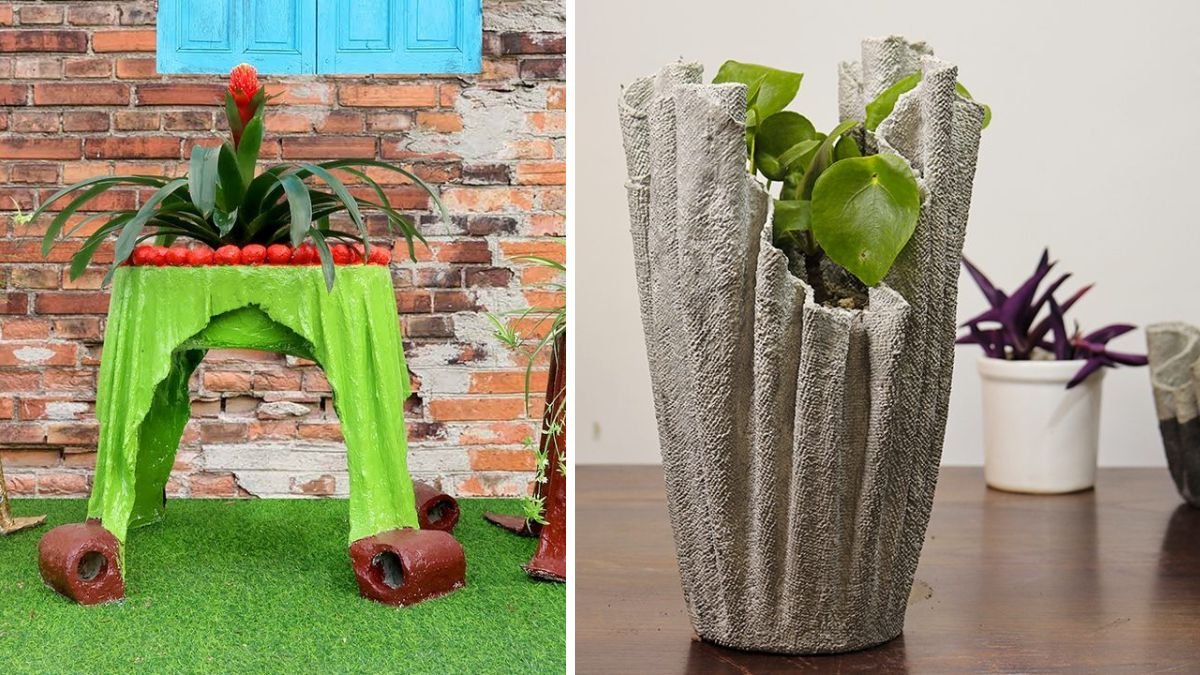
Gardening, home décor, and DIY crafts have all merged into one exciting arena of creative experimentation. In 2026, one of the most popular trends among makers and sustainable enthusiasts is casting cement pots from old fabric. This brilliant idea combines upcycling, hands-on craftsmanship, and artistic expression. Instead of relying on rigid molds or commercial planters, this method uses old textiles to create organic, textured shapes that are completely unique.
Recycling fabric as a mold material is both eco-friendly and inventive. Unlike conventional molds, fabric conforms to artistic shapes, giving each piece a natural, fluid design. This project has gained attention across DIY communities, with tutorials showing how even beginners can turn leftover textiles into stylish, durable cement planters.
🧱 Materials Needed for the Fabric-Cement Casting Project
One of the reasons this project is so accessible is the simplicity of its materials. You’ll need:
- Cement mix – A standard masonry or craft cement works best
- Old fabric – Thick cotton, canvas, denim, or towels
- Mixing bucket and water
- Gloves and protective gear
- Optional primitive molds – Bowls, jars, or any object to drape the fabric over
Most supplies are inexpensive or can be repurposed, making this both an eco-conscious and cost-effective DIY project.
🔨 Step-by-Step Guide to Casting Cement Pots from Fabric
1. Prepare the Cement Mix
Combine cement with water until it reaches a thick, mud-like consistency. Avoid making it too runny; it should hold shape while soaked into the fabric.
2. Soak the Fabric
Fully submerge your chosen fabric in the cement mix. Press gently to ensure even saturation, but avoid wringing, which can damage the fibers and distort the texture.
3. Shape Over the Mold
Drape the cement-soaked fabric over a mold of your choice—such as a bowl, jar, or planter lid. Adjust folds and drapes to create curves and organic forms. Fabric naturally produces texture and movement in the finished piece.
4. Reinforce and Layer
Apply additional layers of cement mix if necessary to strengthen the structure. Smooth edges and sculpt as desired. Multiple layers increase durability while allowing customization of thickness and shape.
5. Curing Process
Let your cement-fabric form dry for 24–48 hours. Once hardened, carefully remove the inner mold and allow the pot to fully cure, typically a few more days depending on humidity and thickness.
6. Finishing Touches
Sand rough edges, add paint or sealant if desired, and optionally apply protective coatings. Once ready, fill your new planter with soil and plants. The result is a one-of-a-kind cement pot with natural textures and artistic appeal.
This simple method produces beautiful, organic planters that are impossible to replicate using standard molds.
🎨 Design Variations to Explore
The beauty of fabric casting lies in its versatility. Here are some creative variations to try:
Textured Fabric Patterns
Different fabric weaves (burlap, knits, canvas) leave distinctive textures in the cement, resulting in geometric or organic relief designs. Experimenting with layered fabrics can create intricate surface patterns that add depth and visual interest.
Color & Finish Enhancements
Add pigments to the cement mix or paint after curing to introduce vibrant colors. Light sealants or matte finishes protect surfaces and highlight textures for a more polished look.
Hanging or Sculptural Pots
Use cone-shaped fabric molds or combine fabric with rope for hanging planters. These sculptural pieces are ideal for indoor or outdoor vertical gardens, adding both greenery and visual intrigue to small spaces.
Furniture & Multi-Purpose Pieces
Larger fabric molds can be used to create stools, small tables, or decorative bowls. The possibilities are only limited by your creativity and the size of your molds.
🛠 Expert Tips for Best Results
- Choose the Right Fabric: Thick, natural fabrics such as canvas or denim hold shape better than thin synthetics.
- Use Mold Release: Apply a light coating of oil or plastic wrap to inner molds to prevent sticking.
- Reinforce with Fibers: Adding fibers or mesh inside the cement improves strength and durability.
- Allow Full Curing: Cement continues to gain strength over time. Handle carefully and wait at least 48–72 hours before heavy use.
- Experiment with Layers: Layering soaked fabric and cement builds structural integrity and allows for unique textural effects.
🌱 Why This Project Is Sustainable
This casting technique is environmentally conscious for several reasons:
- Upcycling: Old textiles that would otherwise end up in landfills are transformed into functional, decorative pieces.
- Longevity: Cement planters are long-lasting, reducing the need for frequent replacements.
- Customizable Materials: Natural fabrics and pigments reduce reliance on synthetic plastics.
By combining upcycling with creative design, you’re creating functional art while supporting sustainable practices.
📚 Expert Sources and Inspiration
While the specific technique of fabric-cement casting is often found in DIY videos, related resources provide guidance, trends, and inspiration:
- YouTube – “Brilliant Ideas! Casting Cement Pots from Old Fabric” – Step-by-step video guide to get started (YouTube)
- Instructables – Cement Flower Pots Tutorial – Practical DIY guide using towels or canvas for texture (Instructables)
- Pinterest – Concrete-on-Cloth Planters – Visual ideas and community examples for texture and shapes (Pinterest)
- Hypertufa Overview (Wikipedia) – Historical context for lightweight cement mixtures used in garden crafts (Wikipedia)
These sources provide both technical insight and creative inspiration to help you master this innovative DIY technique.
🏡 Applications for Your Home and Garden
Fabric-cast cement pots are versatile and functional, fitting seamlessly into many environments:
- Indoor Spaces: Create elegant planters for houseplants, herbs, or decorative succulents.
- Balconies & Patios: Use hanging or sculptural designs to maximize vertical space.
- Gardens: Display multiple fabric-cast planters with varied textures for a cohesive, artistic look.
- Gifts & Décor: Personalized textures and finishes make these planters unique gifts or conversation pieces.
With creativity, you can match your fabric choices and textures to your décor style, ensuring each piece complements its surroundings.
⚠️ Safety Tips
- Wear gloves and a mask to prevent cement dust exposure.
- Work in a ventilated area to avoid inhaling fine cement particles.
- Clean tools promptly to prevent cement from hardening on them.
Following these precautions ensures a safe and enjoyable crafting experience.
🌟 Final Thoughts
Casting cement pots from old fabric is a brilliant DIY idea that combines sustainability, creativity, and functionality. By reimagining leftover textiles as molds, you can create one-of-a-kind planters with rich textures and organic shapes.
This project is ideal for beginners and advanced crafters alike. With a little patience and experimentation, you can create a collection of beautiful cement pots that reflect both your artistic vision and your commitment to eco-friendly practices. Whether used for indoor plants, balcony gardens, or gifts, these planters bring artistry and sustainability into your home.
Turn discarded fabric into designer-quality cement planters, and embrace this creative casting project as a practical, environmentally conscious, and highly rewarding DIY adventure.