Introduction: Why Plastic Bottle Gardening Is Trending
Reusing plastic bottles to grow plants has become an increasingly popular trend among home gardeners, urban growers, and sustainability enthusiasts. Not only does it reduce plastic waste, but it also provides creative, low-cost solutions — from self-watering planters to mini greenhouses that help seedlings thrive.
This simple DIY hack combines environmental responsibility with practical horticulture, making gardening accessible even for people with limited space or resources. Across social platforms, gardening enthusiasts are sharing their versions of these hacks — transforming empty bottles into seedling starters, vertical planters, and drip irrigation systems — proving that a simple plastic bottle can go a long way in cultivating plants. (soycarmin.com)
Why This Plastic Bottle Hack Works
The success of this hack comes from three key gardening principles:
- Microclimate control: Clear bottles act like tiny greenhouses that warm soil and trap moisture, which accelerates germination and protects seedlings. (idealhome.co.uk)
- Water efficiency: When adapted into drip irrigation or self-watering planters, bottles deliver water directly to plant roots, reducing evaporation. (soycarmin.com)
- Cost savings: Plastic bottles eliminate the need for store-bought planters or irrigation systems — perfect for budget-friendly gardening. (growveg.com)
This technique is not only practical for plant growth but also eco-friendly, transforming household waste into valuable gardening tools.
1. Create Mini Greenhouses for Seedlings
One of the most effective uses for plastic bottles is as a mini greenhouse. By cutting off the bottom of a clear bottle and placing it over seedlings, you create a warm, protected microenvironment. This protects young plants from cold snaps, wind, and pests while helping them grow faster.
How to:
- Clean the bottle and remove labels.
- Cut off the bottom carefully.
- Place the top piece over seedlings, pressing lightly into the soil.
Leave vents or slightly unscrew the cap to ensure airflow, preventing excess moisture buildup.
2. DIY Self-Watering Planters
Self-watering planters are ideal for maintaining consistent moisture, especially in hot climates or for busy gardeners. The system uses the top half of a bottle inverted into the bottom half, with a fabric wick drawing water up into the soil. (growveg.com)
Steps:
- Cut the bottle about one-third from the top.
- Thread cotton or fabric through the cap hole to act as a wick.
- Fill the bottom half with water and plant seedlings in the inverted top.
This gravity-fed system delivers water directly to roots, improving plant health and reducing waste.
3. Drip Irrigation Direct to Roots
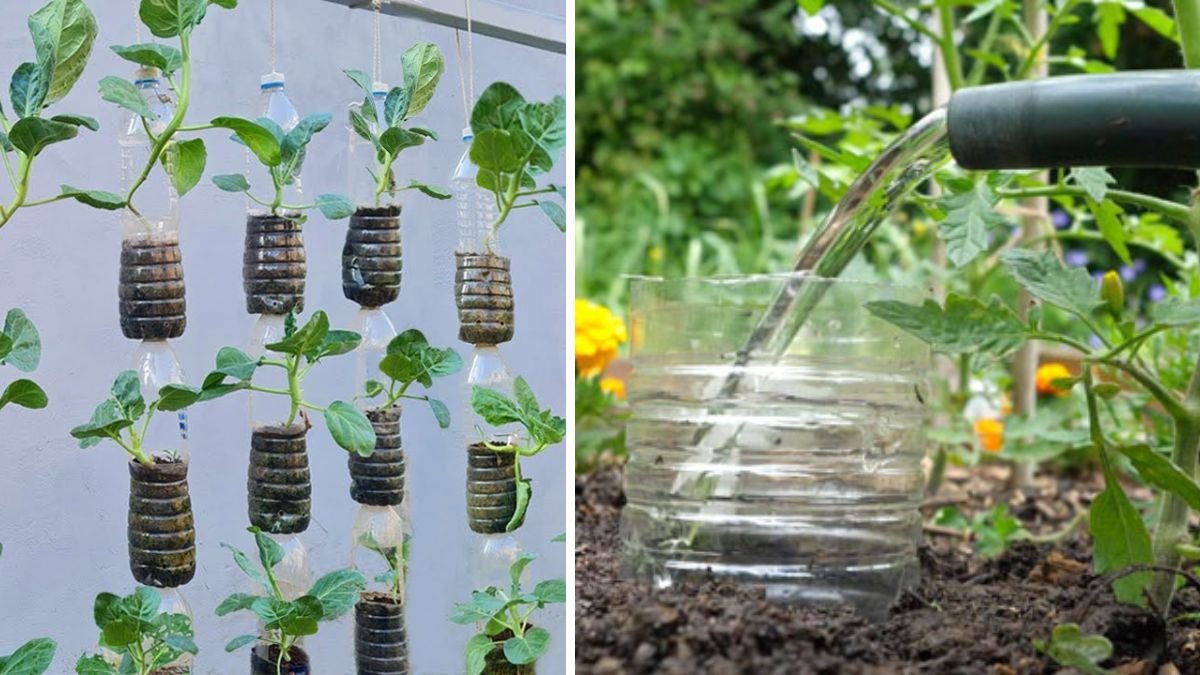
For larger plants, such as tomatoes or chili peppers, plastic bottles can serve as simple drip irrigation devices. Punch small holes in the bottle cap, bury the neck near the plant roots, and fill it with water. The water slowly seeps into the soil, hydrating roots deeply and evenly.
This method reduces surface evaporation and ensures water reaches where it’s needed most, helping plants thrive in dry conditions.
4. Recycled Planters and Vertical Gardens
Plastic bottles can easily become planters by cutting them in half horizontally or vertically. Drill drainage holes in the bottom, fill with soil, and plant herbs, leafy greens, or small flowers.
Vertical gardens are also possible by stringing bottles along a wall, railing, or fence. This technique is perfect for urban gardening, balcony spaces, or small yards. Large bottles provide ample soil depth, making them ideal for leafy greens or compact root vegetables. (soycarmin.com)
5. Protection and Microclimate Tricks
Plastic bottle tops can protect seedlings from pests and harsh weather. Larger bottles act as mini covers that stabilize temperature and humidity, effectively extending the growing season in early spring or late autumn.
This is a practical and inexpensive alternative to greenhouse equipment for gardeners working with small spaces.
6. Plant Labels and Garden Tools
Strips of cut plastic bottles make durable plant labels that resist fading and weather better than cardboard. Larger bottles can also be converted into handy scoops for soil or fertilizer, providing multifunctional use beyond planting.
7. Eco-Friendly Benefits
Using plastic bottles in gardening has significant environmental advantages:
- Reduces plastic waste entering landfills or oceans
- Encourages creative reuse instead of disposal
- Makes gardening more accessible for urban dwellers or those on a budget
- Replaces store-bought tools with recycled household items (soycarmin.com)
This simple hack empowers gardeners to be both eco-conscious and resourceful.
8. Best Plants for Bottle Gardening
Ideal plants for bottle-based gardening include:
- Herbs: Mint, basil, coriander — thrive in small planters
- Leafy greens: Lettuce, spinach, mustard greens
- Small vegetables: Cherry tomatoes or chili peppers in larger bottles
- Seedlings: Any young plant benefits from a mini greenhouse setup
Using these plants helps maximize the efficiency and success of your bottle gardening project.
9. Safety and Best Practices
When using plastic bottles for gardening, it’s important to follow safety tips:
- Use food-grade bottles only, avoiding chemical or detergent containers
- Wash bottles thoroughly and remove labels
- Drill proper drainage holes to prevent waterlogging
These practices ensure your plants grow healthily without harmful chemicals leaching into the soil.
10. Expand Your Creativity
The possibilities with plastic bottle gardening are endless: create hanging gardens, herb walls, self-watering systems, or even small compost stations. Experiment with different sizes and configurations to maximize space and plant diversity.
This DIY approach encourages both sustainable practices and innovation, making gardening fun, educational, and productive.
Authoritative Sources
For more ideas and guidance:
- GrowVeg: 10 Clever Hacks for Reusing Plastic Bottles in the Garden (growveg.com)
- SoyCarmin: Grow Green — Clever Ways to Recycle Plastic Bottles in Your Garden (soycarmin.com)
- Ideal Home: How to Reuse Plastic Bottles in the Garden (idealhome.co.uk)
Conclusion
Trying out this plastic bottle hack to grow plants is more than a clever DIY trick — it’s a sustainable gardening upgrade. From self-watering systems to mini greenhouses, vertical gardens, and plant protection, plastic bottles can transform ordinary gardening into an eco-friendly and innovative practice.
Whether you have a balcony, rooftop, or small backyard, these hacks allow you to maximize space, save money, and reduce plastic waste — all while growing healthy, thriving plants. Grab a few empty bottles, get creative, and watch your garden flourish!