Understanding Crabgrass and Why It’s a Problem
Crabgrass is a warm-season annual weed that can quickly take over thin, stressed, or bare lawns. It germinates in spring when soil temperatures reach around 55°F and produces thousands of seeds by fall. These seeds can persist in the soil, making crabgrass a recurring problem if left unmanaged (Almanac).
Crabgrass competes with desirable turfgrass for light, water, and nutrients, leading to unsightly patches and weakened lawns. Controlling it requires a combination of prevention, timely treatment, and proper lawn care (Sod Solutions).
1. Prevent Crabgrass with Pre-Emergent Herbicides
The most effective strategy is prevention. Pre-emergent herbicides create a barrier in the soil that stops crabgrass seeds from germinating. Timing is critical:
- Apply in early spring, before the seeds start to germinate (typically when soil reaches 55°F for several consecutive days).
- Common active ingredients include dithiopyr, pendimethalin, and prodiamine (LawnStarter).
- Organic options like corn gluten meal can also prevent germination while fertilizing the lawn, though results vary (Iowa State University).
Applying pre-emergent too late significantly reduces effectiveness, so mark your calendar and plan ahead.
2. Spot-Treat Existing Crabgrass
If crabgrass has already emerged, you can still control it:
Manual Removal
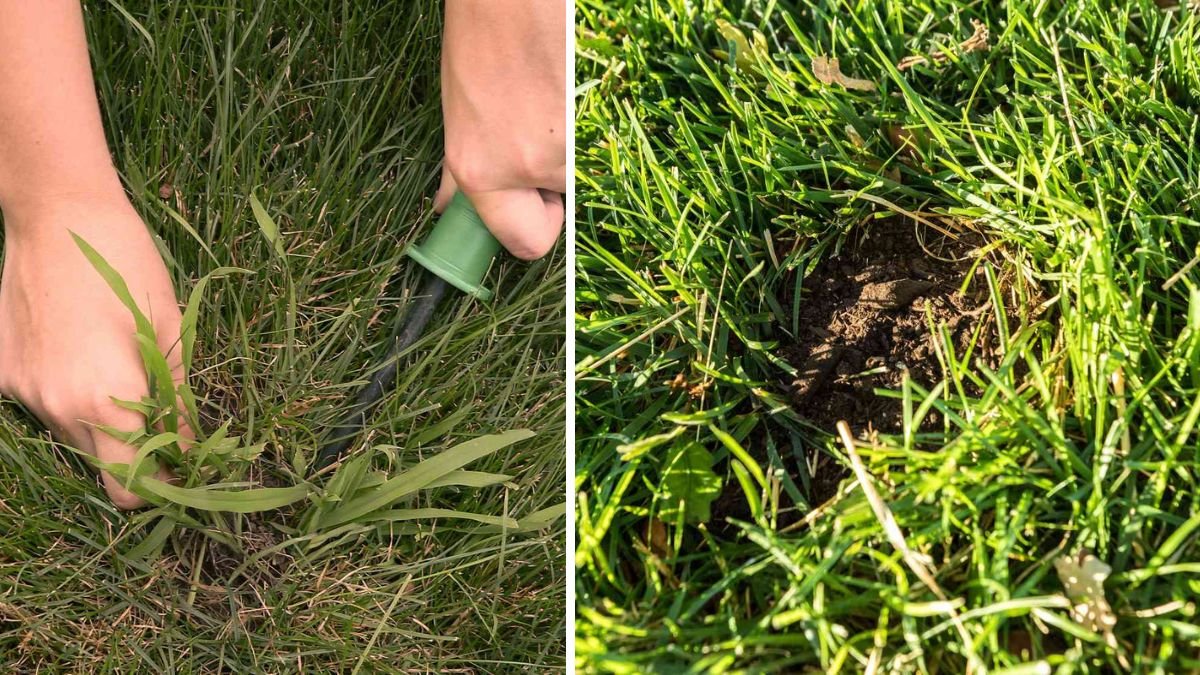
- Hand-pulling is effective for small patches. Grab the plant at the base to remove the roots.
- A weeding tool helps for deeper infestations (Garden Guides).
Post-Emergent Herbicides
- Use crabgrass-specific post-emergent herbicides when weeds are small and actively growing.
- Products containing quinclorac selectively kill crabgrass without harming most turfgrass (Golf Course Lawn).
Treating early in the growth stage improves success rates and prevents seed production.
3. Maintain a Healthy Lawn to Naturally Suppress Crabgrass
A dense, well-cared-for lawn is the best defense against weeds. Crabgrass thrives in weak turf. To strengthen your lawn:
- Mow at the correct height: Taller grass shades the soil, reducing weed germination (Sod Solutions).
- Water deeply but infrequently: Encourages deep root growth in turfgrass while discouraging shallow-rooted weeds.
- Fertilize appropriately: Healthy turf outcompetes crabgrass. Avoid excessive phosphorus during crabgrass season (Martha Stewart).
Combined, these cultural practices create a lawn that naturally crowds out crabgrass over time.
4. Natural and Home Remedies
For homeowners preferring organic approaches:
- Boiling Water: Directly kills crabgrass but may harm surrounding grass if not applied carefully (Sod Lawn).
- Vinegar or Citric Acid Sprays: Strong acetic acid solutions can kill weeds on contact. Multiple applications are often necessary (Just Right Lawns).
These methods work best on small, isolated patches and carry the risk of damaging nearby turf.
5. Long-Term Crabgrass Prevention
Even after treatment, ongoing care is essential:
- Reseed Bare Spots: Bare soil invites crabgrass. Overseed thin areas to establish dense turf (Martha Stewart).
- Test and Amend Soil: Maintaining proper pH and nutrient balance improves grass health and resistance (Sod Solutions).
Common Mistakes to Avoid
- Applying pre-emergent herbicides too late.
- Mowing grass too short.
- Overwatering or shallow watering.
- Fertilizing at the wrong time.
- Tilling infested soil, which brings dormant seeds to the surface (Martha Stewart).
Avoiding these missteps improves both immediate control and long-term prevention.
Authoritative Resources for Further Reading
- University of California IPM Program: Integrated pest management strategies for crabgrass (UC IPM)
- Iowa State University Extension: Organic and chemical crabgrass control (ISU Extension)
- Almanac Lawn Care Guide: Step-by-step crabgrass removal and prevention (Almanac)
- LawnStarter: Pre-emergent herbicides and cultural practices (LawnStarter)
Final Takeaway
Controlling crabgrass isn’t just about killing the visible weeds—it’s about prevention, timing, and lawn health. With proper pre-emergent application, spot treatments, and consistent lawn care practices, you can drastically reduce crabgrass infestations and maintain a lush, green lawn year after year. The key is early action and ongoing maintenance. By combining herbicide strategies, natural remedies, and cultural practices, you can stay one step ahead of crabgrass in 2026 and beyond.