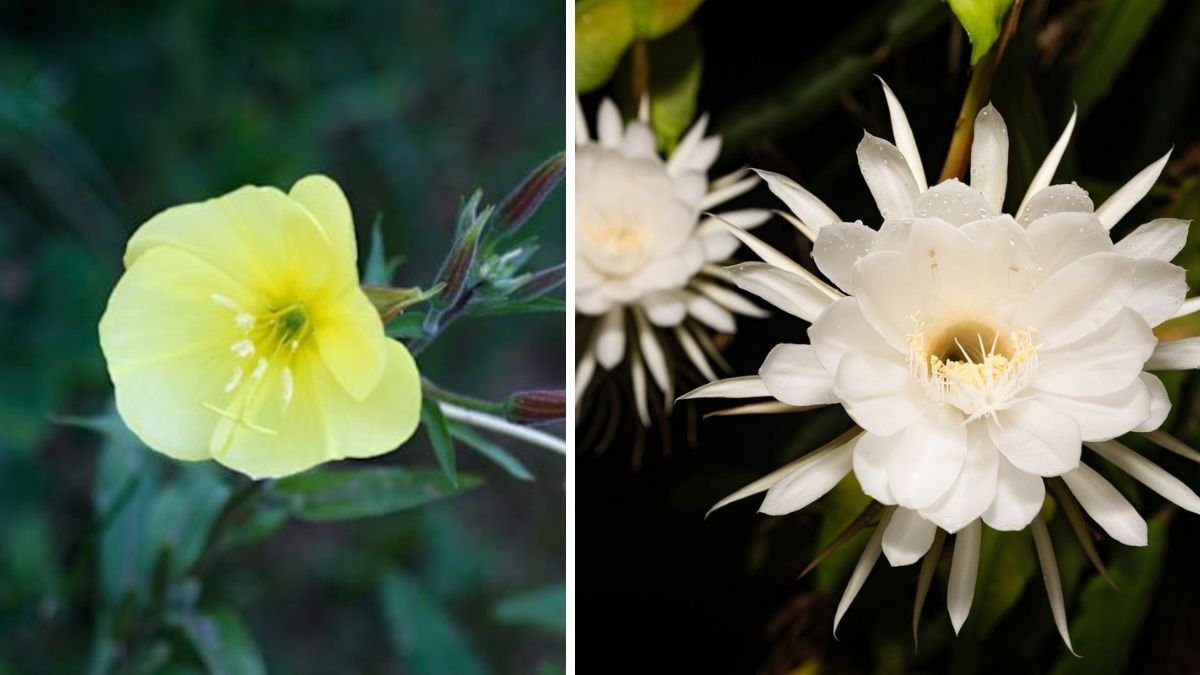
Introduction: The Magic of Night-Blooming Flowers
Most gardeners focus on flowers that bloom during the day, but night-blooming flowers open their petals and release fragrance after dark, creating a magical, moonlit garden experience. These blooms not only beautify your landscape but also attract nocturnal pollinators like moths and bats, enhancing biodiversity in your backyard.
Designing a moon garden — a garden meant to be enjoyed after sunset — is a unique way to extend your gardening enjoyment into the evening hours. Using [FOCUS KEYWORD], you can select plants that provide enchanting scent, striking visual appeal, and nighttime charm. Here are ten stunning night-blooming flowers that will make your garden come alive after dark.
1. Angel’s Trumpet (Brugmansia spp.)
Angel’s Trumpet is known for its large, pendulous flowers that open in the evening and fill the air with a strong, sweet fragrance. Flowers come in shades of white, peach, and pink, and their dramatic, trumpet-shaped blossoms create a striking visual effect in a moon garden.
Planting Tips:
- Plant in rich, well-draining soil with full sun exposure.
- Prune annually to maintain shape.
- All parts of the plant are toxic, so handle with care.
(archfoundation.org)
2. Night Phlox (Zaluzianskya capensis)
Also called Midnight Candy, Night Phlox opens star-shaped flowers after sunset and emits a honey-like fragrance that lingers into the night. It’s ideal for borders, containers, or near seating areas where you can enjoy its scent.
Planting Tips:
- Requires full sun and well-draining soil.
- Deadhead spent blooms to encourage continuous flowering.
(lodhigarden.com)
3. Evening Primrose (Oenothera biennis)
Evening Primrose produces bright yellow flowers that open at dusk, attracting night pollinators with nectar and color. This hardy plant is perfect for naturalistic gardens and moonlight viewing.
Planting Tips:
- Grow in full sun.
- Tolerates dry soil once established.
(lodhigarden.com)
4. Flowering Tobacco (Nicotiana spp.)
Flowering Tobacco plants open in late afternoon and continue blooming through the night, releasing a jasmine-like fragrance that attracts nocturnal pollinators. Their clusters of tubular blooms are visually appealing and highly fragrant.
Planting Tips:
- Plant in borders or containers in sun or partial shade.
- Regular watering enhances fragrance and bloom quality.
(lodhigarden.com)
5. Four O’Clocks (Mirabilis jalapa)
Four O’Clocks get their name from the time they open — late afternoon. Flowers remain open into the night and come in a variety of colors, often with a soft citrus-like scent. They self-seed readily, offering continuous evening blooms.
Planting Tips:
- Easy to grow in sun or partial shade.
- Deadhead occasionally to manage self-seeding.
(sg.news.yahoo.com)
6. Moonflower (Ipomoea alba)
Moonflower is a quintessential night-bloomer with large white blossoms that glow under moonlight. Its gentle fragrance is particularly noticeable in the evening, creating a magical garden ambiance.
Planting Tips:
- Provide trellises, fences, or arbors for climbing.
- Plant in full sun for vigorous growth.
(plantsinformation.com)
7. Gardenia (Gardenia jasminoides)
While gardenias bloom during the day, their fragrance intensifies at night, making them perfect for evening enjoyment. Creamy white flowers stand out against glossy green foliage, adding elegance to a moon garden.
Planting Tips:
- Grow in slightly acidic, well-draining soil.
- Provide afternoon shade in hot climates to prevent leaf burn.
(architecturaldigest.in)
8. Night-Blooming Jasmine (Cestrum nocturnum)
Night-Blooming Jasmine, known as “queen of the night,” emits an intoxicating tropical fragrance after sunset. Small, clustered flowers produce a powerful scent that fills patios and gardens.
Planting Tips:
- Grow in full sun to partial shade.
- Ideal near windows or outdoor seating to enjoy the fragrance.
(timesofindia.indiatimes.com)
9. Queen of the Night Cactus (Epiphyllum / Cereus)
Queen of the Night cactus produces large, dramatic blossoms that open only for one night. These brief, spectacular blooms make it an exciting and rare feature in any moon garden.
Planting Tips:
- Grow in warm climates or protected areas.
- Position where blooms are visible for nighttime viewing.
(countryliving.com)
10. Tuberose (Polianthes tuberosa)
Tuberose offers clusters of fragrant white tubular flowers that unfold in the evening, filling the air with a rich, long-lasting scent. It’s ideal for moon gardens and for adding a perfumed atmosphere.
Planting Tips:
- Requires sunny, well-draining soil.
- Keep soil consistently moist during the growing season.
(lodhigarden.com)
Why Night-Blooming Flowers Matter in Your Garden
Night-blooming flowers attract nocturnal pollinators like moths, bats, and evening insects, enhancing garden biodiversity. Their pale or white blooms reflect moonlight, creating visual interest after dark. By including these plants, you extend your garden’s beauty and utility beyond daylight hours, offering a magical evening retreat. (elledecor.com)
Tips for Designing a Night Garden
- Place fragrant plants near seating areas for maximum enjoyment.
- Mix heights and textures, with vines like moonflower climbing trellises and low-growing phlox edging pathways.
- Use lighter-colored blooms to reflect moonlight.
- Add subtle ambient lighting to enhance night viewing without overpowering natural beauty.
Authoritative Sources
- These 10 Night-Blooming Flowers Make Your Garden Come Alive After Dark — Country Living (countryliving.com)
- 10 Unique Night-Blooming Flowers That Light Up Your Garden After Dark — Lodhi Garden (lodhigarden.com)
- 7 Beautiful Night-Blooming Flowers with Fragrance — Times of India (timesofindia.indiatimes.com)
- The Secret World of Gardens After Dark — Elle Decor (elledecor.com)
Conclusion: Transform Your Garden After Sunset
Night-blooming flowers bring fragrance, color, and life to your garden after dark, creating a magical atmosphere for evening relaxation or entertaining. From the glowing blooms of Moonflower and Tuberose to the intoxicating scent of Night-Blooming Jasmine, these plants transform your garden into a sensory retreat. By strategically placing these flowers and using [FOCUS KEYWORD], you can enjoy a garden that truly comes alive after sunset, providing beauty and biodiversity well into the night.