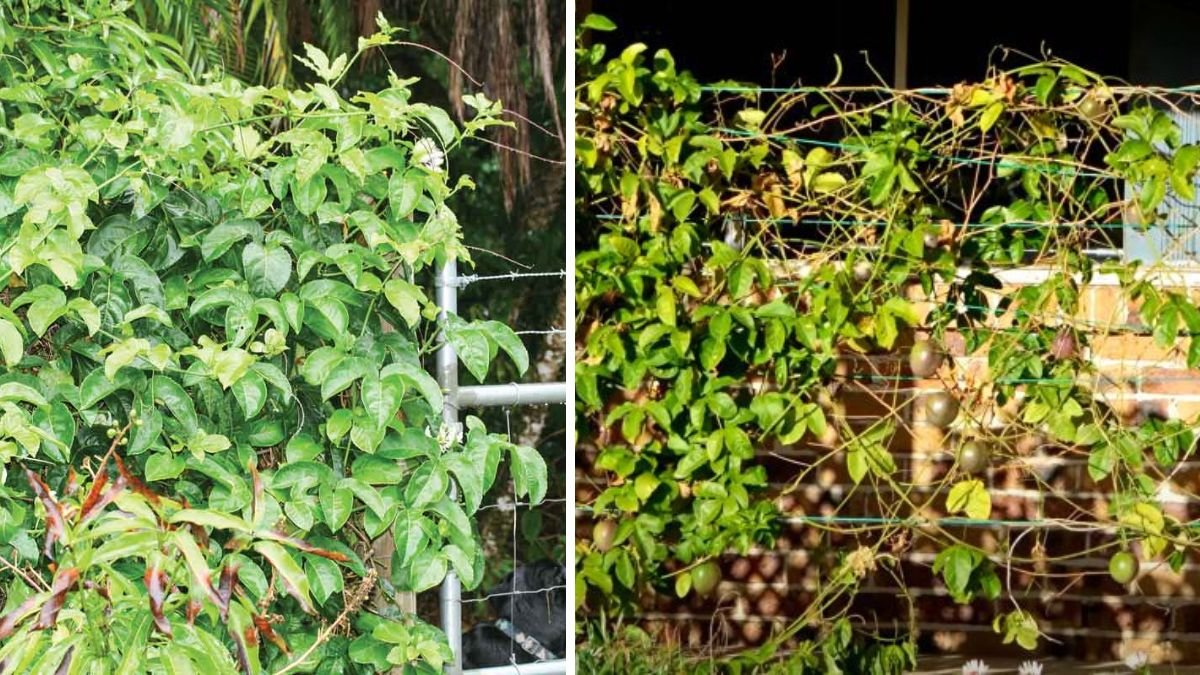
Passion fruit is one of the most exciting fruits you can grow at home. With its vigorous vines, stunning flowers, and aromatic fruit, passion fruit transforms ordinary spaces into lush, productive gardens. One of the easiest and most space-efficient ways to grow this tropical climber is along a simple fence line.
Whether you have a wooden fence, wire mesh, or metal railing, this guide will show you how to grow exotic passion fruit along a fence, even if you’re working with limited space.
Why Grow Passion Fruit Along a Fence?
Growing passion fruit on a fence offers several advantages:
- Maximizes vertical space
- Provides strong natural support
- Improves air circulation
- Makes harvesting easier
- Turns fences into living green walls
A single healthy vine can cover a fence quickly and produce dozens of fruits each season.
Understanding Passion Fruit Growth Habits
Passion fruit (Passiflora) is a fast-growing, climbing vine that:
- Can grow 15–30 feet long
- Produces tendrils that cling naturally to supports
- Flowers and fruits on new growth
- Thrives in warm, sunny conditions
Because of its climbing nature, a fence is an ideal structure.
Choosing the Right Passion Fruit Variety
Different varieties suit different climates.
Popular choices include:
- Purple passion fruit – Sweeter, good for cooler climates
- Yellow passion fruit – More vigorous, ideal for tropical regions
- Hybrid varieties – Disease-resistant and productive
Choose a variety that matches your local climate for best results.
Selecting the Best Fence Location
Passion fruit needs the right environment to thrive.
Ideal fence location:
- Full sun (6–8 hours daily)
- Protection from strong winds
- Well-draining soil
- Enough space for vine spread
South- or west-facing fences are usually ideal.
Preparing the Soil Along the Fence
Healthy soil is critical for long-term success.
Soil preparation steps:
- Clear weeds and debris
- Loosen soil to a depth of 12–18 inches
- Mix in compost or aged manure
- Ensure good drainage
Passion fruit prefers slightly acidic soil (pH 6.0–6.5).
Planting Passion Fruit Along the Fence
Spacing
- Plant vines 6–10 feet apart
- Avoid overcrowding
- Each vine needs room to spread
Planting Steps
- Dig a hole twice the size of the root ball
- Place plant at soil level
- Backfill with enriched soil
- Water deeply
- Mulch around the base
Plant after the risk of frost has passed.
Training Passion Fruit Vines on a Fence
Early training ensures strong growth.
Training tips:
- Gently tie young vines to the fence
- Guide main shoots horizontally
- Remove weak or tangled growth
- Encourage lateral branching
A well-trained vine produces more flowers and fruit.
Watering and Feeding Passion Fruit
Watering
- Water deeply 2–3 times per week
- Increase during flowering and fruiting
- Avoid waterlogged soil
Fertilizing
- Balanced fertilizer every 4–6 weeks
- Increase potassium during flowering
- Avoid excess nitrogen
Balanced feeding encourages fruit, not just leaves.
Pruning for Fence-Grown Passion Fruit
Pruning keeps vines productive and manageable.
Pruning guidelines:
- Prune lightly after harvest
- Remove dead or overcrowded growth
- Maintain airflow along the fence
- Encourage new shoots
Since passion fruit fruits on new growth, pruning boosts yield.
Flowering and Pollination
Passion fruit produces stunning, exotic flowers.
Pollination tips:
- Encourage bees and insects
- Hand-pollinate if necessary
- Avoid pesticides during flowering
Better pollination leads to larger, fuller fruit.
Harvesting Passion Fruit
Fruits ripen 2–3 months after flowering.
Signs of ripeness:
- Deep color change
- Slight wrinkling
- Fruit falls naturally from the vine
Collect fallen fruit daily for best flavor.
Common Problems and Solutions
- Yellow leaves: Overwatering or nutrient deficiency
- Few flowers: Too much nitrogen or low sunlight
- Pests: Aphids, caterpillars—use neem oil
Early care adjustments keep vines productive.
Final Thoughts
Growing exotic passion fruit along a simple fence line is one of the smartest ways to combine beauty and productivity in your garden. With sunlight, good soil, and regular care, a plain fence can become a tropical fruit wall bursting with flowers and delicious harvests year after year.