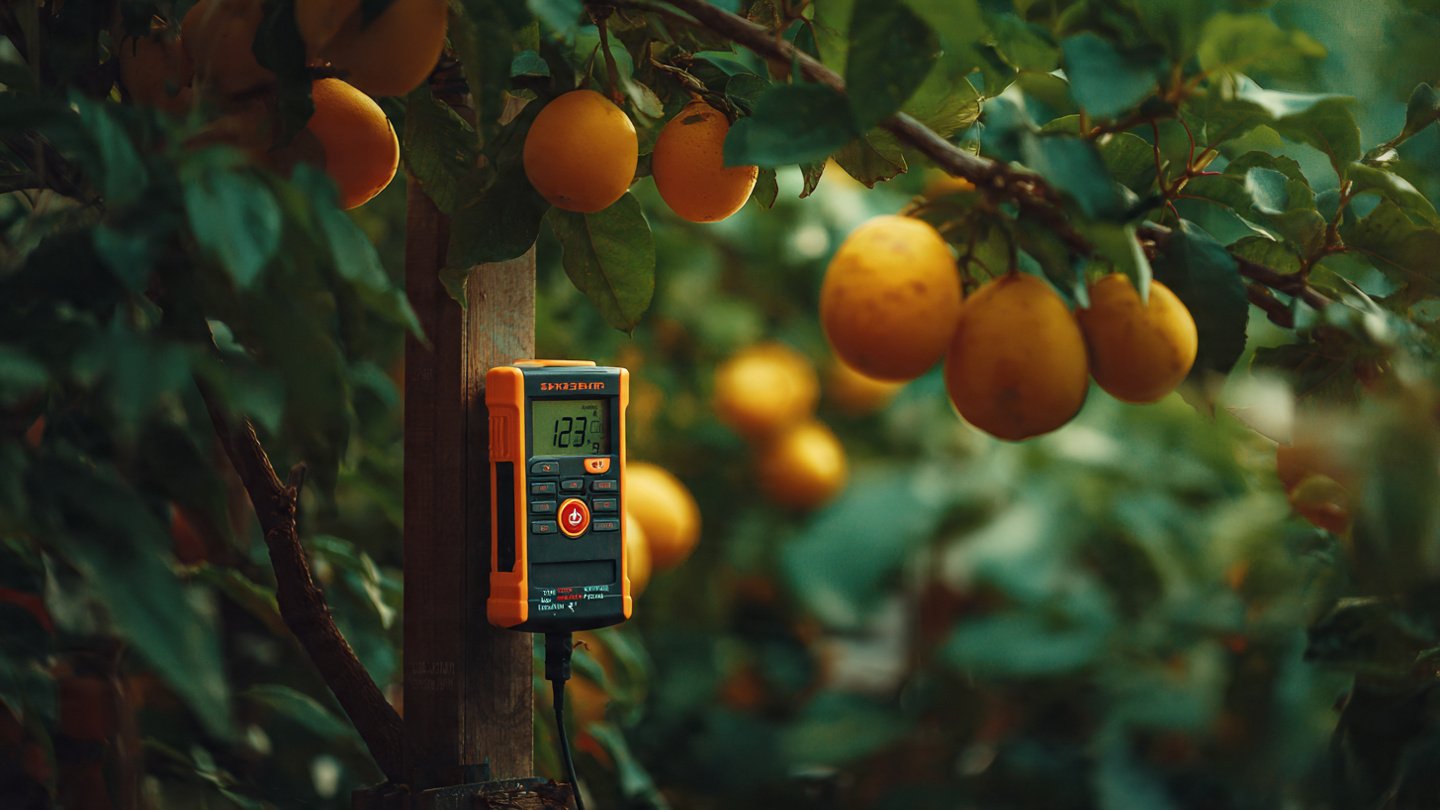
In the realm of gardening and fruit cultivation, achieving the perfect balance of sweetness and acidity is essential for producing bountiful, flavorful harvests. A Brix meter—commonly known as a refractometer—serves as a vital tool for gardeners and fruit growers, allowing them to assess and enhance the quality of their produce. By measuring the sugar concentration in fruits, this simple but effective instrument can significantly transform your garden’s fruit harvest. Understanding how to use a Brix meter not only aids in selecting the right time for harvesting but also helps in fine-tuning cultivation practices to optimize fruit quality.
To start, it is important to understand what a Brix meter actually does. The term “Brix” refers to the degrees Brix (°Bx), a scale that measures the sugar content in an aqueous solution. Specifically, 1 °Bx is equivalent to 1 gram of sucrose in 100 grams of solution. A Brix meter works on the principle of refractometry, measuring the degree to which light is refracted as it passes through the juice or aqueous solution of a fruit. The higher the sugar content, the more light will bend, allowing the Brix meter to provide a direct reading of sugar concentration.
The implications of this measurement are profound for fruit gardeners. One of the primary benefits of using a Brix meter is the ability to determine the optimal harvest time for fruits. Fruits picked too early may lack the desired sweetness, resulting in a less enjoyable eating experience, while those left on the vine too long can become overripe, leading to spoilage or a decline in flavor quality. Brix readings enable gardeners to monitor sugar development over time, offering a more precise indicator of ripeness than visual or tactile cues alone.
For example, consider a backyard grower cultivating a variety of strawberries. Instead of relying solely on the berries’ color or firmness, utilizing a Brix meter can reveal that the optimal sugar content for their chosen variety is around 10 °Bx. By regularly measuring the Brix level, gardeners can confidently harvest their strawberries at the moment they reach peak sweetness, ensuring their fruit is not only tasty but also appealing to buyers if sold.
Additionally, the Brix meter can serve as a guide for improving cultivation practices. By tracking Brix levels, gardeners can glean insights about their soil health, water management, and nutrient delivery. Elevated Brix readings suggest healthy plants that are likely benefiting from optimal growing conditions. Conversely, lower readings might indicate issues such as nutrient deficiencies, overwatering, or unsuitable soil pH levels. A Brix meter thus acts as a diagnostic tool, allowing gardeners to make informed adjustments and enhance the growing environment.
Soil health plays a crucial role in determining the sugar content of fruits. Healthy, microbe-rich soils promote better nutrient uptake, which directly contributes to the sugar synthesis in plants. If a gardener notices consistently low Brix readings across various crops, this may indicate the need to enhance soil quality through practices such as composting, crop rotation, or the incorporation of organic amendments. Improving soil health not only boosts sugar content but also fortifies plants’ overall resilience against pests and diseases.
Water management is another critical factor that influences Brix levels. Inconsistent watering practices can stress plants, potentially leading to inadequate sugar production. Overly saturated soils can cause root problems, while drought conditions can both stress plants and stunt growth. A Brix meter can help gauge whether a plant is stressed due to improper watering. By linking Brix levels with watering schedules, gardeners can develop a more effective irrigation strategy, ensuring that plants receive the right amount of moisture when they need it most.
Nutrient delivery also plays a pivotal role in the sugar content of fruits. Nutritional imbalances can lead to diminished sugar levels. Essential nutrients like nitrogen, potassium, and phosphorus must be adequately supplied for optimum fruit development. A Brix meter can help determine if a particular nutrient deficiency is impacting sugar levels by monitoring Brix trends in relation to fertilization practices. Adjusting nutrient profiles and minimizing chemical inputs can lead to healthier plants that produce fruits with higher Brix values.
In addition to these agronomic benefits, the aesthetic and sensory qualities of fruits can also be enhanced through Brix measurement. Fruits with higher sugar concentrations typically have better flavor profiles, as sweetness is a key component of overall taste. This quality is especially important for chefs and culinary enthusiasts who emphasize the importance of flavor in their dishes. Knowing the Brix levels can help gardeners produce fruits that not only look good but also deliver an impressive taste experience.
For those in the commercial sector, the implications of using a Brix meter can be even more significant. In the competitive marketplace of fruit produce, higher Brix levels can translate into better pricing and increased consumer demand. Many consumers are willing to pay a premium for sweet, flavorful fruit, and vendors are often keen to promote their produce with high Brix readings. This not only enhances marketability but can foster strong relationships between producers and consumers who prioritize quality over quantity.
Moreover, the ability to document Brix readings over time can assist in creating a brand around fruit quality. Growers can build a reputation for high-sugar content fruits and engage with a community that values this metric. Through social media, farmers’ markets, and local events, producers can share their Brix data and educate consumers about the relationship between plant care practices and fruit quality. This not only benefits individual growers but can elevate the entire community’s reputation for quality produce.
Further, the ecological footprint of agriculture can also be addressed through the smart use of a Brix meter. By encouraging sustainable practices—such as organic farming, reduced chemical use, and improved water management—gardeners can enhance the quality of their harvests while minimizing their environmental impact. The data gleaned from Brix readings can advocate for natural farming methods that resonate with increasingly environmentally conscious consumers.
In summary, the application of a Brix meter in fruit gardening provides an array of benefits that can revolutionize your harvest. From determining optimal harvest times and improving soil health to fine-tuning water management and nutrient delivery, the insights gained from Brix readings empower gardeners to cultivate superior fruits. The aesthetic and sensory qualities of high-Brix fruits contribute to better marketability and consumer satisfaction, adding an economic incentive to sustainable practices.
As you embark on or continue your gardening journey, consider the Brix meter not just as a tool, but as a transformative ally in your quest for sweetness and excellence. Embrace the change and unlock the potential of your garden, as the fruits of your labor become a testament to both your growing skills and the power of precise measurements. Through this combination of art and science, you can elevate your fruit harvest to new heights, ensuring that every bite is as sweet and satisfying as nature intended.
How Can a Brix Meter Transform Your Garden Fruit Harvest?
Yezdi Roadster 2026 Launched: Smooth Engine, Muscular Cruiser Design, Advanced Features
EPFO Pension New Rules 2026: Salary Limit Changed, Pension Will Increase
2026 Rolls-Royce Motorhome Redefining Ultra-Luxury Road Travel With Timeless Elegance
Motorola New Smartphone With 420MP Camera, 7700mAh Battery at ₹9,900
Motorola Razr 50 Ultra New 5G Foldable Smartphone With Attractive Design, 165Hz Display
Nokia 2660 Flip 4G Beautiful Design Flip Keypad Phone With 12MP Camera at Just ₹2,500
Motorola Unveiled Stunning Design Smartphone With 250MP Camera, 16GB RAM and 95W Superfast Charging
Vivo V50 Lite 5G Smartphone Launched With 3 Days Battery Backup, 6.77-Inch AMOLED Display at ₹19,000
Honor X9c Smartphone With 144Hz Display, 70W Charging and Circle Design Camera
Oppo Premium 5G Smartphone With 250MP Camera and 7800mAh Battery
Infinix 5G Smartphone Launched With 12GB RAM, 200MP Camera and Flagship-Level Design
Tata Nano EV 2026: Affordable Electric Car With 300km Range Starting at ₹3.5 Lakh in India
Day Will Turn Slowly to Night During the Longest Total Solar Eclipse of the Century Across Several Regions
Maruti Suzuki Grand Vitara 2026 With 2.8L Petrol Engine Delivers 37kmpl Mileage and Luxury Features
Galaxy S23 Ultra 5G With 108MP AI Camera and Fabulous Design
Yamaha XSR 155 2026 Launched With Smooth Engine, Neo-Retro Design and Advanced Features
Day Will Slowly Turn to Night as the Longest Total Solar Eclipse of the Century Creates a Rare and Spectacular Event
Known as the Black Gold of Agriculture, Chernozem Soil Helped Turn Ukraine, Russia and Kazakhstan Into Global Breadbaskets
Light Will Disappear for Minutes: Experts Warn an Extraordinary Solar Eclipse Is Approaching
Vivo Y21d Budget-Friendly Smartphone With 6000mAh Battery Launched
Triumph Scrambler 400 X 2026 Launched With Rugged Design, Torque-Rich Engine and Modern Features
Oppo A6 Pro Smartphone With 50MP Dual Camera and 256GB Storage
Tecno Pova Slim 5G Smartphone With 6.78-Inch 3D Curved Display at ₹17,000
New Maruti Brezza 2026 Stylish Compact SUV With 35 km/l Mileage, Luxury Features and Smart Tech
Age Pension Update 2026: $1,179 Increase Announced – Who Qualifies
Realme Narzo 90 Smartphone With Sleek Design and 7000mAh Battery
Vivo New Phone With 300MP Camera and 7600mAh Battery at ₹9,600
Poco M7 Plus 5G With Snapdragon Processor and 144Hz Display at Just ₹10,000
OnePlus Nord CE 5 5G Smartphone With 80W SuperVOOC Charging and 256GB Storage at ₹20,000
Redmi New 5G Phone Launched in India With 108MP Camera and Curved AMOLED Screen