Cleaning your balcony floor isn’t just about aesthetics; it’s also crucial for maintaining a healthy outdoor space, especially if you’re using it as a garden or haven for plants. A clean balcony can promote better airflow, prevent pest infestations, and create a more enjoyable environment for relaxation and recreational activities. In this article, we will explore effective cleaning methods that prioritize not only the cleanliness of your balcony floor but also the safety and well-being of your plants.
Understanding the Types of Balcony Flooring
Before diving into specific cleaning methods, it’s essential to identify the type of flooring on your balcony, as this will influence your cleaning approach:
- Wooden Decking: Often looks beautiful but requires special care to avoid rot and discoloration.
- Concrete: Highly durable but can attract dirt and grime quickly.
- Tiles: A versatile option that can be made of ceramic or porcelain, which is generally easy to clean but can be slippery.
- Composite Materials: Mimics wood but is generally more durable and resistant to weather impacts.
Each type requires different cleaning techniques and products, so be mindful of these variations as we proceed.
Preparing for Cleaning
Clear the Area
Start by removing any furniture, planters, or decorative items from the balcony. If you have potted plants, consider moving them indoors or to a shaded area away from the cleaning action. You want to ensure that they are out of the way of the cleaning agents or water runoff.
Gather Your Supplies
Here is a list of cleaning supplies commonly used for balcony maintenance:
- Broom and Dustpan: For sweeping away loose debris like leaves and dirt.
- Mop or Scrubber: For rinsing and scrubbing the floor.
- Bucket: To mix your cleaning solutions.
- Natural Cleaning Agents: Vinegar, baking soda, or mild dish soap are excellent choices for eco-friendly cleaning.
- Hose or Pressure Washer: Depending on your balcony layout, a hose or a pressure washer can be useful for rinsing.
Protect Your Plants
If you choose to use any cleaning agents, make sure they are non-toxic and safe for plants. You can also shield plants with plastic sheeting or weather-resistant tarp to avoid any accidental spills or drips that may harm them.
Effective Cleaning Techniques
1. Sweeping
Start with a thorough sweep to remove dirt, dust, and debris. Sweeping regularly keeps your balcony looking neat and prevents dirt buildup that may require more intensive cleaning later.
- Tip: Sweep in the direction of the drainage system to encourage water to flow away.
2. Mopping
Once you’ve cleared away debris, it’s time to mop.
-
For Wooden Decking: Use a damp mop—not soaking wet—to avoid water damage. Add a few drops of mild dish soap to warm water for effective cleaning.
-
For Concrete or Tile: A mixture of warm water and vinegar (1:1 ratio) makes for an excellent cleaner. Dip the mop in the solution, wring it out, and start mopping from one corner to another.
3. Scrubbing Stains
If you notice stubborn stains, you may need a more hands-on approach.
-
Baking Soda Paste: Make a paste with baking soda and water. Apply it to the stains and let it sit for about 10 minutes before scrubbing with a stiff-bristled brush. Rinse it off with water afterward.
-
For Oily Stains: Sprinkle a generous amount of cornstarch or baking soda on the stain to absorb the oil. Let it sit for a while before scrubbing it off with warm water.
4. Rinsing
After scrubbing, it’s crucial to rinse the balcony thoroughly to remove any cleaning agents that could potentially harm your plants.
-
Using a Hose: Directly rinse the floor down the balcony’s drainage while avoiding direct contact with your plants.
-
With a Bucket: If a hose isn’t an option, refill your bucket with clean water and pour it over the floor, again directing it toward any drainage points.
5. Pressure Washing (If Needed)
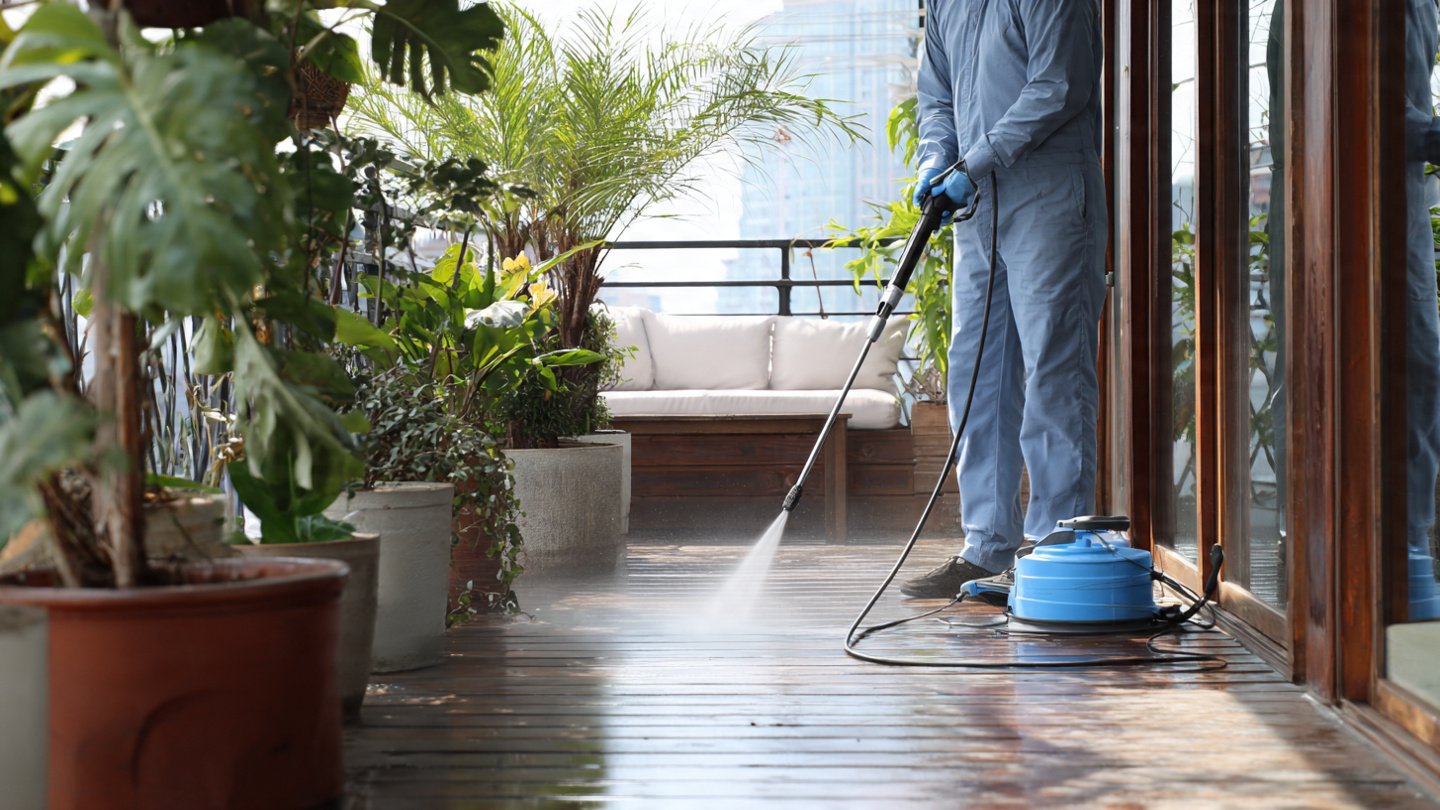
For heavily soiled areas, a pressure washer can offer a deep clean. However, it’s crucial to adjust the pressure to avoid damaging any surfaces.
- Note: Make sure to cover any plants or move them temporarily to prevent water and debris from damaging them.
6. Drying
Once rinsed, allow your balcony to air dry. Use towels or mops to soak up excess water, especially on wooden surfaces, to prevent rot.
Post-Cleaning Maintenance
Cleaning doesn’t stop once the floor is spotless. Regular maintenance will make your life easier and keep your balcony looking great.
Regular Sweeping
Make it a habit to sweep your balcony once a week. This will keep dirt and debris from accumulating and make the next deep clean much easier.
Quick Wipe Downs
If you notice sticky or oily residue, a quick wipe with a damp cloth and mild soap can keep things in check between deeper cleans.
Inspect Your Plants
After cleaning, inspect your plants for any signs of damage or stress. Ensure they’re re-mulched and receiving the optimal amount of water and sunlight.
Seasonal Deep Cleans
Plan for seasonal deep cleaning, especially after fall or spring when debris such as leaves or pollen might accumulate more heavily.
Additional Tips for Plant Protection
-
Choose Cleaning Agents Carefully: Always pick eco-friendly, biodegradable cleaners to minimize any impact on your plants and the surrounding wildlife.
-
Timing: Try to clean early in the morning or late afternoon when the temperatures are cooler. This minimizes the risk of plants getting stressed from excess heat.
-
Use Protective Barriers: If you anticipate using harsher chemicals occasionally, create a barrier using organic mulch or rocks around your plants to shield their root zones.
Conclusion
Cleaning your balcony floor doesn’t have to come at the expense of your beloved plants. With careful planning and the right techniques, you can maintain a spotless balcony space that serves as a beautiful extension of your home while ensuring the health and safety of your plants. Consistent maintenance will provide not only visual appeal but also an inviting environment for relaxation and enjoyment. Happy cleaning!