Introduction
Urban gardening has become more popular than ever, especially among people living in apartments with limited outdoor space. Balconies, rooftops, and small terraces are now being transformed into productive mini-farms. One of the most effective and rewarding plants to grow in such spaces is chayote, also known as vegetable pear or chow chow.
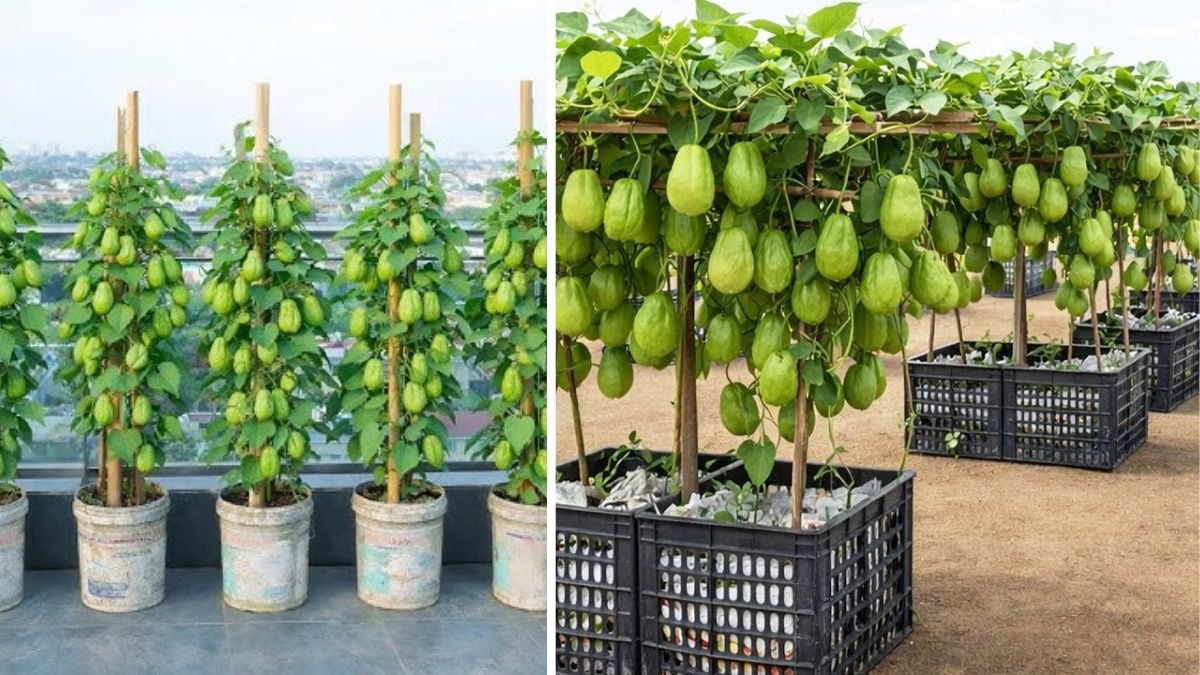
With the plastic container chayote method, even a small balcony can turn into a lush, food-producing green zone. This method is affordable, eco-friendly, and perfect for beginners. In this article, you’ll learn how to grow healthy chayote vines using plastic containers and how this simple technique can completely transform your balcony farm.
Why Choose Chayote for Balcony Gardening?
Chayote is an ideal vegetable for urban gardeners because:
- It grows vigorously in containers
- Produces high yields
- Requires minimal maintenance
- Has excellent nutritional value
- Thrives in warm climates
- Can grow vertically to save space
Chayote is rich in fiber, vitamin C, antioxidants, and potassium. It is commonly used in curries, stir-fries, salads, and soups, making it a valuable addition to any home kitchen.
When grown properly, one plant can produce dozens of fruits in a season.
Understanding the Plastic Container Method
The plastic container method involves growing chayote in large recycled plastic containers instead of traditional ground soil. These containers act as portable planting beds that fit easily on balconies.
This method offers several advantages:
- Low cost using recycled materials
- Better drainage control
- Reduced pest problems
- Easy movement of plants
- Space optimization
- Improved root management
By using vertical supports and proper training, chayote vines can grow upward rather than outward, making this method perfect for small spaces.
Choosing the Right Plastic Container
Selecting the right container is the foundation of success.
Ideal Container Size
- Minimum size: 25–30 liters
- Depth: At least 12–15 inches
- Width: 14–18 inches
Large water cans, paint buckets, oil containers, or storage drums work well.
Drainage Holes
Drill 5–8 holes at the bottom and sides to ensure proper drainage. Poor drainage leads to root rot, which can destroy the plant.
Cleaning
Wash containers thoroughly with mild soap and water to remove chemical residues before use.
Selecting Quality Chayote Fruit for Planting
Chayote is grown from the whole fruit, not seeds.
Choose:
- Mature but fresh chayote
- No cuts, mold, or soft spots
- Firm and heavy fruit
Avoid very young or damaged fruits, as they may not sprout properly.
Preparing the Potting Mix
Chayote needs nutrient-rich, well-draining soil.
Ideal Soil Mix
Combine:
- 40% garden soil
- 30% compost or vermicompost
- 20% cocopeat or peat moss
- 10% sand or perlite
Optional Additions:
- Neem cake (pest control)
- Bone meal (root development)
- Wood ash (potassium source)
Mix everything well before filling the container.
Planting the Chayote in Plastic Containers
Step 1: Pre-Sprouting (Optional but Helpful)
Place the chayote fruit in a shaded, dry place for 1–2 weeks until a small sprout appears.
Step 2: Filling the Container
Fill the container with soil mix, leaving 2 inches from the top.
Step 3: Positioning the Fruit
Place the fruit sideways or slightly tilted with the sprout facing upward.
Bury only half of the fruit in soil. Do not cover it completely.
Step 4: Watering
Water gently until soil is moist but not soaked.
Setting Up Vertical Support
Chayote is a climbing vine and needs strong support.
Support Options
- Bamboo poles
- PVC pipes
- Balcony railings
- Trellis nets
- Wire mesh
Install support before the plant grows too large to avoid root disturbance later.
Train vines upward using soft ties or strings.
Sunlight Requirements
Chayote needs:
- 5–7 hours of direct sunlight daily
- Bright indirect light for remaining hours
Place containers where they receive morning sun and partial afternoon shade, especially in hot climates.
Insufficient sunlight results in poor flowering and low fruit production.
Watering Schedule
Proper watering is crucial.
General Rule
- Summer: Water daily or every alternate day
- Winter: 2–3 times per week
- Rainy season: Only when soil feels dry
Check topsoil with your finger. If dry 1 inch deep, it’s time to water.
Avoid waterlogging at all costs.
Fertilizing for Maximum Yield
Chayote is a heavy feeder and requires regular nutrients.
Organic Fertilizer Schedule
Every 15 Days:
- Vermicompost (2–3 handfuls)
- Compost tea
Once a Month:
- Mustard cake water
- Banana peel fertilizer
- Seaweed extract
Flowering Stage:
Add extra potassium-rich fertilizer to boost fruiting.
Avoid excessive nitrogen, as it promotes leaves instead of fruits.
Pruning and Training Techniques
Pruning helps control growth and improve productivity.
When to Prune
- Remove weak branches
- Cut yellow leaves
- Trim overcrowded vines
Benefits
- Better air circulation
- More sunlight penetration
- Reduced disease risk
- Increased fruiting
Guide main vines along supports and remove unnecessary side shoots.
Common Pests and Diseases
Even balcony gardens can face problems.
Common Pests
- Aphids
- Whiteflies
- Spider mites
- Mealybugs
Organic Control
- Neem oil spray (weekly)
- Soap water spray
- Garlic-chili solution
Diseases
- Powdery mildew
- Root rot
- Leaf spot
Prevention:
- Good drainage
- Proper spacing
- Avoid wet leaves at night
Flowering and Pollination
Chayote produces male and female flowers.
- Male flowers appear in clusters
- Female flowers have small fruit behind them
Pollination usually happens naturally through insects and wind. On high-rise balconies, you may hand-pollinate using a soft brush.
Harvesting Chayote
Chayote is ready to harvest:
- 30–45 days after flowering
- When fruits are tender and shiny
- Before skin hardens
Use scissors or a knife to cut fruits gently.
Regular harvesting encourages more production.
One healthy plant can yield 20–50 fruits per season in containers.
Benefits of the Plastic Container Method
This method transforms balconies into productive spaces by offering:
- Sustainable food production
- Reduced grocery expenses
- Fresh chemical-free vegetables
- Stress relief
- Improved air quality
- Eco-friendly recycling
It is perfect for apartment dwellers, seniors, beginners, and busy professionals.
Tips for Long-Term Success
- Rotate containers occasionally for even sunlight
- Mulch soil to retain moisture
- Keep balcony clean
- Inspect plants weekly
- Avoid overcrowding
- Replace soil every season
Consistent care leads to stronger plants and higher yields.
Conclusion
The plastic container chayote method is a powerful and practical solution for urban gardeners who want maximum results in minimum space. With simple materials, proper care, and basic knowledge, anyone can grow fresh, healthy chayote right on their balcony.
This technique not only helps you grow nutritious food but also turns your living space into a vibrant green retreat. Whether you are a beginner or an experienced gardener, this method offers an affordable, sustainable, and rewarding way to enjoy home-grown vegetables.
Start today, and watch your balcony transform into a thriving mini-farm full of life and abundance