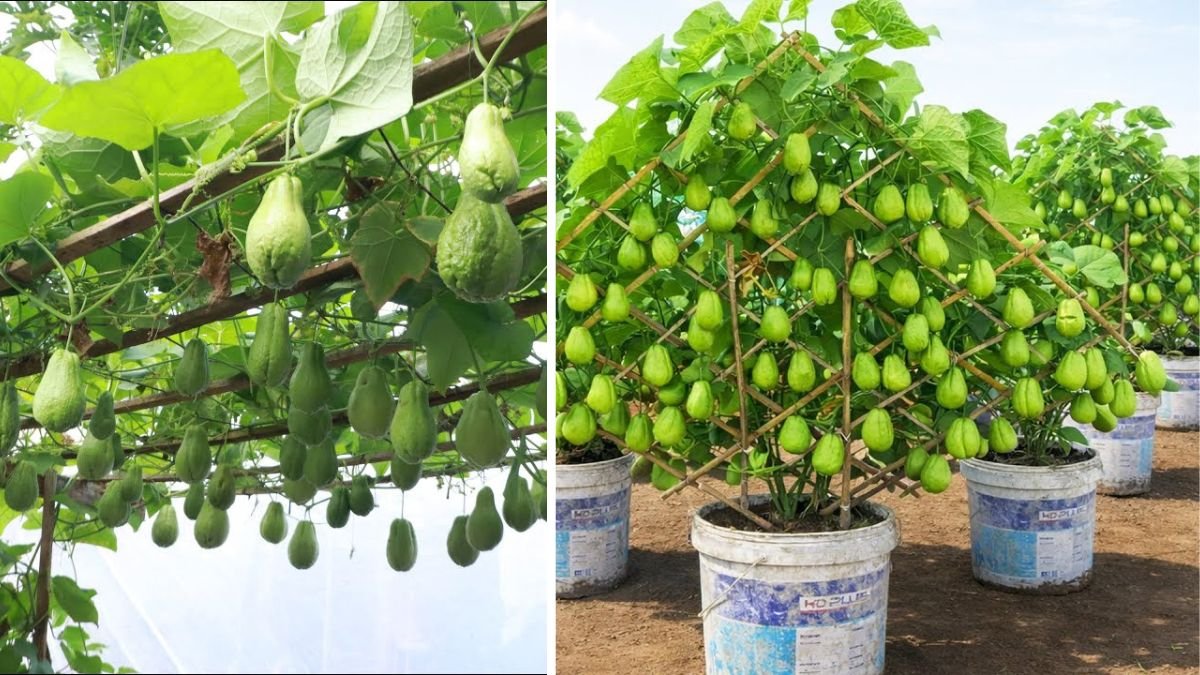
Chayote, also known as vegetable pear, mirliton, or chow-chow, is a fast-growing, nutritious climbing vegetable that thrives in warm climates. In many parts of India and Asia, it is valued for its mild flavor, high vitamin content, and versatility in cooking. However, many home gardeners struggle to grow chayote successfully due to space limitations, poor soil quality, or improper planting techniques.
The good news is that you don’t need a large garden or expensive equipment to enjoy a healthy chayote harvest. With the plastic container chayote method, you can grow strong vines and produce dense, heavy fruits even in small spaces like balconies, rooftops, or backyards. This simple, eco-friendly method uses recycled plastic containers to create an ideal growing environment for chayote.
In this detailed guide, you will learn how to use plastic containers to grow chayote efficiently, improve fruit size, and maximize yield—all with minimal cost and effort.
Why Choose the Plastic Container Method for Chayote?
Growing chayote in plastic containers offers several practical advantages:
First, containers give you complete control over soil quality. Many gardeners fail because their garden soil is too compact, nutrient-poor, or waterlogged. A container allows you to prepare the perfect growing mix.
Second, this method saves space. Chayote vines can be trained vertically, making them ideal for urban homes and small gardens.
Third, plastic containers are lightweight, affordable, and easy to move. You can shift your plant to sunnier spots or protect it from heavy rain when needed.
Finally, using recycled containers reduces waste and promotes eco-friendly gardening.
Selecting the Right Plastic Container
The success of this method begins with choosing the right container.
Use a strong plastic drum, bucket, or storage box with a minimum capacity of 40–60 liters. Chayote develops an extensive root system, so shallow containers are not suitable.
Ensure the container has several drainage holes at the bottom. Poor drainage causes root rot, which is one of the main reasons chayote plants fail.
If your container does not have holes, drill at least 6–8 holes before planting. Place small stones or broken tiles at the base to prevent soil blockage.
Preparing the Ideal Soil Mix
Healthy soil is the foundation of dense, heavy fruit production.
For best results, prepare the following soil mixture:
- 40% garden soil
- 30% well-rotted compost or vermicompost
- 20% coco peat or sand
- 10% aged cow dung manure
Mix all ingredients thoroughly to create a loose, well-draining, nutrient-rich medium.
This soil blend ensures proper aeration, good moisture retention, and steady nutrient supply—three essential factors for strong root development and heavy fruiting.
Choosing and Preparing Chayote Seeds
Unlike most vegetables, chayote is grown using the whole fruit rather than dry seeds.
Select a mature, healthy chayote that has started sprouting naturally. You may notice a small shoot emerging from the fruit. This is the best stage for planting.
Avoid using immature or damaged fruits, as they produce weak plants.
Before planting, keep the sprouted chayote in a dry, shaded area for 3–4 days. This helps strengthen the shoot and reduces transplant shock.
Planting Chayote in the Plastic Container
Fill the container with soil mix, leaving about 8–10 cm from the top.
Dig a shallow hole in the center. Place the chayote fruit sideways with the sprout facing upward. Do not bury it completely. About one-third of the fruit should remain above the soil surface.
Lightly cover with soil and press gently.
Water thoroughly after planting, but avoid flooding the container.
Place the container in a location that receives at least 6–8 hours of direct sunlight daily.
Building a Strong Support System
Chayote is a vigorous climber and requires sturdy support.
Install bamboo poles, metal frames, or nylon netting near the container. You can also guide the vines onto balconies, walls, or terrace railings.
Create a trellis system at least 6–8 feet high. A strong structure allows vines to spread freely, improves air circulation, and exposes more leaves to sunlight.
Proper support directly influences fruit size and quality.
Watering Schedule for Maximum Yield
Consistent watering is essential for producing dense fruits.
During early growth, water every 2–3 days, depending on weather conditions.
Once flowering begins, increase watering to once daily in hot climates. However, ensure excess water drains out.
Never allow the soil to become completely dry, as this causes flower drop and poor fruit development.
At the same time, avoid waterlogging, which weakens roots and reduces productivity.
Organic Fertilization for Heavy Fruit Production
Chayote is a heavy feeder and requires regular nutrition.
Apply compost or vermicompost every 20 days by mixing it into the topsoil.
Every two weeks, use liquid organic fertilizers such as:
- Compost tea
- Cow dung slurry
- Banana peel water
- Fish amino acid (if available)
During flowering and fruiting stages, add wood ash or bone meal in small amounts to boost potassium and phosphorus.
These nutrients help produce thicker flesh, better taste, and heavier fruits.
Pruning and Vine Management
Proper pruning improves airflow and directs energy toward fruit production.
Remove weak, damaged, or overcrowded vines regularly.
When the plant reaches about 5–6 feet, pinch the main tip to encourage side branches. More branches mean more flowering points.
Also, remove old yellow leaves to prevent disease and pest buildup.
Common Pests and Disease Control
Chayote is generally hardy, but it can attract aphids, whiteflies, and mites.
Spray neem oil solution every 10–14 days as a preventive measure.
For fungal diseases, ensure good air circulation and avoid wetting leaves during watering.
If powdery mildew appears, spray baking soda solution mixed with water and mild soap.
Early prevention keeps plants healthy and productive.
Flowering and Fruit Development
Chayote usually begins flowering 3–4 months after planting.
Male and female flowers appear on the same plant. Pollination is mainly done by insects, but you can hand-pollinate if needed.
Healthy vines produce continuous fruits for several months.
Each fruit develops fully within 20–25 days after pollination.
With proper care, one container-grown plant can yield 25–40 fruits in a season.
Harvesting Dense, Heavy Chayote
Harvest fruits when they are firm, glossy, and about 10–15 cm long.
Do not wait until fruits become over-mature, as they become fibrous and less tasty.
Use sharp scissors to cut fruits, leaving a small stem attached.
Regular harvesting encourages more flowering and higher yields.
Seasonal Care and Replanting
In warm regions, chayote can be grown almost year-round.
After the main fruiting season, reduce watering and feeding.
Allow the plant to rest before starting a new growth cycle.
You can also save healthy fruits for the next planting season.
Benefits of Growing Chayote in Plastic Containers
This method offers multiple benefits:
It saves space and fits urban lifestyles.
It produces higher-quality fruits.
It reduces dependency on chemical fertilizers.
It promotes recycling and sustainable living.
It allows easy plant management.
With proper care, even beginners can achieve professional-level results.
Conclusion
The plastic container chayote method is a simple, affordable, and highly effective way to grow dense, heavy fruits at home. By choosing the right container, preparing rich soil, providing strong support, and maintaining proper watering and feeding schedules, you can enjoy continuous harvests from a single plant.
Whether you have a small balcony or a rooftop garden, this method empowers you to grow healthy, organic chayote with minimal resources. With patience and consistency, you will soon be harvesting fresh, nutritious vegetables right from your home garden.