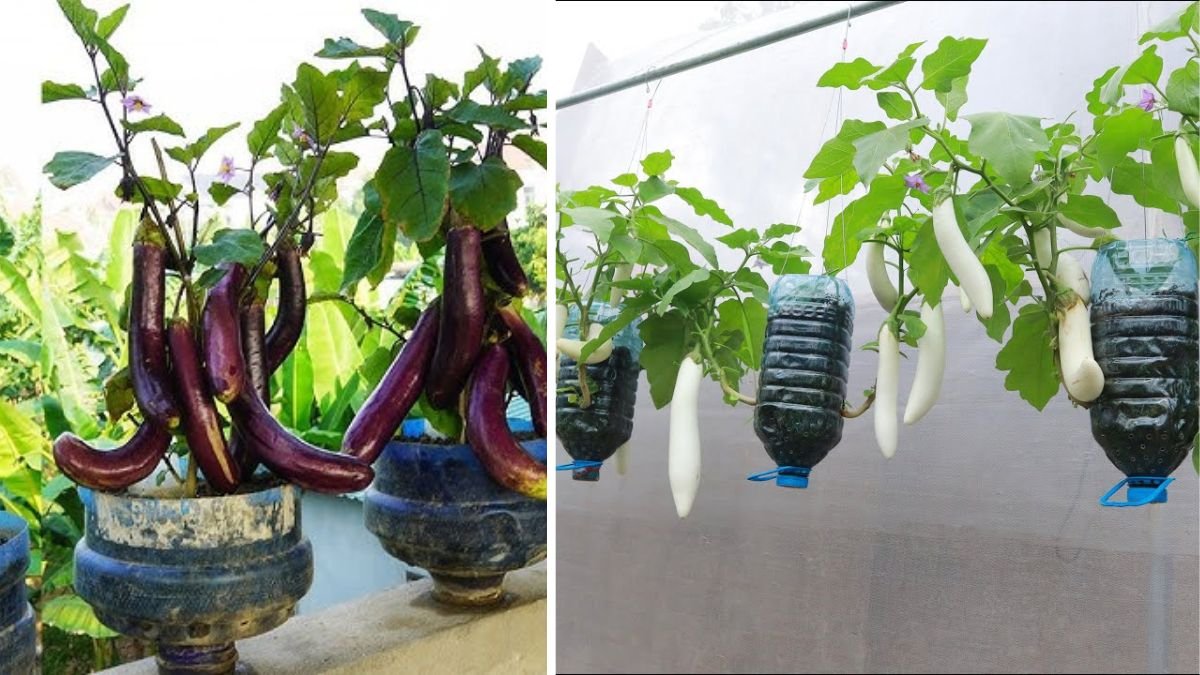
Urban gardening is becoming more popular every day, especially among people who have limited space but still want to grow their own fresh vegetables. Like many home gardeners, I once believed that eggplants (also known as brinjal or aubergine) needed large garden beds or deep pots to grow well. However, after experimenting with vertical gardening, I discovered an amazing method that completely changed my gardening experience—growing eggplants in hanging plastic bottles.
This simple and low-cost technique not only saved space but also produced an incredible yield. In this article, I will share my complete experience, step-by-step method, and useful tips so that you can grow healthy and productive eggplants at home using recycled bottles.
Why Choose Hanging Bottles for Growing Eggplants?
Before starting this experiment, I wondered whether eggplants could really grow well in hanging containers. Surprisingly, they adapted very well. Hanging bottles offer several advantages.
First, they save space. If you live in an apartment, have a small balcony, or limited backyard space, vertical gardening is a perfect solution. Instead of spreading plants horizontally, you use vertical areas like walls, railings, or fences.
Second, this method promotes better air circulation. When plants are hanging, air flows freely around the leaves and stems. This reduces the risk of fungal diseases and pest infestations.
Third, recycled plastic bottles are easily available and cost almost nothing. Instead of throwing them away, you can turn them into useful planting containers. This makes the method eco-friendly and budget-friendly.
Finally, hanging containers make plant care easier. Watering, pruning, and harvesting become more convenient because the plants are at eye level.
Materials Needed to Get Started
To begin growing eggplants in hanging bottles, you only need a few simple materials.
You will need large plastic bottles, preferably 2-liter or 5-liter bottles. Bigger bottles provide more space for roots to grow.
A sharp knife or cutter is required to cut openings in the bottles. You will also need a nail or heated metal rod to make drainage holes.
Strong rope, wire, or nylon thread is used for hanging the bottles securely.
Good-quality potting soil is essential. A mix of garden soil, compost, and coco peat works very well.
Healthy eggplant seedlings or seeds are needed. It is better to start with seedlings for faster results.
You will also need organic fertilizer such as vermicompost, cow dung compost, or liquid plant feed.
Preparing the Hanging Bottles
The first step is to prepare the plastic bottles properly.
Wash the bottles thoroughly to remove any residue. Then cut a rectangular or oval opening on one side of the bottle. This opening should be large enough for planting and maintenance.
Next, make small drainage holes at the bottom. Proper drainage prevents waterlogging, which can damage roots.
On both sides near the top, make two small holes to pass the rope or wire. Tie the rope securely so the bottle can hang straight.
Make sure the bottle is strong enough to hold soil and plant weight. Weak bottles may collapse over time.
Preparing the Soil Mixture
Soil quality plays a major role in successful eggplant growth.
I used a simple but effective soil mix:
40% garden soil
30% compost or vermicompost
20% coco peat or sand
10% organic manure
This mixture provides good drainage, nutrients, and moisture retention.
Before filling the bottles, mix everything thoroughly. Remove stones or debris that may block root growth.
Fill the bottle up to about three-quarters, leaving some space at the top for watering.
Planting the Eggplant Seedlings
Once the bottles and soil are ready, it is time to plant.
If you are using seeds, sow two to three seeds in each bottle and later thin them to keep only the strongest plant.
If you are using seedlings, gently remove them from their nursery pots. Place one healthy seedling in the center of each bottle opening.
Press the soil lightly around the roots to secure the plant. Do not press too hard, as this may restrict root growth.
After planting, water gently until moisture reaches the bottom.
Choosing the Right Location
Location is crucial for good yield.
Eggplants need at least six to eight hours of direct sunlight daily. Place your hanging bottles on balconies, terraces, rooftops, or near sunny windows.
Make sure the area is protected from strong winds, as hanging plants can swing and get damaged.
If sunlight is limited, you may rotate the bottles occasionally to ensure even exposure.
Watering and Fertilizing Schedule
Hanging containers dry out faster than ground soil, so proper watering is very important.
In summer, water daily or every alternate day depending on weather. In cooler seasons, water when the topsoil feels dry.
Always avoid overwatering. Water should drain out freely from the bottom holes.
For fertilizing, I applied vermicompost once every two weeks. I also used liquid organic fertilizer made from compost tea or banana peel water once a week.
This regular feeding kept the plants healthy and boosted flowering and fruiting.
Supporting and Pruning the Plants
Eggplants produce heavy fruits, so support is necessary.
As the plant grows, tie the main stem gently to the hanging rope or nearby support. This prevents bending and breaking.
Pruning is also important. Remove yellow leaves, weak branches, and extra shoots. This allows the plant to focus energy on fruit production.
Pinch off early flowers if the plant is still small. This encourages stronger root and stem development.
Managing Pests and Diseases Naturally
Like any vegetable plant, eggplants can face pest problems.
Common pests include aphids, whiteflies, and spider mites. To control them naturally, spray neem oil solution once a week.
You can also use garlic-chili spray to repel insects.
For fungal diseases, ensure proper spacing, good airflow, and avoid wetting leaves during watering.
Remove infected leaves immediately to prevent spread.
Flowering, Pollination, and Fruit Development
After about 40 to 50 days, my plants started flowering.
Eggplants are mostly self-pollinating, but gentle shaking of plants helps improve pollination, especially in balconies.
Once pollinated, flowers turn into small fruits. Within three to four weeks, they grow into full-sized eggplants.
Regular harvesting encourages more fruit production.
Harvesting the Incredible Yield
The most exciting part is harvesting.
Eggplants are ready when their skin is shiny and firm. Overripe fruits become dull and bitter.
Use scissors or pruning shears to cut fruits instead of pulling them.
From just a few hanging bottles, I harvested dozens of healthy eggplants throughout the season. The yield was truly impressive considering the small space used.
Benefits of Growing Eggplants in Hanging Bottles
This method offers many advantages.
It saves space and is perfect for urban homes.
It reduces gardening costs through recycling.
It produces clean, pesticide-free vegetables.
It improves home aesthetics.
It encourages sustainable living.
Most importantly, it gives a sense of satisfaction and self-reliance.
Final Thoughts
Growing eggplants in hanging bottles completely changed my perspective on home gardening. What started as a simple experiment turned into a highly productive and rewarding system.
With minimal investment, basic care, and a little patience, anyone can grow fresh and healthy eggplants even in the smallest space.
If you are looking for an easy, eco-friendly, and high-yield gardening method, try hanging bottle gardening for eggplants. You may be surprised by the incredible results—just like I was.