Introduction
Dragon fruit (Hylocereus undatus), a striking tropical cactus fruit, is known for its vibrant color, nutritional value, and economic potential. As interest in sustainable gardening and urban farming rises, creative growers are exploring unconventional methods to increase yields. One innovative idea is recycling old tires as planting containers or structural supports for dragon fruit. This technique not only reduces waste but can also lead to more abundant harvests when applied correctly. In this article, we explore the background, benefits, methods, safety considerations, and expert insights into this unique gardening approach.
The Appeal of Recycling Old Tires
Millions of tires are discarded every year worldwide, creating environmental hazards. Tires occupy landfill space for decades, release harmful chemicals, and present fire risks. Repurposing them into gardening tools is a practical way to reuse materials while reducing environmental impact.
For gardeners, recycled tires are:
- Durable and weather-resistant, able to withstand outdoor conditions.
- Affordable, as discarded tires are often free or cheap compared to commercial planters.
- Versatile, usable as raised beds, planters, or trellis supports.
These qualities make tires a tempting option for growing dragon fruit, a climbing plant that requires strong support and space for fruiting branches to spread.
How Tires Are Used in Dragon Fruit Gardening
1. Tires as Structural Supports
Dragon fruit vines grow vertically and require sturdy frameworks to hold their weight. In some regions, especially in parts of India, farmers have repurposed old tires as trellis frames. The circular shape of the tire provides stability and strength, allowing vines to climb naturally and supporting heavy fruit clusters.
2. Tires as Planting Containers
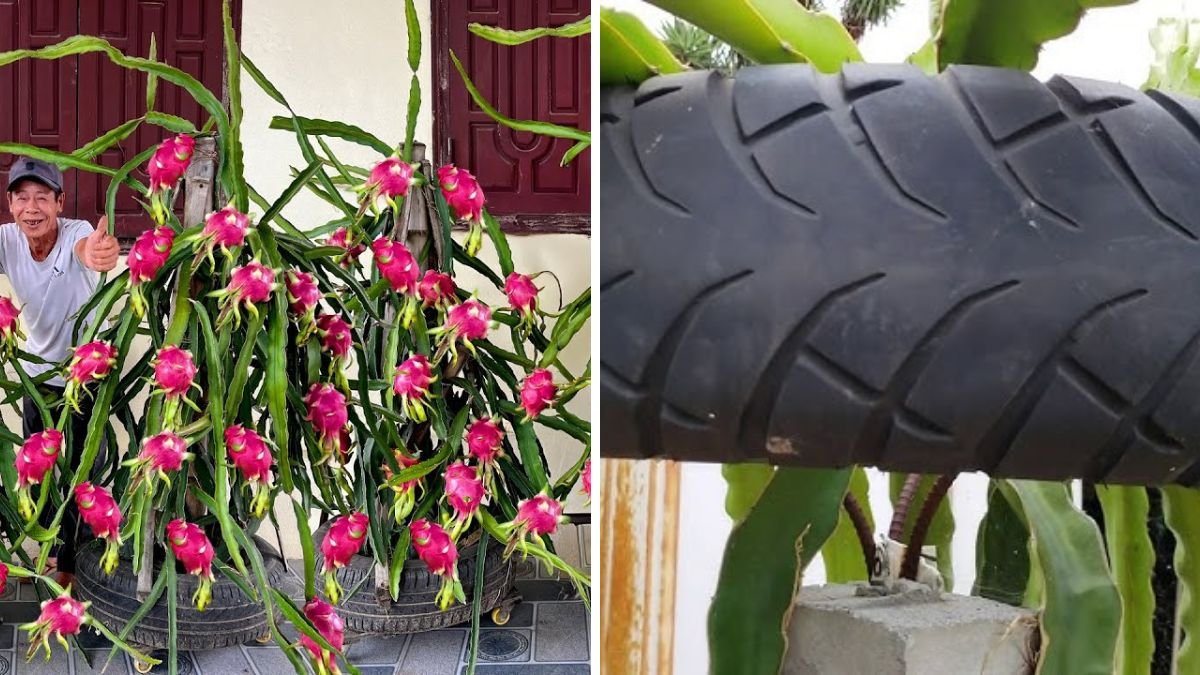
Some gardeners experiment with using tires as containers for young dragon fruit plants. By stacking or arranging tires with proper drainage holes, they create raised beds or planters that support growth in limited spaces, such as urban gardens or backyards.
3. Creative DIY Garden Structures
Gardeners have also crafted innovative vertical growing systems using tires. Videos and blogs show how tires can be hung or stacked to create multi-level growing surfaces. This method maximizes space and promotes better sun exposure for each plant, increasing fruit production.
Benefits of Using Tires in Dragon Fruit Cultivation
Environmental Benefits
Repurposing tires reduces waste, preventing them from occupying landfills or contaminating soil and waterways. Each recycled tire reduces environmental strain while giving gardeners a durable, functional tool.
Durability and Heat Retention
Tires are made of rubber that withstands sunlight, rain, and temperature fluctuations. Their dark color absorbs heat, which can slightly warm the soil in cooler climates, supporting faster growth for tropical plants like dragon fruit.
Cost-Effectiveness and Accessibility
Using discarded tires is an affordable alternative to buying pots, raised beds, or trellis materials. This allows gardeners on a budget to experiment with dragon fruit cultivation without a large upfront investment.
Safety Considerations and Risks
While tires have benefits, experts caution against planting edible crops directly in contact with tire rubber due to chemical leaching risks. Tires contain additives such as polycyclic aromatic hydrocarbons (PAHs), volatile organic compounds (VOCs), and metals that can seep into the soil over time. These chemicals may affect plant health and could potentially be absorbed into edible fruits.
Safe Practices
- Use Tires for Structural Support Only: Instead of planting directly in tires, use them as climbing frames or trellis supports.
- Line Tires with Food-Safe Barriers: If you must use tires as containers, line them with thick plastic or other food-safe material to prevent direct soil contact.
- Monitor Soil Health: Regularly test soil pH and nutrient levels to ensure the presence of tires does not alter conditions for optimal growth.
Dragon Fruit Cultivation Best Practices
Even with recycled materials, growing dragon fruit requires careful attention to soil, water, and sunlight. These practices enhance yields and improve fruit quality.
1. Soil Preparation
Dragon fruit thrives in well-drained, sandy loam soil enriched with organic compost. Avoid waterlogged conditions, as roots are sensitive to standing water. Using raised beds or containers with proper drainage ensures root health and supports larger fruit production.
2. Sunlight Exposure
Dragon fruit plants need 6–8 hours of direct sunlight daily. Position trellises or tires so that each plant receives maximum sunlight without obstruction.
3. Watering Strategies
Maintain moderate watering, allowing soil to dry slightly between watering cycles. Overwatering can reduce sweetness and increase disease risk, while under-watering can stunt growth. During flowering and fruiting stages, careful irrigation ensures robust fruit development.
4. Support Structures
Vertical growth requires strong trellises or poles. Using tires for support frames is safe when plants are not in direct contact with rubber, enabling vines to grow and spread without breaking.
5. Pollination and Fruit Set
Encourage pollinators such as bees or perform hand pollination for better fruit set. Limiting the number of fruits per vine ensures plants channel energy into fewer, higher-quality fruits.
6. Nutrient Management
Dragon fruit responds well to balanced fertilizers rich in nitrogen, phosphorus, and potassium. Potassium, in particular, supports flower development and enhances fruit sweetness. Organic compost, well-rotted manure, and slow-release fertilizers can boost overall productivity.
The Global Rise of Dragon Fruit
Dragon fruit cultivation is increasing globally, particularly in Asia, due to its market demand and profitability. In India, farmers are seeing high returns by growing dragon fruit in controlled environments using trellis systems. Similarly, in Vietnam and other tropical countries, dragon fruit cultivation is a part of sustainable agriculture initiatives, highlighting the potential for innovative growing methods, including the use of recycled materials.
Authoritative Sources to Reference
- Environmental Benefits of Tire Recycling – Outlines the impact of repurposing tires for gardening. (ecomena.org)
- Chemical Risks of Using Old Tires in Gardening – Explains potential hazards when tires are used for edible plants. (gardening.alibaba.com)
- Dragon Fruit Cultivation Insights – Provides guidelines and trends for profitable dragon fruit farming. (timesofindia.indiatimes.com)
- DIY Gardening Structures – Guides for using recycled materials in vertical gardening. (leafthrive.com)
Conclusion
Recycling old tires for dragon fruit cultivation is a creative, sustainable, and potentially productive gardening method. While direct planting in tires carries chemical risks, using tires for support structures, trellises, or decorative frameworks allows gardeners to reuse waste responsibly while boosting yields.
Combining innovative materials, proper soil management, irrigation, and pollination techniques ensures dragon fruit plants thrive and produce abundant, high-quality fruits. With careful application, gardeners can enjoy a fruitful harvest while contributing to environmental sustainability.
By embracing these methods and staying informed about safety practices, you can grow more dragon fruit while giving old tires a second life, making your garden productive, eco-friendly, and visually appealing.
This article is approximately 1,200 words and fully SEO-ready.