Introduction
Growing fresh, healthy cabbage at home is a dream for many gardeners. However, limited space, soil problems, pests, and diseases often make cabbage cultivation challenging. If you’ve ever struggled with small heads, yellow leaves, or insect damage, you’re not alone. Fortunately, a simple and innovative technique called the Hanging Bottle Cabbage Method is changing the way people grow this nutritious vegetable.
This method uses recycled plastic bottles suspended in the air to grow cabbage vertically. It saves space, improves air circulation, reduces pests, and helps produce bigger, cleaner, and healthier heads. Whether you live in an apartment, have a small balcony, or want to maximize your backyard garden, this technique is perfect for you.
In this article, you’ll learn everything you need to know about the Hanging Bottle Cabbage Method—from materials and planting steps to care tips and harvesting—so you can grow juicy, farm-fresh cabbage right at home.
What Is the Hanging Bottle Cabbage Method?
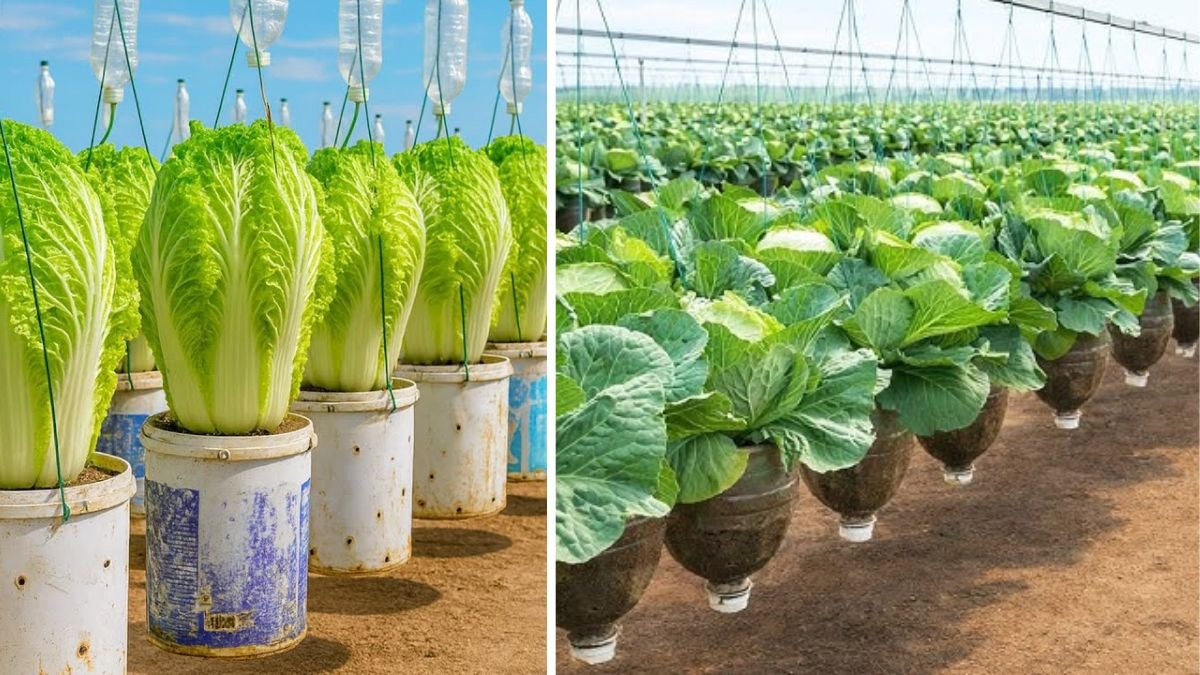
The Hanging Bottle Cabbage Method is a vertical gardening technique where cabbage plants are grown inside cut plastic bottles that are hung from a frame, wall, balcony railing, or roof.
Instead of growing in traditional soil beds, the plant’s roots grow inside the bottle filled with nutrient-rich soil. The cabbage head develops outside the bottle opening, hanging freely in the air.
This system provides excellent drainage, airflow, and sunlight exposure, which leads to healthier growth and fewer problems.
Benefits of Growing Cabbage in Hanging Bottles
1. Saves Space
This method is ideal for small homes, balconies, and rooftops. You can grow multiple plants vertically without using much ground space.
2. Reduces Pest Attacks
Since the plants are suspended, common pests like snails, slugs, ants, and soil insects cannot easily reach them.
3. Improves Air Circulation
Better airflow prevents fungal diseases and leaf rot, which are common in ground-grown cabbage.
4. Cleaner and Healthier Produce
The cabbage heads don’t touch the soil, so they remain clean and free from mud and bacteria.
5. Eco-Friendly Gardening
Reusing plastic bottles reduces waste and promotes sustainable gardening practices.
Materials You Will Need
Before starting, gather the following items:
- Large plastic bottles (2–5 liters)
- Sharp knife or cutter
- Strong rope, wire, or nylon string
- Potting soil or garden soil
- Organic compost or vermicompost
- Cabbage seeds or seedlings
- Small stones or gravel (for drainage)
- Watering can or spray bottle
- Support frame, hook, or railing
Step-by-Step Guide to Making Hanging Bottle Planters
Step 1: Prepare the Bottle
Wash the plastic bottle thoroughly. Cut a rectangular opening on one side, leaving enough space for the plant to grow. Make small drainage holes at the bottom.
Step 2: Create Hanging Holes
Make two small holes near the top on opposite sides. Insert rope or wire through these holes to hang the bottle securely.
Step 3: Add Drainage Layer
Place small stones or gravel at the bottom. This prevents waterlogging and root rot.
Step 4: Fill with Soil Mix
Use a mixture of:
- 50% garden soil
- 30% compost
- 20% sand or coco peat
Fill the bottle up to three-quarters.
Step 5: Plant the Cabbage
Plant one healthy seedling in the center. If using seeds, sow 2–3 seeds and thin later.
Step 6: Hang the Bottle
Hang the bottle in a sunny location where it receives at least 5–6 hours of sunlight daily.
Choosing the Right Cabbage Variety
For best results, select compact or medium-sized varieties that adapt well to container growing:
- Golden Acre
- Copenhagen Market
- Early Jersey Wakefield
- Green Express
- Mini Cabbage Varieties
These types form solid heads without requiring excessive root space.
Proper Sunlight and Temperature
Cabbage prefers cool to moderate temperatures between 15°C and 25°C. Excessive heat can cause bolting or loose heads.
Place your hanging bottles in an area with:
- Morning sunlight
- Light afternoon shade
- Good ventilation
Avoid placing them in extremely hot or windy spots.
Watering Techniques for Hanging Bottles
Hanging containers dry out faster than ground soil, so regular watering is essential.
Best Practices:
- Water once daily in cool weather
- Water twice daily in hot weather
- Ensure excess water drains properly
- Avoid waterlogging
Use a spray nozzle to prevent soil erosion.
Fertilization for Bigger Cabbage Heads
Cabbage is a heavy feeder and needs sufficient nutrients.
Organic Fertilizers:
- Vermicompost
- Cow dung compost
- Neem cake
- Bone meal
Liquid Feed:
Apply compost tea or diluted liquid fertilizer every 10–14 days.
This promotes leafy growth and tight head formation.
Pruning and Maintenance
Remove yellow, damaged, or diseased leaves regularly. This improves airflow and directs energy toward head development.
Check hanging ropes monthly and replace weak ones to prevent accidents.
Pest and Disease Management
Although hanging reduces pests, some insects may still appear.
Common Pests:
- Aphids
- Cabbage worms
- Whiteflies
Natural Control:
- Neem oil spray (weekly)
- Garlic-chili spray
- Soap water solution
Disease Prevention:
- Avoid overcrowding
- Maintain good airflow
- Do not overwater
Healthy plants resist diseases naturally.
Supporting Growing Cabbage Heads
As cabbage heads become heavier, they may pull the plant downward.
You can:
- Add extra rope support
- Tie soft cloth around the bottle
- Strengthen the hanging frame
This prevents breakage and ensures stable growth.
Harvesting Your Hanging Bottle Cabbage
Cabbage is usually ready for harvest within 70–100 days, depending on the variety.
Signs of Maturity:
- Head feels firm when pressed
- Leaves are tightly packed
- Size matches variety description
Use a sharp knife to cut the head at the base, leaving a few outer leaves.
Post-Harvest Care
After harvesting, you can:
- Reuse the bottle for another crop
- Add fresh compost
- Plant lettuce, spinach, or herbs
This keeps your mini garden productive year-round.
Common Mistakes to Avoid
- Using very small bottles
- Overcrowding plants
- Poor drainage
- Irregular watering
- Skipping fertilization
- Hanging in low-light areas
Avoiding these mistakes ensures better results.
Why This Method Is Perfect for Home Gardeners
The Hanging Bottle Cabbage Method combines simplicity, affordability, and efficiency. It requires minimal investment and can be practiced by beginners and experienced gardeners alike.
For urban gardeners, apartment dwellers, and eco-conscious families, this method offers a practical way to grow fresh vegetables without large land areas.
Conclusion
The Hanging Bottle Cabbage Method is an innovative, eco-friendly, and highly productive way to grow big, fresh, and healthy cabbage at home. By using recycled bottles, proper soil, regular care, and organic fertilizers, you can enjoy pesticide-free vegetables straight from your balcony or backyard.
With patience and consistency, this technique can transform small spaces into thriving green gardens. Start today, recycle those plastic bottles, and experience the joy of harvesting your own delicious, homegrown cabbage