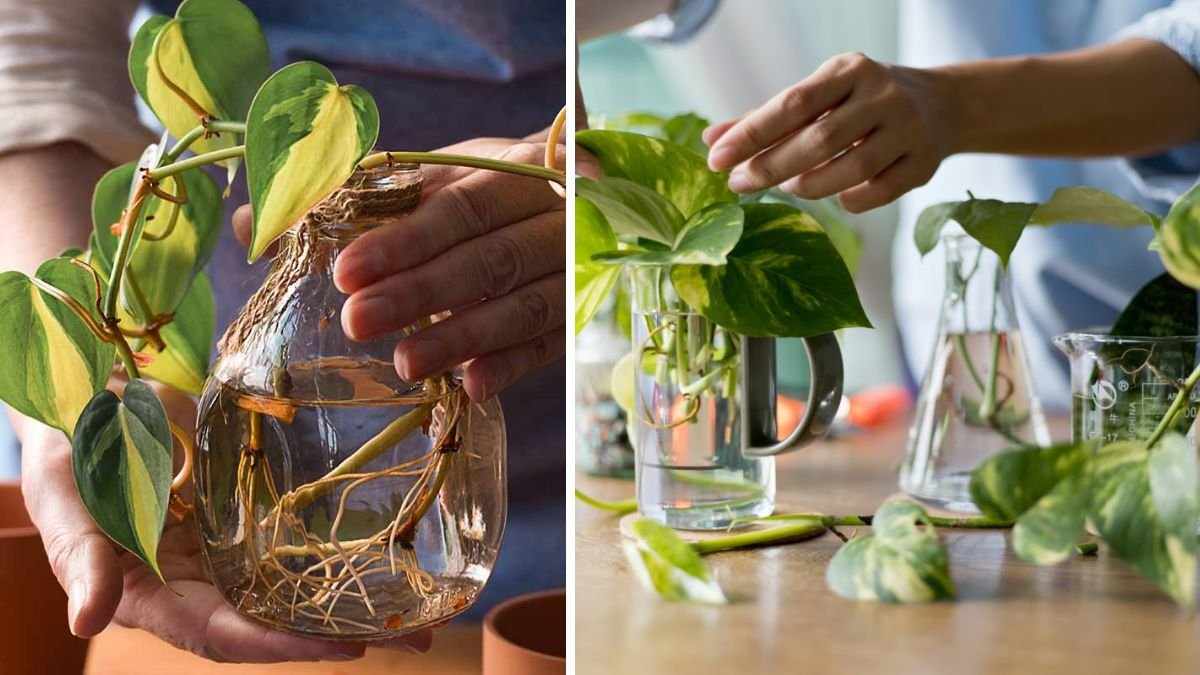
Introduction: Multiply Your Indoor Garden for Free
Expanding your indoor garden doesn’t have to mean buying new plants. One of the most rewarding and cost-effective ways to grow your collection is by propagating houseplants from cuttings. This method allows you to create new plants from existing ones, turning a single parent plant into multiple thriving indoor companions.
Propagation isn’t just about saving money — it’s also a chance to connect with your plants on a deeper level. You’ll observe growth patterns, learn about plant biology, and gain confidence in your gardening skills. With just clean scissors, a bit of water or potting mix, and some patience, you can multiply your favorite plants and fill your home with greenery. (Garden Botany)
What Is Plant Propagation?
Plant propagation is the process of creating new plants from parent plant material. There are several techniques, but for houseplants, the most common methods include stem cuttings, leaf cuttings, and offsets (pups).
A critical concept is the node, which is the point on a stem where leaves grow. Nodes contain cells that can develop roots when placed in suitable conditions, making them the ideal site for taking cuttings. Cuttings can be rooted in water, moist soil, or even sphagnum moss, depending on the species. (RHS)
Why Propagate Houseplants From Cuttings?
There are many benefits to propagating houseplants:
- Expand your collection without purchasing new plants.
- Share plant babies with friends and family.
- Boost your gardening skills by learning new techniques.
- Save money and reduce waste by using what you already have.
Many houseplants root easily and quickly, making them perfect for beginners who want fast, satisfying results. This approach encourages creativity and helps you maximize your existing plant collection. (Garden Botany)
7 Houseplants You Can Grow From Cuttings
Here are seven houseplants that are particularly easy to propagate from cuttings:
1. Pothos (Epipremnum spp.)
Pothos is one of the easiest houseplants to propagate. Simply take a stem with a few leaves and at least one node, then place it in water or soil. Roots typically appear within a few weeks, and once they’re a few inches long, you can transfer the cutting to potting mix for continued growth. Pothos thrives in low to bright indirect light, making it a versatile indoor plant. (Martha Stewart)
2. Spider Plant (Chlorophytum comosum)
Spider plants produce baby offshoots, known as “spiderettes,” which are miniature versions of the parent plant. Snip these off and root them directly in water or soil. Spider plants are incredibly forgiving, making this method almost foolproof. With proper care, spiderettes quickly grow into fully mature plants, perfect for hanging baskets or tabletop displays. (Garden Botany)
3. Philodendron (Various Species)
Heartleaf philodendrons and other varieties are ideal for propagation. Cut just below a node and place the stem in water or a moist potting mix. With bright, indirect light, these cuttings develop roots and new growth rapidly. Philodendrons are low-maintenance and adapt well to indoor conditions, making them perfect candidates for beginners. (Homes & Gardens)
4. Snake Plant (Sansevieria trifasciata)
Snake plants are hardy and versatile. Leaf cuttings can be rooted in water and later transferred to soil. You can also root leaf sections directly in well-draining compost. While roots take a bit longer to develop compared to other species, the payoff is worthwhile, as snake plants are highly resilient and excellent for indoor air purification. (Homes & Gardens)
5. Tradescantia (Inch Plant)
Tradescantia thrives when propagated from stem cuttings. Snip a few nodes with attached leaves and place them in water or damp soil. These cuttings root quickly, producing trailing vines ideal for hanging baskets or decorative shelves. Tradescantia is fast-growing and forgiving, making it an excellent choice for beginners. (Living Etc)
6. Monstera Deliciosa
Monstera cuttings can be rooted in water or moss. Select a stem with an aerial root or node, cut below it, and place it in the medium of your choice. With proper moisture and indirect light, these cuttings develop roots and eventually grow into full, sprawling vines. Monsteras are iconic for their dramatic leaves and can become statement plants in your home. (Martha Stewart)
7. ZZ Plant (Zamioculcas zamiifolia)
ZZ plants can be propagated from leaf or stem cuttings. While they take longer to root compared to other houseplants, the process is straightforward. Insert a leaf or stem into moist soil and be patient. Over time, roots and new shoots will emerge. ZZ plants are nearly indestructible, making them an ideal choice for slow but reliable propagation. (Bloomy Heaven)
Step-by-Step Propagation Techniques
Method 1: Water Propagation
- Take a cutting: Use clean shears to cut just below a node.
- Remove lower leaves: Ensure only the top leaves remain above water.
- Place in water: Submerge the node in a jar of clean water.
- Change water regularly: Keep water fresh to prevent rot.
- Wait for roots: Roots generally appear in 2–4 weeks.
- Pot up: Transfer rooted cuttings to soil once roots are a few inches long. (RHS)
Method 2: Soil Propagation
- Prepare potting mix: Use moist, well-draining soil.
- Plant cuttings: Insert cuttings so that nodes are just under the soil surface.
- Maintain moisture: Keep soil lightly moist, not waterlogged.
- Provide light: Bright, indirect light encourages root development.
- Monitor growth: New roots and shoots typically appear within a few weeks. (RHS)
Tips for Successful Cuttings
- Use clean, sharp shears to prevent infection.
- Take cuttings from healthy, mature plants.
- Keep cuttings in bright, indirect light.
- Avoid direct sun, which can stress young cuttings.
- Optional: Use rooting hormone or cinnamon powder to encourage root development and reduce rot. (Ideal Home)
Best Time to Take Cuttings
While many houseplants can be propagated year-round, spring and early summer are ideal because plants are actively growing. During winter, some species such as pothos and tradescantia can still root successfully if they receive adequate light and warmth. (Homes & Gardens)
Common Mistakes to Avoid
- Overwatering, which can cause rot.
- Using dull or dirty shears, leading to infections.
- Insufficient light, slowing root formation.
- Planting cuttings too deep or shallow, affecting root success.
Being patient and maintaining optimal light, moisture, and temperature conditions is key to successful propagation. (RHS)
Authoritative Sources
- RHS – How to Take Cuttings from Houseplants: Comprehensive step-by-step guide. (RHS)
- GardenBotany – Propagating Houseplants: Easy-to-follow propagation methods. (Garden Botany)
- Homes & Gardens – Easy Houseplants to Propagate: Beginner-friendly houseplants and techniques. (Homes & Gardens)
- Martha Stewart – Houseplants to Grow From Cuttings: Expert recommendations and tips. (Martha Stewart)
Final Thoughts
Propagating houseplants from cuttings is an easy, rewarding, and cost-effective way to expand your indoor jungle. From pothos to ZZ plants, these seven species are perfect for beginners and experienced gardeners alike. By mastering simple propagation techniques, you can create new plants, share greenery with friends, and enjoy the satisfaction of watching your plants thrive.
With patience, attention to light and moisture, and proper cutting techniques, your indoor garden can flourish and multiply — all from plants you already own. Happy propagating!