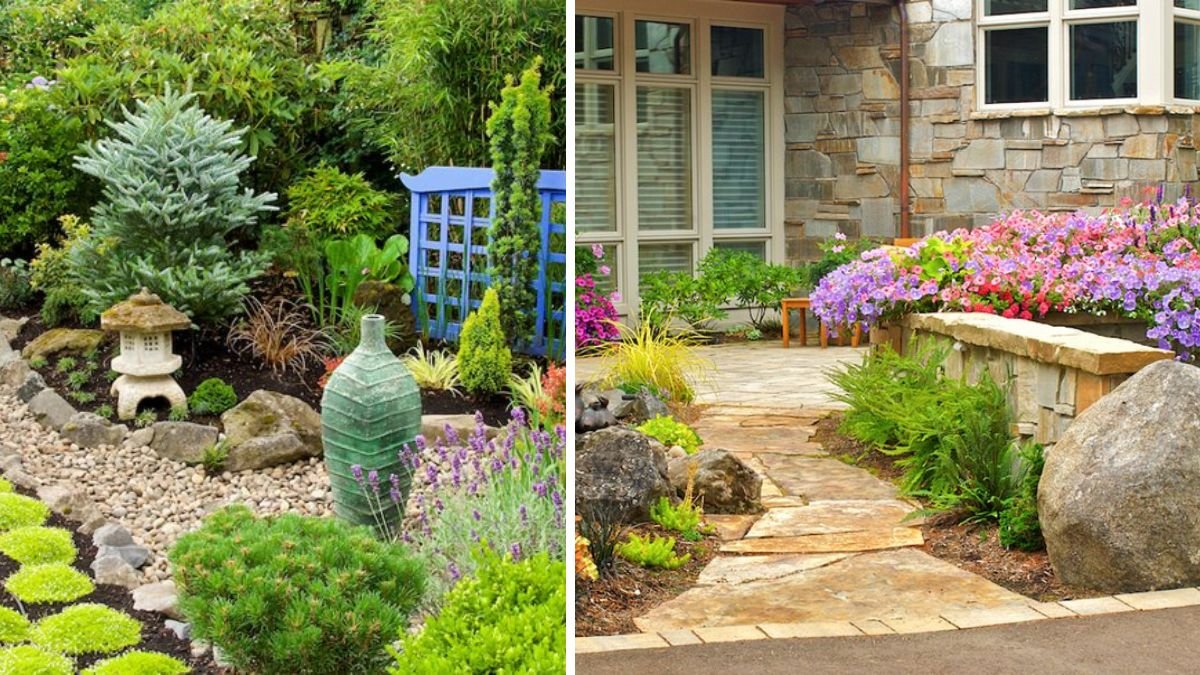
Introduction — Why Rocks Are a Must-Have in Yard Design
Rocks are no longer just functional for pathways or garden edging; they have become essential elements in modern landscaping. Whether you have a sprawling backyard or a compact front yard, creatively incorporating rocks can enhance texture, structure, and visual interest while also serving practical purposes such as drainage and erosion control. From rugged boulders to smooth river stones, rocks can transform your outdoor space into a balanced and beautiful landscape. (housely.com)
In this article, we explore five creative ways to use rocks in your yard, each blending aesthetic appeal with functional benefits.
1. Build a Rock Garden
A rock garden is one of the most classic and dynamic ways to integrate rocks into your yard. By mixing different sizes and textures — from smooth pebbles to rugged boulders — you can create a naturalistic landscape that complements plants like succulents, perennials, or ornamental grasses. (remodr.com)
Tips for a Successful Rock Garden:
- Use a variety of rock sizes to create visual layers.
- Place larger boulders as focal points and smaller stones around plantings for cohesion.
- Combine rocks with drought-tolerant plants to soften edges and maintain low maintenance. (gardeneros.com)
A well-planned rock garden not only adds visual interest but also brings a sense of balance and structure to your yard.
2. Create a Dry Riverbed
Dry riverbeds are functional, visually appealing features that channel rainwater and prevent erosion. Designed with river rocks and pebbles, they mimic the natural flow of water and can be integrated seamlessly into your yard’s landscape. (housely.com)
How to Build a Dry Riverbed:
- Outline the path with larger rocks to define the edges.
- Fill the center with a mix of medium and small river stones.
- Plant groundcovers or native grasses along the edges for a natural finish. (wisercosts.com)
A dry riverbed not only helps with drainage but also creates a dynamic feature that draws attention and adds movement to your landscape.
3. Design a Rock Water Feature
Adding water to your rock landscape can enhance both its beauty and tranquility. Even small features like cascades, ponds, or fountains can make a significant impact. (wisercosts.com)
Steps to Add a Rock Water Feature:
- Use large rocks to guide water flow for a small cascade or pond.
- Surround the edges with smooth stones and moisture-loving plants.
- Incorporate aquatic plants like lilies or reeds to add natural beauty. (gardeneros.com)
This feature adds soothing sounds, attracts wildlife, and creates a peaceful focal point in your yard.
4. Use Rock Borders and Edging
Rock borders and edging are simple yet effective for defining spaces and adding structure. Whether outlining garden beds, pathways, or lawn edges, rocks create a durable and natural boundary. (housely.com)
Rock Border Tips:
- Use uniform rock sizes for a neat, contemporary look.
- Mix sizes for a rustic, organic style.
- Combine rocks with mulch or soil for a smooth transition between lawn and beds. (wisercosts.com)
Borders and edging not only contain plantings and prevent soil erosion but also create clear visual zones in your landscape.
5. Make Rock Seating and Focal Points
Rocks can also serve as functional elements, such as seating or architectural focal points. Large flat stones or boulders can double as natural benches or low walls around fire pits and garden gathering areas. (housely.com)
Ideas for Functional Rock Features:
- Arrange boulders around a fire pit for casual seating.
- Use unique rocks as focal points or sculptures.
- Add outdoor cushions or pads to make rock seating more comfortable.
Integrating functional rock elements adds both beauty and usability to your yard, creating social spaces that blend seamlessly with natural landscaping.
Background Context — Why Rock Landscaping Is Popular
Rocks have surged in popularity for several reasons:
Architectural Interest
Rocks provide structure and scale in your yard. Unlike plants that change with seasons, rocks offer year-round form and presence. (remodr.com)
Low Maintenance and Longevity
Rocks require minimal upkeep, making them ideal for busy homeowners or areas with harsh climates. (wisercosts.com)
Eco-Friendly Landscaping
Features like dry riverbeds help manage stormwater, reduce erosion, and support drought-resistant landscapes. Rocks also reduce the need for watering and fertilizers, aligning with sustainable garden practices. (lawnlove.com)
From minimalist modern gardens to Japanese-inspired dry landscapes, rocks provide versatility, durability, and timeless appeal. (gardeneros.com)
Tips for Successful Rock Landscaping
Plan Your Layout: Sketch your yard to determine where rocks will make the biggest impact. Consider pathways, focal points, and plant arrangements.
Mix Textures and Sizes: Avoid uniformity; combining smooth pebbles, medium stones, and large boulders creates a natural, layered look. (remodr.com)
Complement with Plants: Pair rocks with ornamental grasses, succulents, or flowering plants to soften edges and enhance visual appeal. (gardeneros.com)
Use Landscape Fabric: For groundcover or mulch, installing landscape fabric beneath rocks helps reduce weeds and long-term maintenance.
Authoritative Sources
For inspiration and expert guidance on rock landscaping:
- Housely – 15 Creative Ways to Incorporate Rocks in Your Yard (housely.com)
- Remodr – Rock Your Yard: 18 Landscaping Ideas Using Rocks (remodr.com)
- WiserCosts – Front Yard Landscaping Ideas With Rocks (wisercosts.com)
- Homes & Gardens – Landscaping Ideas With Rocks (homesandgardens.com)
Conclusion
Rocks are much more than decorative accents — they provide structure, texture, and enduring beauty in your yard. By building rock gardens, designing dry riverbeds, adding water features, creating borders, or incorporating functional rock seating, you can elevate your outdoor space aesthetically and functionally.
With careful planning, mixed textures, and complementary plants, rocks help create a serene, intentional landscape that is visually appealing and sustainable. Transform your yard into a timeless and inviting outdoor retreat by embracing the creative potential of rocks. (housely.com)