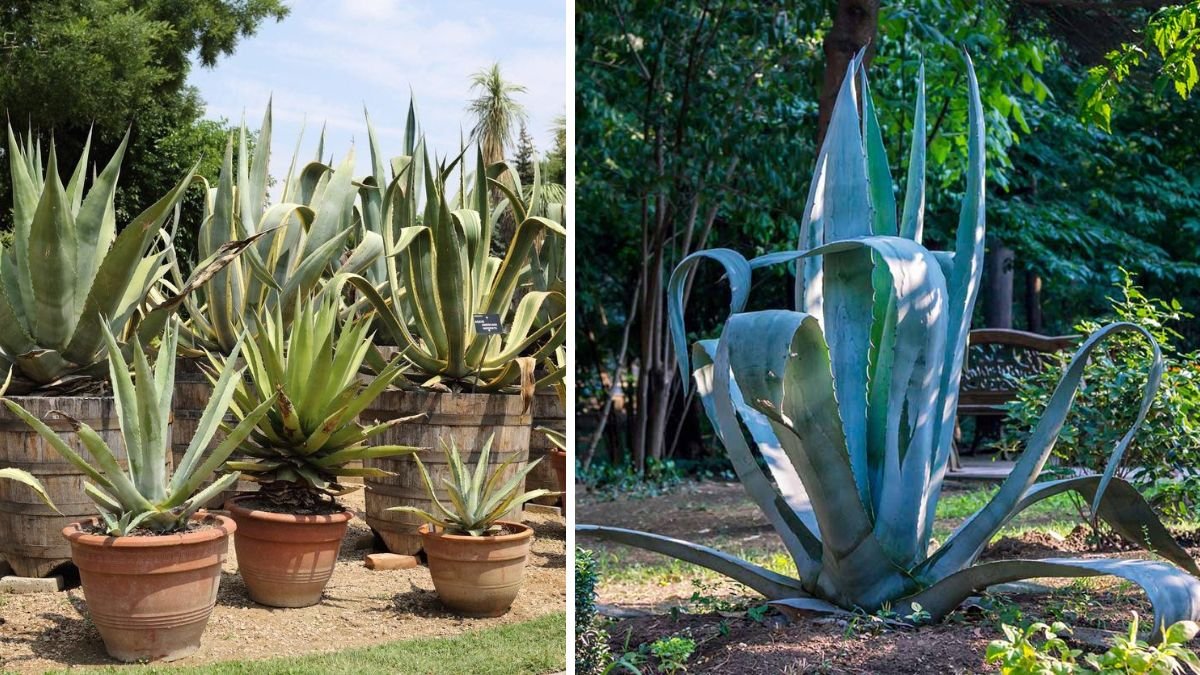
Agave plants are striking succulents that bring dramatic texture and architectural beauty to gardens, patios, and indoor spaces. Known for their rosette-shaped leaves and low-maintenance nature, agaves are perfect for both beginner and experienced gardeners. According to horticulture experts, proper care ensures these slow-growing succulents thrive for years, whether they’re planted outdoors in warm climates or grown in containers indoors.
This guide covers essential agave plant care, growing tips, and design ideas, so your agave can flourish while adding bold, sculptural beauty to your space.
Why Agave Plants Are Popular
Agave plants are more than just visually striking. They offer several benefits for gardeners:
- Low maintenance: Agaves require minimal watering and pruning, making them ideal for busy gardeners.
- Drought tolerance: Their succulent leaves store water, allowing them to survive long dry periods.
- Architectural appeal: Bold rosettes and spiky leaves create focal points in landscapes or indoor spaces.
- Versatility: Many varieties thrive in containers, rock gardens, xeriscapes, or indoor planters.
- Longevity: Agaves are slow-growing and can live for decades with proper care.
Experts emphasize that understanding the plant’s native habitat and mimicking those conditions leads to healthy growth and vibrant foliage.
Step 1: Selecting the Right Agave
With over 200 species, choosing the right agave depends on your climate, space, and desired aesthetic:
- Agave americana: Large, dramatic rosettes; best for spacious outdoor gardens.
- Agave parryi: Compact, silver-gray leaves; ideal for smaller spaces and containers.
- Agave attenuata: Soft, spineless leaves; suitable for indoor and pet-friendly spaces.
- Agave victoriae-reginae: Small, ornamental variety with striking white markings; perfect for focal points or indoor display.
- Agave tequilana: Known for tequila production; large and slow-growing, suitable for sunny gardens.
Experts recommend considering mature size, growth rate, and hardiness before planting, as some agave species can reach several feet in height and width.
Step 2: Ideal Growing Conditions
To thrive, agave plants require conditions that mimic their natural desert habitats:
- Light: Most agaves need full sun to partial shade. Indoor agaves require bright, indirect sunlight or a south-facing window.
- Soil: Well-draining soil is critical. Sandy or gritty soil prevents root rot. A cactus or succulent mix works well in containers.
- Temperature: Agaves prefer warm temperatures (70–90°F) but can tolerate cooler climates with protection from frost. Some hardy varieties withstand brief freezes.
- Airflow: Good ventilation prevents fungal infections, especially in humid climates.
Experts stress that providing optimal light and soil conditions is the foundation for healthy, long-lived agave plants.
Step 3: Planting Agave
Whether planting in the garden or a container, proper planting techniques are essential:
- Outdoor planting:
- Dig a hole slightly larger than the root ball.
- Mix soil with sand or gravel for drainage.
- Place the agave and backfill carefully, keeping the crown slightly above soil level.
- Water lightly to settle the soil.
- Container planting:
- Choose a pot with drainage holes.
- Use a cactus or succulent soil mix.
- Place the plant at the center, leaving the crown above soil.
- Avoid overwatering in the pot.
Experts recommend spacing outdoor plants according to their mature size to prevent overcrowding and maintain airflow.
Step 4: Watering Tips
Agaves are drought-tolerant but still require occasional water for healthy growth:
- Newly planted agaves: Water once a week for the first month to encourage root establishment.
- Established plants: Water deeply but infrequently, allowing the soil to dry completely between waterings.
- Indoor agaves: Water sparingly; overwatering is the most common cause of indoor agave failure.
Horticulturists emphasize that agaves store water in their leaves, so less is often more when it comes to irrigation.
Step 5: Fertilizing
Agaves are low-nutrient feeders, but occasional fertilization can encourage growth:
- Use a balanced, slow-release succulent fertilizer in spring and summer.
- Avoid high-nitrogen fertilizers, which can cause soft, weak leaves.
- Liquid fertilizers can be applied every 4–6 weeks during the active growing season.
Experts note that over-fertilization may harm agave plants, making moderation key.
Step 6: Pruning and Maintenance
Agaves are relatively low-maintenance, but some care is required:
- Remove dead leaves: Cut off dry or damaged leaves at the base using gloves and sharp pruning shears.
- Protect from pests: Watch for scale, mealybugs, and snout weevils. Treat infestations early with insecticidal soap or horticultural oil.
- Support large agaves: For species with long, heavy leaves, consider staking or providing a windbreak in outdoor locations.
Experts stress safety when pruning, as many agaves have sharp spines. Protective gloves and long sleeves are essential.
Step 7: Repotting
For container-grown agaves:
- Repot every 3–5 years or when roots outgrow the pot.
- Choose a slightly larger container with excellent drainage.
- Avoid disturbing the crown; only loosen roots gently.
Repotting allows for fresh soil and keeps container plants healthy and vigorous.
Step 8: Flowering
Agaves are monocarpic, meaning they flower once in their lifetime:
- Flowering occurs after 10–30 years, depending on species.
- After flowering, the main rosette usually dies, but offsets (pups) often grow at the base to continue the plant line.
- Flower spikes can reach impressive heights, some up to 20–30 feet outdoors.
Experts recommend allowing the plant to bloom naturally and harvesting pups to propagate new plants.
Step 9: Propagation
Agaves propagate easily through offsets:
- Remove pups from the base of the mature plant using a sharp, clean knife.
- Allow offsets to dry for several days to form calluses over cut areas.
- Plant in well-draining soil and water sparingly until roots establish.
Propagation is the easiest way to multiply agave plants and maintain a continuous presence in the garden.
Step 10: Design Ideas
Agaves are versatile in garden design:
- Xeriscapes: Pair with other drought-tolerant plants like yucca, aloe, and ornamental grasses.
- Rock gardens: Agaves add texture and height among stones and pebbles.
- Container arrangements: Combine smaller agaves with succulents and cacti for a dramatic display.
- Indoor focal points: Large agaves work as statement plants in bright living spaces.
Experts highlight agave’s architectural appeal, noting it can be a central focal point or complementary plant depending on its placement.
Benefits of Growing Agave
- Drought-tolerant and low-maintenance: Ideal for busy gardeners or dry climates.
- Longevity: Agaves grow slowly but can live for decades.
- Architectural beauty: Bold leaves and symmetrical rosettes enhance any landscape or interior space.
- Propagation: Produces pups, allowing easy multiplication.
- Environmental resilience: Tolerates heat, poor soil, and high sunlight.
With minimal care, agaves combine beauty, utility, and resilience, making them one of the most versatile plants for gardens and interiors alike.
Final Thoughts
Agave plants are a striking addition to any garden, patio, or indoor space. According to horticulture experts, their drought tolerance, low maintenance, and architectural appeal make them ideal for a wide range of settings. By selecting the right species, providing optimal light, soil, and water, and practicing proper care and propagation techniques, gardeners can enjoy healthy agaves for decades.
Whether you’re looking for a dramatic focal point outdoors, a desert-inspired garden, or a sculptural indoor plant, agaves offer unmatched beauty, resilience, and versatility. With these expert tips, your agave plants can thrive and continue to impress for years to come.