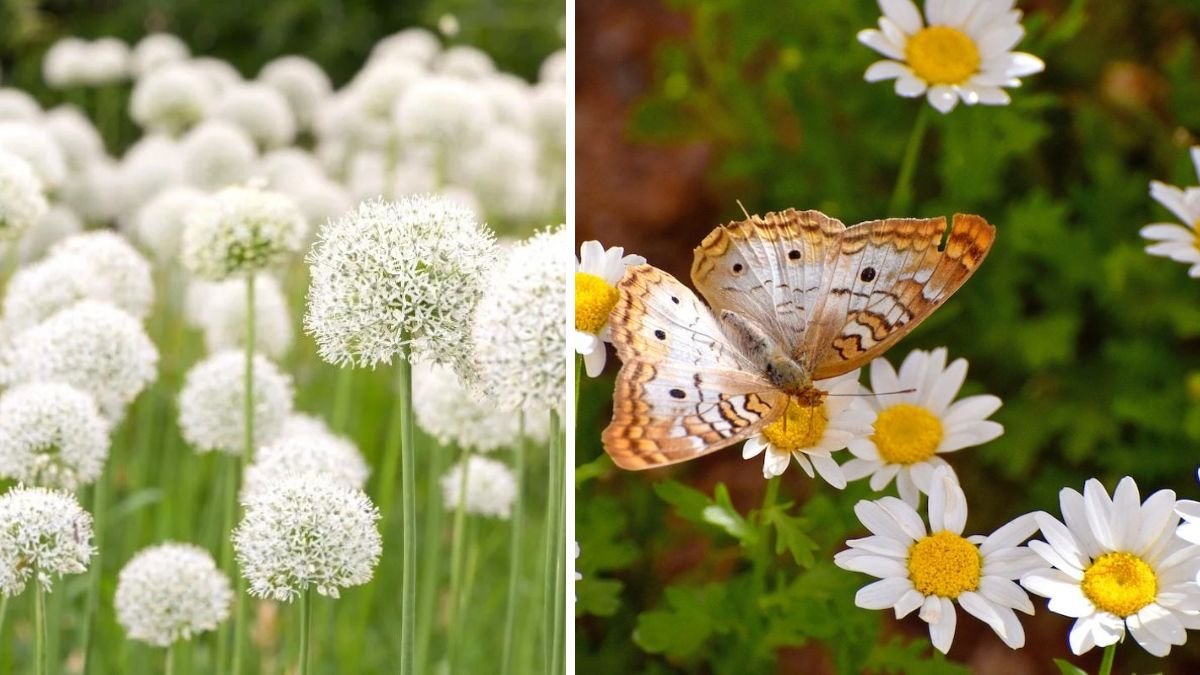
White flowers bring timeless elegance, brightness, and balance to gardens. Whether you want to soften a bold color palette, create a peaceful retreat, or highlight architectural features, white blooms provide versatility unmatched by other colors. According to gardening experts, incorporating white flowers strategically can unify the garden’s design and make other colors pop.
This guide explores 20 stunning white flowers, their growing requirements, and tips to seamlessly integrate them into your garden for a classic, harmonious look.
Why White Flowers Are Garden Essentials
White flowers are more than just neutral—they serve several important functions in garden design:
- Visual balance: White blooms contrast with vibrant colors without competing.
- Nighttime interest: Many white flowers reflect moonlight, making the garden glow at night.
- Versatility: White complements any color scheme, from pastels to bold reds.
- Pollinator attraction: White flowers often attract beneficial insects like bees and butterflies.
- Seasonal flexibility: Many varieties bloom across spring, summer, and fall, providing year-round brightness.
Experts emphasize that white flowers are key to creating cohesion in mixed borders, container plantings, or formal garden designs.
1. Gardenia (Gardenia jasminoides)
Why it’s great: Fragrant, creamy-white blooms that brighten both the garden and home.
Care tips:
- Full sun to partial shade.
- Acidic, well-drained soil.
- Keep soil moist but not soggy.
Gardenias are excellent for hedges, borders, or container planting.
2. Hydrangea ‘Annabelle’ (Hydrangea arborescens)
Why it’s great: Large, globe-shaped white blooms that last through summer.
Care tips:
- Partial shade.
- Moist, rich soil.
- Deadhead for prolonged blooming.
‘Annabelle’ hydrangeas provide bold visual interest in cottage-style or informal gardens.
3. Shasta Daisy (Leucanthemum × superbum)
Why it’s great: Classic white petals with yellow centers, perfect for perennial borders.
Care tips:
- Full sun.
- Well-draining soil.
- Deadhead to encourage repeated blooming.
Shasta daisies offer cheerful simplicity and long-lasting blooms.
4. White Lily (Lilium spp.)
Why it’s great: Elegant trumpet-shaped flowers with dramatic vertical presence.
Care tips:
- Full sun to partial shade.
- Fertile, well-draining soil.
- Stake taller varieties to prevent flopping.
Lilies work beautifully in formal gardens or mixed borders.
5. Clematis ‘Henryi’ (Clematis spp.)
Why it’s great: White, star-shaped climbing blooms for trellises or fences.
Care tips:
- Full sun on foliage; roots shaded.
- Moist, well-drained soil.
- Prune according to bloom group.
Clematis adds height and elegance while softening structures.
6. White Peony (Paeonia lactiflora)
Why it’s great: Large, ruffled white blooms that exude fragrance.
Care tips:
- Full sun.
- Fertile, well-drained soil.
- Support stems as blooms can be heavy.
Peonies are excellent focal points in borders or garden beds.
7. White Camellia (Camellia japonica)
Why it’s great: Glossy leaves with pristine winter or early spring blooms.
Care tips:
- Partial shade.
- Acidic, well-drained soil.
- Protect from harsh winter winds.
Camellias add seasonal drama to winter and early spring gardens.
8. White Anemone (Anemone × hybrida)
Why it’s great: Graceful white blooms with a subtle nod to elegance in late summer and fall.
Care tips:
- Partial shade.
- Well-drained soil.
- Divide every few years for vigor.
Anemones add late-season interest and complement darker fall foliage.
9. White Foxglove (Digitalis purpurea ‘Alba’)
Why it’s great: Tall spires of bell-shaped flowers add vertical structure.
Care tips:
- Partial shade to full sun.
- Moist, well-drained soil.
- Biennial or perennial depending on variety.
Foxgloves provide height and charm for woodland or cottage gardens.
10. White Hydrangea Paniculata (‘Limelight’ variant)
Why it’s great: Conical blooms that start green and mature to creamy white.
Care tips:
- Full sun to partial shade.
- Fertile, moist soil.
- Prune in late winter for shape and bloom vigor.
This hydrangea type offers long-lasting blooms with dynamic seasonal color.
11. White Bleeding Heart (Dicentra spectabilis ‘Alba’)
Why it’s great: Delicate heart-shaped flowers dangle elegantly along arching stems.
Care tips:
- Partial to full shade.
- Rich, moist soil.
- Cut back foliage after blooming for plant health.
Bleeding hearts thrive in shaded borders or woodland gardens.
12. White Coneflower (Echinacea purpurea ‘White Swan’)
Why it’s great: Sturdy, daisy-like blooms that attract pollinators.
Care tips:
- Full sun.
- Well-draining soil.
- Deadhead to prolong bloom.
Coneflowers add structure and wildlife benefits to any garden.
13. White Hydrangea Macrophylla (‘Madame Emile Mouillere’)
Why it’s great: Mophead blooms that create a lush, romantic effect.
Care tips:
- Partial shade.
- Fertile, moist soil.
- Mulch to conserve moisture and maintain root health.
These hydrangeas suit formal garden designs and container planting.
14. Garden Phlox (Phlox paniculata ‘David’)
Why it’s great: Tall white clusters with strong fragrance, perfect for summer borders.
Care tips:
- Full sun.
- Moist, well-drained soil.
- Deadhead to encourage repeat blooming.
Phlox attracts butterflies and provides long-lasting floral appeal.
15. White Astilbe (Astilbe × arendsii ‘Bridal Veil’)
Why it’s great: Feathery white plumes ideal for shaded garden areas.
Care tips:
- Partial to full shade.
- Moist, rich soil.
- Divide every few years for vitality.
Astilbes brighten shaded borders with elegant texture.
16. White Hydrangea Arborescens (‘Incrediball’)
Why it’s great: Large, long-lasting white blooms with impressive presence.
Care tips:
- Full sun to partial shade.
- Fertile, moist soil.
- Prune annually for strong growth and bloom production.
‘Incrediball’ hydrangeas are perfect for dramatic garden accents.
17. White Lilac (Syringa vulgaris ‘Madame Lemoine’)
Why it’s great: Fragrant white blooms in spring provide scent and elegance.
Care tips:
- Full sun.
- Well-drained soil.
- Prune after flowering to maintain shape.
Lilacs combine fragrance with a striking visual impact.
18. White Azalea (Rhododendron simsii ‘White Lights’)
Why it’s great: Compact, abundant blooms for spring color.
Care tips:
- Partial shade.
- Acidic, well-drained soil.
- Mulch and water consistently.
Azaleas suit containers, borders, or woodland gardens.
19. White Calla Lily (Zantedeschia aethiopica)
Why it’s great: Sleek, sculptural blooms with tropical flair.
Care tips:
- Full sun to partial shade.
- Moist, rich soil.
- Remove spent blooms to encourage continued flowering.
Calla lilies are perfect for formal beds or water-edge plantings.
20. White Begonia (Begonia semperflorens)
Why it’s great: Low-growing, long-blooming flowers for beds and containers.
Care tips:
- Partial shade.
- Fertile, well-drained soil.
- Deadhead to encourage continuous blooms.
White begonias provide versatility for edging and container gardening.
Design Tips for Using White Flowers
- Combine textures: Mix large blooms with delicate flowers for layered interest.
- Seasonal succession: Plant species that bloom at different times to maintain white accents year-round.
- Contrast with foliage: Dark green leaves make white flowers stand out.
- Use as highlights: White blooms can brighten corners, pathways, or mixed borders.
- Container placement: White flowers in pots can act as focal points on patios or decks.
Experts recommend considering height, bloom time, and foliage color for cohesive and visually striking white-themed gardens.
Benefits of Incorporating White Flowers
- Timeless elegance: White flowers suit any style, from formal to cottage gardens.
- Visual unity: Provides cohesion among bold colors.
- Pollinator support: Many white flowers attract beneficial insects.
- Low-maintenance options: Several varieties are hardy and easy to grow.
White flowers are not just accents—they are essential components of a balanced garden design.
Final Thoughts
White flowers are versatile, elegant, and essential for creating a polished, harmonious garden. According to gardening experts, combining early, mid, and late-season bloomers ensures year-round visual interest, while varying plant height, texture, and foliage provides depth and dimension.
The 20 white flowers listed—from classic daisies and fragrant lilacs to tropical calla lilies—offer options for every garden style, climate, and lighting condition. With careful placement, proper care, and thoughtful combinations, white flowers can round out your garden’s look, brighten shady corners, and serve as timeless garden staples for decades.