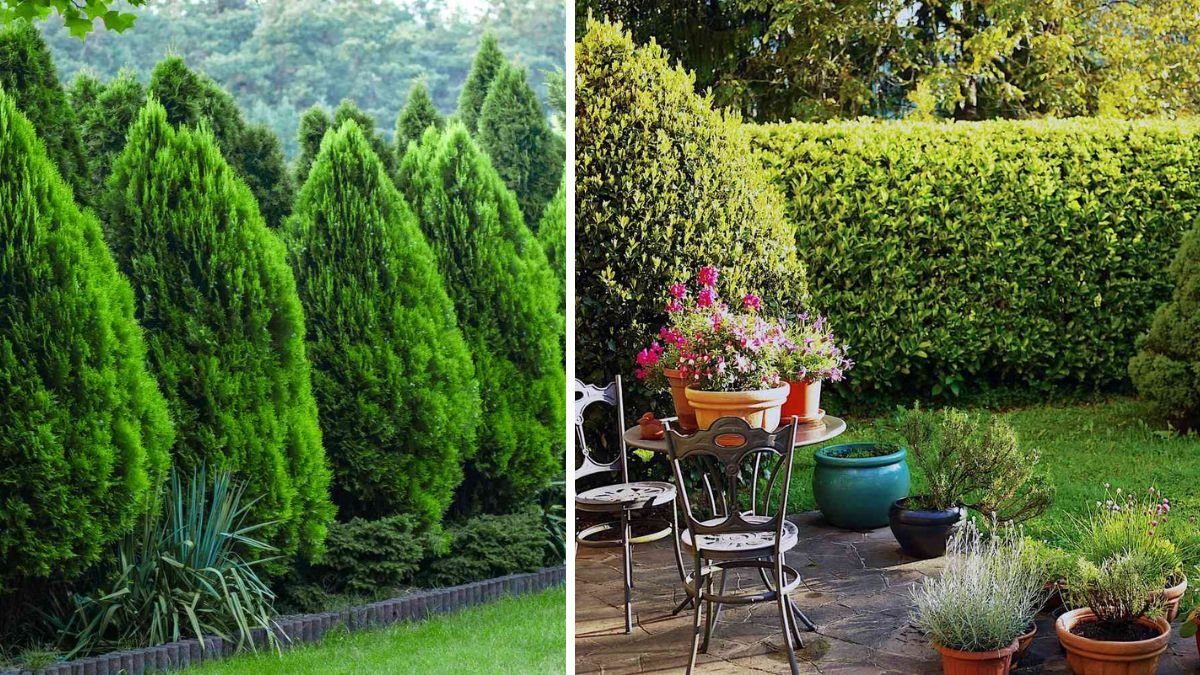
Creating privacy in your yard doesn’t always require fences, walls, or elaborate landscaping structures. According to gardening experts, strategically planting shrubs, trees, and tall perennials can form natural screens that block sightlines, reduce noise, and create a sense of seclusion. Natural privacy screens also bring additional benefits, such as attracting wildlife, improving air quality, and enhancing the beauty of your garden.
This guide explores ten plants that excel at creating natural privacy, explains their care requirements, and offers tips for designing a green barrier that looks great year-round.
Why Use Plants as Privacy Screens?
Gardening experts highlight several reasons to choose plants over traditional fences for privacy:
- Aesthetic appeal: Plants add texture, color, and seasonal interest.
- Environmental benefits: Shrubs and trees filter air, reduce noise, and provide habitat for birds and pollinators.
- Flexibility: Planting allows for curved or varied screen shapes, unlike rigid fences.
- Long-term value: Mature plants increase property value and create a natural, serene environment.
Unlike fences, living screens can evolve with your landscape and provide dynamic beauty throughout the year.
1. Arborvitae (Thuja occidentalis)
Arborvitae is a classic choice for natural privacy due to its dense, evergreen foliage and vertical growth habit.
Benefits:
- Fast-growing and tall, often reaching 20–30 feet.
- Dense foliage blocks views and wind year-round.
Care tips:
- Plant in full sun for maximum density.
- Water regularly in the first two years to establish roots.
- Prune lightly to maintain shape and encourage thickness.
Experts recommend spacing arborvitae 2–3 feet apart for a solid hedge effect.
2. Bamboo
Bamboo grows quickly and creates a tropical, modern privacy screen.
Benefits:
- Extremely fast-growing, providing almost instant screening.
- Attractive, slender stalks add vertical interest.
Cautions:
- Some species are invasive; choose clumping bamboo instead of running bamboo to avoid uncontrolled spread.
Care tips:
- Plant in rich, moist soil with partial to full sun.
- Install root barriers if necessary to contain growth.
Bamboo works well in narrow spaces and urban gardens.
3. Boxwood (Buxus spp.)
Boxwood is a versatile shrub that forms dense, evergreen hedges.
Benefits:
- Tolerates pruning into formal shapes or natural styles.
- Maintains privacy year-round without massive height.
Care tips:
- Prefers full to partial sun.
- Well-drained soil is essential to prevent root rot.
- Fertilize lightly in spring to promote growth.
Experts note boxwood is ideal for medium-height hedges and decorative barriers.
4. Holly (Ilex spp.)
Hollies are evergreen shrubs with dense branches and often spiny leaves, creating an effective natural barrier.
Benefits:
- Some species produce red berries that attract birds.
- Dense, upright growth discourages intrusion.
Care tips:
- Plant male and female varieties for berry production.
- Prune lightly to maintain height and shape.
- Full sun encourages thick, vibrant foliage.
Holly is perfect for formal hedges or wildlife-friendly screens.
5. Privet (Ligustrum spp.)
Privet is a fast-growing deciduous or semi-evergreen shrub ideal for tall hedges.
Benefits:
- Rapid growth makes it a practical choice for quick privacy.
- Dense foliage provides excellent visual and noise screening.
Care tips:
- Plant in full sun to partial shade.
- Regular pruning encourages bushiness and maintains desired height.
- Watch for invasive tendencies in some regions; check local regulations.
Privet hedges are easy to shape and adapt to both formal and informal garden designs.
6. Lilac (Syringa spp.)
Lilacs offer seasonal blooms along with privacy screening.
Benefits:
- Large shrubs that can reach 8–15 feet.
- Fragrant flowers provide visual and sensory appeal.
Care tips:
- Plant in full sun for optimal flowering.
- Well-drained soil is crucial.
- Prune after flowering to maintain health and shape.
Lilacs combine beauty, fragrance, and privacy in one package.
7. Photinia (Photinia × fraseri)
Photinia is an evergreen shrub with vibrant red new growth that gradually turns green.
Benefits:
- Dense growth creates effective year-round screening.
- Colorful foliage adds seasonal interest.
Care tips:
- Plant in full sun to partial shade.
- Prune annually to encourage new red shoots.
- Fertilize in spring for robust growth.
Photinia hedges are both functional and decorative.
8. Red-Twig Dogwood (Cornus sericea)
Red-twig dogwood is a deciduous shrub with striking red stems in winter, providing seasonal beauty along with privacy.
Benefits:
- Dense branching blocks sightlines in fall and winter.
- Colorful stems brighten the winter landscape.
Care tips:
- Plant in full sun to partial shade.
- Moist, well-drained soil promotes dense growth.
- Prune old stems annually to encourage new vibrant growth.
Experts recommend red-twig dogwood for naturalistic screens with year-round interest.
9. Forsythia (Forsythia × intermedia)
Forsythia is a deciduous shrub that grows rapidly and produces bright yellow blooms in early spring.
Benefits:
- Fast-growing, creating an effective temporary screen.
- Early blooms signal the arrival of spring.
Care tips:
- Plant in full sun for best flowering.
- Prune immediately after flowering to maintain shape and thickness.
- Space plants 4–6 feet apart for a solid barrier.
Forsythia works well for informal screens that combine color and coverage.
10. Miscanthus or Ornamental Grasses
Tall grasses like Miscanthus, Pampas Grass, and Switchgrass provide privacy with a softer, flowing effect.
Benefits:
- Tall and dense, excellent for screening patios or property edges.
- Movement in the wind adds visual interest and texture.
Care tips:
- Plant in full sun.
- Provide consistent moisture until established.
- Cut back dead foliage in late winter to allow new growth in spring.
Grasses are ideal for naturalistic, low-maintenance privacy screens.
Tips for Designing a Natural Privacy Screen
- Mix heights and textures: Combine tall evergreens with medium shrubs and ornamental grasses for layered coverage.
- Consider growth rate: Include fast-growing plants for immediate screening and slower growers for long-term stability.
- Account for spacing: Dense planting prevents gaps but allows air circulation to reduce disease.
- Prune strategically: Maintain shape and thickness without sacrificing privacy.
- Seasonal interest: Combine evergreens for year-round coverage with deciduous shrubs for flowers or winter color.
Experts emphasize that thoughtful planning ensures a functional and beautiful living screen that matures gracefully over time.
Benefits Beyond Privacy
Using plants as a privacy screen offers additional advantages:
- Wildlife habitat: Birds, pollinators, and beneficial insects are attracted to hedges and dense shrubs.
- Noise reduction: Dense planting muffles urban or neighborhood sounds.
- Microclimate control: Shrubs can reduce wind, provide shade, and moderate temperature extremes in the garden.
- Environmental impact: Unlike fences, plants absorb carbon dioxide and improve air quality.
A well-planned living screen provides both functional and ecological benefits.
Final Thoughts
Natural privacy screens are an elegant, eco-friendly way to define your garden space without erecting fences. According to gardening experts, the ten plants listed above—from evergreens like arborvitae and holly to colorful deciduous shrubs and ornamental grasses—offer year-round coverage, visual appeal, and added wildlife benefits.
By combining fast-growing and slow-growing varieties, planting strategically, and maintaining your shrubs and grasses with proper pruning and care, you can create a private, serene, and beautiful outdoor space.
Natural screens not only provide privacy—they enhance the garden’s aesthetic, support biodiversity, and offer a sustainable alternative to traditional fencing. With careful planning and plant selection, your yard can enjoy both seclusion and seasonal beauty without ever installing a single fence panel.