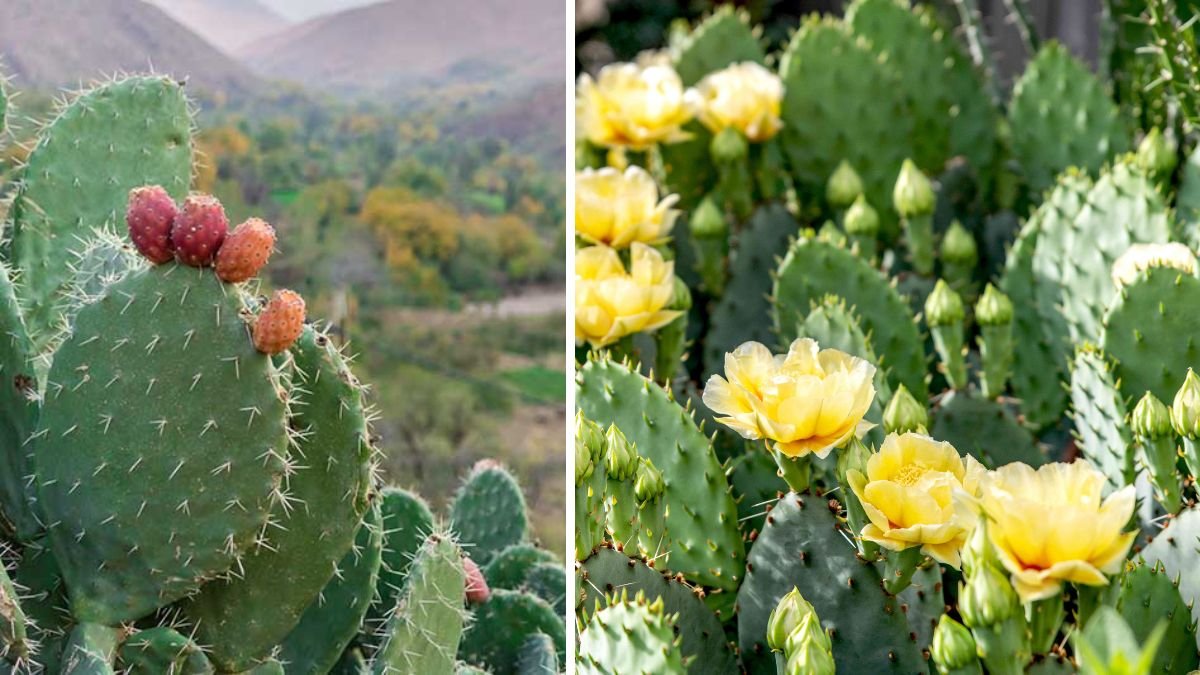
Opuntia, commonly known as prickly pear cactus, is a versatile, drought-tolerant plant that serves both practical and aesthetic purposes. With its distinctive flat pads, beautiful flowers, and edible fruit, Opuntia can function as a natural landscape barrier, protecting your property while adding visual appeal.
This guide will show you how to grow Opuntia as a natural and attractive barrier, blending function, safety, and beauty.
Why Use Opuntia as a Landscape Barrier
Opuntia makes a perfect living fence because it is:
- Drought-tolerant: Thrives in dry conditions with minimal water
- Low-maintenance: Hardy and resilient
- Prickly: Acts as a natural deterrent for animals or intruders
- Aesthetically pleasing: Produces vibrant flowers and fruit
- Edible: Some species yield fruit (tunas) and pads (nopales) for consumption
It combines security with beauty, making it ideal for urban and rural landscapes alike.
Selecting the Right Opuntia Variety
Different species suit different purposes:
- Opuntia ficus-indica: Large pads, edible fruit, good for barriers
- Opuntia microdasys: Smaller, dense pads, highly decorative
- Opuntia humifusa: Cold-hardy, good for northern climates
Choose a variety suited to your climate, space, and intended barrier height.
Site Selection and Soil Preparation
Opuntia grows best with:
- Sunlight: Full sun (6+ hours daily)
- Soil: Well-draining sandy or rocky soil
- Space: Adequate width for natural spread, 3–5 feet apart for barriers
Prepare the soil by loosening and adding coarse sand or gravel to improve drainage. Avoid heavy clay soils, which can cause root rot.
Planting Opuntia as a Barrier
Step-by-Step Guide:
- Dig a hole slightly larger than the cactus root system
- Place the cactus carefully; use gloves to avoid spines
- Backfill soil and press gently around the base
- Water lightly after planting; then allow soil to dry completely
- Mulch with gravel to retain warmth and reduce weeds
Spacing is key: plant closer for a dense barrier or farther apart for a natural look.
Supporting Growth and Formation
- Pruning: Remove damaged pads or overcrowded growth
- Training: Guide pads to grow upright if you want a tighter barrier
- Layering: Plant multiple rows for a multi-layered natural fence
With time, Opuntia can form a dense, spiny wall that’s both functional and beautiful.
Watering and Fertilizing Opuntia
- Watering: Minimal; once a week in the growing season, less in winter
- Fertilizing: Occasional cactus fertilizer or balanced slow-release fertilizer
- Stress tolerance: Opuntia thrives with neglect—overwatering is the main danger
This low-maintenance approach makes Opuntia ideal for both urban gardens and rural landscapes.
Flowering and Fruiting
- Flowers: Yellow, red, or pink blooms attract pollinators
- Fruit: Edible pads and fruit provide additional benefits
- Timing: Most species flower in late spring to summer
Flowering enhances the visual appeal of your barrier and adds seasonal interest.
Safety Considerations
- Spines: Wear gloves and protective clothing when handling
- Barrier placement: Avoid high-traffic areas to prevent injuries
- Pets and children: Consider height and density if accessibility is a concern
Opuntia is a safe and natural deterrent when placed strategically.
Design Tips for an Attractive Barrier
- Vary heights: Mix Opuntia with other shrubs for texture
- Combine colors: Plant flowering perennials nearby
- Accent with rocks: Create a natural desert-inspired landscape
- Layering: Front rows shorter, back rows taller for depth
Opuntia blends functionality with beauty when integrated thoughtfully.
Final Thoughts
Growing Opuntia as a natural landscape barrier offers security, beauty, and low maintenance. Its striking form, seasonal flowers, and edible fruit make it a unique addition to any garden. With proper placement, soil preparation, and care, you can enjoy a prickly yet visually appealing fence that protects your property while enhancing your landscape.