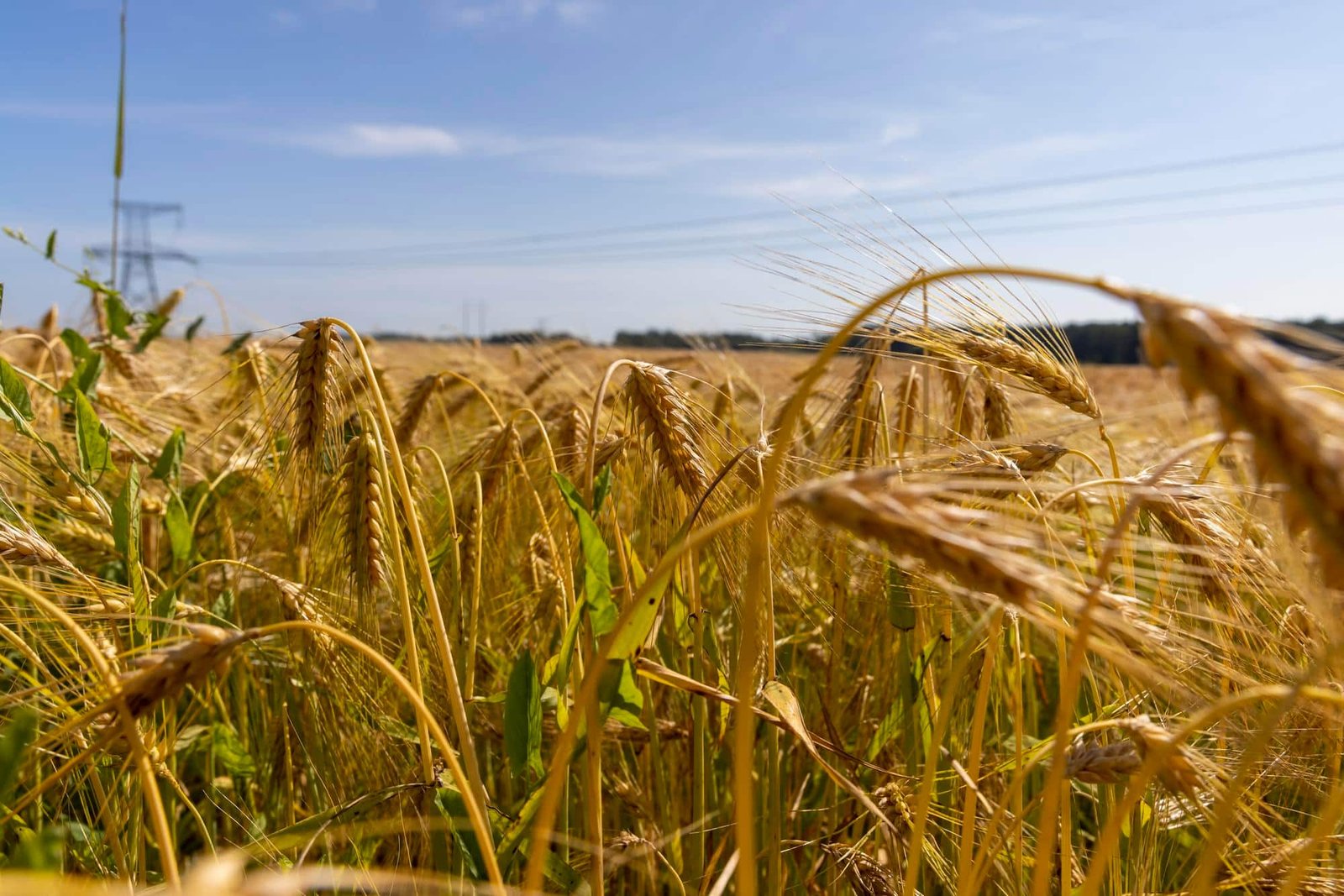
The first thing you notice isn’t the wheat. It’s the smell. A sweet, almost chocolatey scent rising from a freshly plowed field on the outskirts of Poltava, in central Ukraine. The farmer scoops up a handful of soil, lets it crumble through his fingers, and grins like he’s showing off a bar of pure gold. The earth is black, dense, almost silky. Under the weak spring sun, it doesn’t shine, but somehow it feels alive.
He says one word in Ukrainian, slowly, as if it’s sacred: chornozem. Black earth.
A few centimeters down, the color deepens. Twenty centimeters. Fifty. Nearly a full meter of dark, rich soil. Somewhere between those layers, this country’s fate is buried.
The quiet power of a one‑meter‑deep treasure
Seen from the sky, the chernozem belt looks like a quiet, endless quilt: broad patches of brown and green, laid out across Ukraine, southern Russia, northern Kazakhstan. Seen from the ground, it’s something else entirely. Every spadeful feels like a compressed history of grasses, roots, seasons, and harvests, accumulated over thousands of years.
On a windy July morning near Kharkiv, combine harvesters move slowly across a sea of wheat heads, each swaying just enough to whisper against the other. This region sits right on top of classic chernozem: a layer of humus-rich soil up to one meter deep, loaded with organic matter and nutrients. The yield numbers tell the story.
Promoted Content
In a good year, a Ukrainian farmer on black soil can harvest up to twice as much wheat per hectare as a farmer on light, dry land in Central Asia. Kazakhstan’s northern steppe, where the same dark earth stretches towards the horizon, has turned entire districts into export machines for grain and oilseeds. Russia’s southern regions, too, use their chernozem to flood global markets with wheat, barley and sunflower. The “black belt” quietly feeds millions of people who will never set foot on it.
From a scientific point of view, chernozem is almost a perfect storm of fertility. Thick humus formed under ancient grasslands. A crumbly structure that holds water yet drains enough to avoid suffocating roots. High levels of nitrogen, phosphorus, and other nutrients bound to organic matter that slowly releases them over time.
This mix allows crops to dig deep, resist droughts a bit longer, and recover after tough seasons. That’s why geographers speak of “black gold”. It’s not just poetic. It’s a frank recognition that soil like this has economic and geopolitical weight. Countries sitting on massive chernozem reserves are not just farming nations. They are potential kingmakers in the global food system.
How “black gold” turns into a strategic weapon
The method is deceptively simple: turn sunshine, rain and chernozem into calories, then into power. That power shows up in export contracts, grain corridors, price negotiations in far‑off capitals. It also shows up when supply is disrupted, as the world learned the hard way after the invasion of Ukraine in 2022.
Ships loaded with Ukrainian wheat stalled in the Black Sea. Russian exports were scrutinized. Import‑dependent countries from Egypt to Lebanon watched prices climb and stocks dwindle. Behind the headlines about ports and sanctions, one truth sat quietly under the tractors’ wheels: whoever controls the black earth controls part of the world’s bread.
Imagine a midsize Ukrainian farming enterprise: 10,000 hectares of mostly chernozem, some leased from smallholders, some inherited. On a normal year, the farm exports wheat, corn and sunflower seeds through Black Sea ports, filling contracts in North Africa and the Middle East. When conflict erupts, that flow stutters or stops.
In a matter of weeks, silos that usually feel like a blessing become a burden. Grain piles up. Storage costs climb. Roads and railways strain to reroute exports through neighboring countries. Meanwhile, in Cairo or Tunis, bread subsidies strain state budgets as world prices spike. This is how a dark, quiet field outside Poltava ends up echoing in the political debates of countries thousands of kilometers away.
Analysts sometimes talk about “weaponized interdependence” when key resources become levers of power. Chernozem is a textbook case. For Russia, huge black‑soil regions underpin its role as the world’s largest wheat exporter. For Kazakhstan, the northern steppe helps balance its economic ties between East and West. For Ukraine, **its chernozem is both lifeline and bargaining chip**, drawing investors, raising the stakes of conflict, and shaping alliances.
Let’s be honest: nobody really thinks of soil when they watch grain prices on a financial chart. Yet that’s what’s underneath every line and spike. When rain falls on chernozem in May, futures traders may not feel the drops, but their screens quietly respond months later. The “black gold of agriculture” doesn’t ring like oil wells, yet its influence seeps just as far.
The fragile side of the world’s richest soil
For all its reputation as an almost magical resource, chernozem is not indestructible. The most basic “method” to protect it sounds nearly too simple: disturb it less, cover it more, and feed it back. On the ground this means reduced tillage, planting cover crops between seasons, rotating wheat with legumes or oilseeds, and leaving crop residues instead of scraping fields bare.
Many farmers across Ukraine, Russia and Kazakhstan have started switching to no‑till or minimum‑till systems. The plow goes out less often. Stubble stays on the surface. Over time, the soil structure stabilizes, erosion slows, and organic matter levels hold steady or even rise. It’s not flashy. It’s a slow, patient conversation between humans and earth. *The kind of change that doesn’t make headlines, but decides the headlines of tomorrow.*
We’ve all been there, that moment when routine wins over long‑term thinking. In agriculture, that routine often means deep plowing, monoculture, and pushing yields hard with cheap fertilizers. On chernozem, the temptation is even stronger, because the soil forgives a lot. It yields well even when treated roughly.
The risk is insidious. A few millimeters of topsoil lost to wind each year. A slow decline in organic matter as crop residues are burned or exported. More compaction from heavy machinery. The black horizon is still there, but a bit thinner, a bit less spongy. **The plain truth is: even the best soil has a breaking point.** Once that threshold is crossed, rebuilding takes decades, not seasons.
“People think chernozem is eternal,” a Ukrainian agronomist told me near Dnipro. “But it’s like a bank account. You can live off the interest, or you can burn through the capital. Right now, a lot of fields are spending the capital.”
- Limit deep plowing: switching to shallow or strip till helps preserve structure and organic matter.
- Keep the soil covered: cover crops, crop residues, even temporary grasses reduce erosion and water loss.
- Diversify rotations: alternating cereals with legumes and oilseeds breaks disease cycles and nourishes the soil.
- Watch compaction: lighter machinery, controlled traffic lanes, and avoiding field work on wet ground protect the deeper layers.
- Think long term: policies, leases and investments that look beyond a few harvests give chernozem space to regenerate.
A black horizon that belongs to more than one country
Stand at the edge of a chernozem field at dusk and the soil almost disappears into the dark. What you see instead is the line of the horizon, the glow of a distant village, perhaps the silhouette of a combine parked for the night. In that quiet, it’s easy to forget that this land is part of a global nervous system. Grain from this exact field might end up in bread in Istanbul, noodles in Lagos, or livestock feed in Beijing.
The politics around chernozem will keep evolving: land reforms, foreign leases, sanctions, export quotas, climate agreements. Yet the basic reality stays absurdly simple. If the black earth is cared for, it can keep feeding hundreds of millions. If it’s mined like a finite resource, future generations inherit fields that look the same from afar, but yield less, react worse to drought, and lock less carbon away.
There’s also a strange intimacy in all this. Somewhere, a farmer in Kansas or Punjab is wrestling with tired soil, watching weather forecasts with a tight knot in their stomach. Somewhere else, a farmer near Kursk or Kropyvnytskyi is doing the same, but standing on land that still has a buffer, a reserve of resilience under their boots. The gap between these two stories is not inevitable. It’s the product of geology, yes, but also of choices.
Maybe that’s the most unsettling and hopeful part of chernozem’s tale. This legendary “black gold of agriculture” is not a miracle. It’s a slow accumulation of life, layer by layer, mixed with human care or neglect. Anyone who has ever picked up a handful of dark soil knows the feeling: it stains your fingers, clings to your nails, refuses to be forgotten.
| Key point | Detail | Value for the reader |
|---|---|---|
| Chernozem’s exceptional fertility | Humus‑rich layers up to 1 meter deep across Ukraine, Russia, Kazakhstan | Understand why this region became a global breadbasket and strategic asset |
| Geopolitical leverage | Control of black soils shapes grain exports, prices, and food security worldwide | See how distant fields influence your food costs and global stability |
| Need for protection | Reduced tillage, cover crops, and rotations protect this “black gold” from degradation | Grasp the long‑term stakes behind sustainable farming on the world’s best soils |