Creating a chocolate-scented garden can be a delightful endeavor, transforming your outdoor space into a sensory experience that tantalizes with the sweet, rich aroma of chocolate. Not only does this kind of garden stimulate your olfactory senses, but it also invites your guests to indulge in a unique and lush floral environment. In this article, we’ll explore three plants that can help you create an aromatic landscape reminiscent of everyone’s favorite treat: chocolate.
1. Chocolate Cosmos (Cosmos atrosanguineus)
Description
Chocolate cosmos are unique, dark red to brown flowers that emit a rich, chocolate-like scent, especially when warmed by the sun. Native to Mexico, these perennial plants are not only visually captivating but also serve as a perfect centerpiece for your chocolate-scented garden.
Characteristics
- Height: Typically 2 to 3 feet tall.
- Bloom Time: Late summer to fall.
- Soil: Prefers well-drained soil with a slightly acidic pH.
- Light Requirements: Full sun to partial shade.
Growing Conditions
To successfully cultivate chocolate cosmos, choose a sunny spot in your garden. These plants thrive in warm climates and should be planted in well-drained, loamy soil. If you’re planting in colder regions, consider starting them indoors or using pots so you can bring them indoors during frost. Water them regularly but ensure that the soil does not become waterlogged.
Maintenance
Chocolate cosmos are relatively low-maintenance. Deadhead spent flowers to encourage more blooms and monitor for pests like aphids, which can sometimes affect the plant. Fertilize sparingly; too much nitrogen can reduce flowering.
Companion Plants
Pair chocolate cosmos with fragrant herbs like mint or lavender. Their contrasting scents will enhance the chocolate aroma while maintaining a fragrant environment.
2. Chocolate Mint (Mentha x piperita ‘Chocolate’)
Description
Chocolate mint is a delightful herb that offers the dual pleasure of fresh mint flavor and a subtle chocolate aroma. This plant is perfect for culinary uses as well and can be harvested for teas, desserts, or even savory dishes.
Characteristics
- Height: About 12 to 24 inches.
- Bloom Time: Summer.
- Soil: Prefers rich, moist, well-drained soil.
- Light Requirements: Prefers partial shade but can tolerate full sun.
Growing Conditions
Chocolate mint thrives in rich, moist soil. If planting in a garden bed, consider using containers to prevent it from spreading uncontrollably, as mint can be invasive. Chocolate mint loves moisture, so regular watering is essential, especially during hot months.
Maintenance
Keep the plant trimmed to encourage bushy growth and prevent it from flowering, as the flowers can be less aromatic. If you want to enjoy the blooms, allow a few stems to flower but be sure to keep the rest pruned. Watch for common pests like spider mites and aphids, particularly in dry conditions.
Culinary Uses
One of the best things about chocolate mint is its versatility in the kitchen. It can be used in drinks like mojitos, added to chocolate desserts, or even steeped in teas for a refreshing culinary experience.
3. Theobroma Cacao (Cocoa Tree)
Description
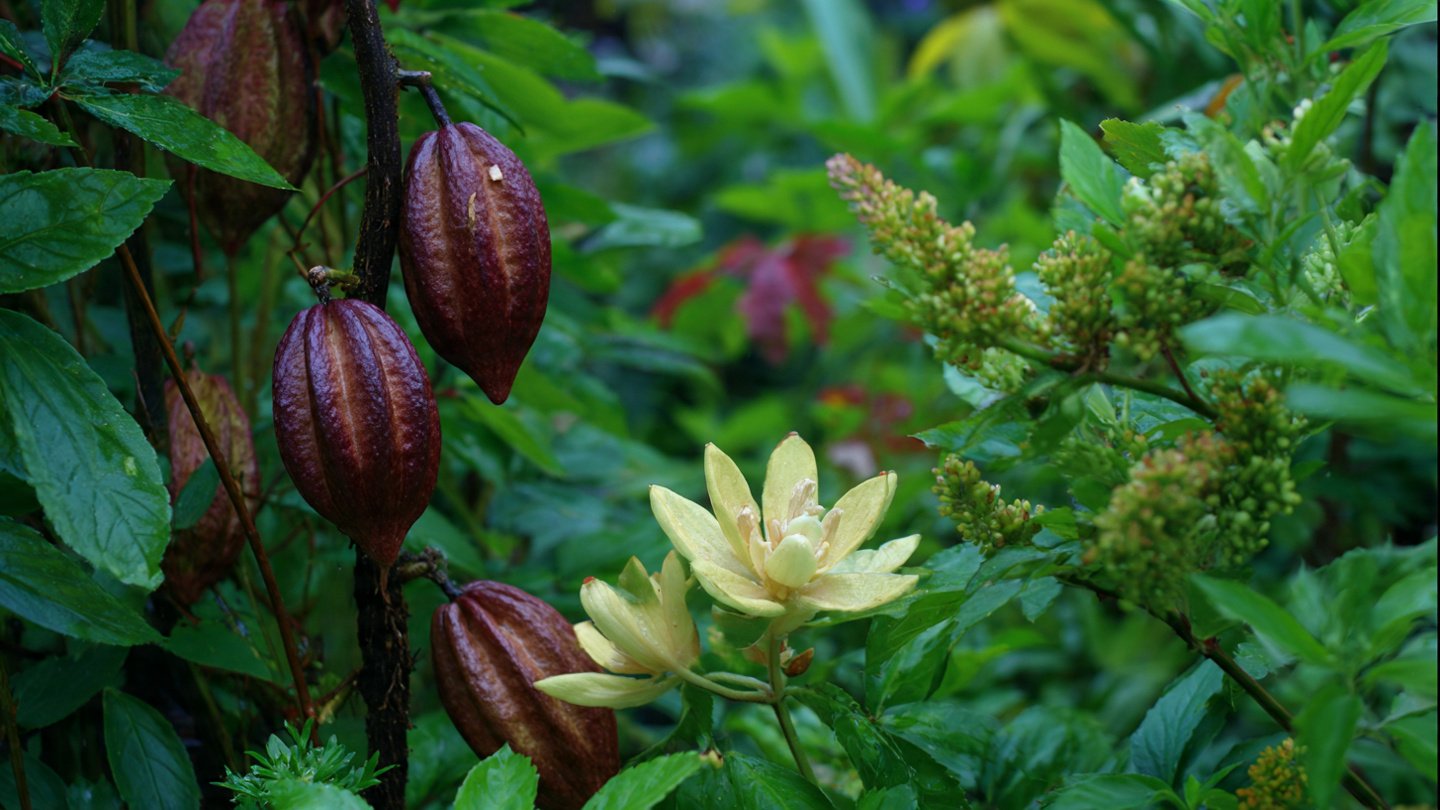
The cocoa tree is the source of chocolate, producing cacao pods that house the seeds used to make chocolate. While growing a cacao tree requires a little more expertise and specific conditions, its fragrant flowers and potential fruit make it a spectacular choice for a chocolate-themed garden.
Characteristics
- Height: Can grow up to 20 feet tall.
- Bloom Time: Year-round in tropical climates.
- Soil: Prefers rich, well-drained soil.
- Light Requirements: Requires partial shade under taller trees.
Growing Conditions
Cacao trees thrive in warm, humid environments, typically found in USDA zones 10-11. If you live in a suitable climate, plant your cocoa tree in a location that gets filtered sunlight—this mimics its natural under-canopy habitat in the rainforest.
Maintenance
Cacao trees require regular watering, especially during dry spells. They benefit from a rich organic mulch around their base to retain soil moisture and maintain nutrient levels. Pruning can help manage the tree’s height and ensure proper air circulation.
Harvesting
If you’re fortunate enough to grow a cacao tree, the flowers will appear throughout the year. Once pollinated, the cacao pods will develop, which can take several months to mature. Once harvested, the beans can be fermented and processed into chocolate. However, this process requires knowledge and care to achieve the desired quality.
Importance in Biodiversity
Besides its chocolate production, the cacao tree plays a significant role in local ecosystems, supporting various wildlife species. By incorporating this tree into your garden, you’re also contributing to ecological health.
Design Your Chocolate-Scented Garden
Creating a harmonious garden requires thoughtful placement of each plant. Here are some design tips to help you create your chocolate-scented oasis:
Layout
- Central Feature: Place chocolate cosmos as central plants since their striking blooms lead the eye. Position them at the back if flower beds are tiered or in the center of a circular bed.
- Edging with Chocolate Mint: Use chocolate mint as a border plant for pathways to make every step enjoyable.
- Cacao Tree Placement: If you have space, plant your cocoa tree slightly offset to create height in your garden. If it’s a pot, position it on a table or stand to showcase it better.
Textural Variety
Combine different textures and colors in your garden by pairing the silky chocolate cosmos with fluffy mint foliage. Ensure there’s variety in leaf shape and size, adding depth and visual interest.
Seasonal Consideration
Plan for continuous blooms and scents. While chocolate cosmos bloom in summer and fall, chocolate mint can also be enjoyed year-round depending on how you choose to cultivate it, while the cocoa tree offers blooms throughout the year in suitable climates.
Additional Plants for Your Garden
Consider adding a few more plants to enhance the sensory experience.
- Nectarine Petunias: Known for their sweet scent, they can enhance the chocolate aroma.
- Scented Geraniums: Many have aromatic foliage that can complement the theme.
- Orange or Lemongrass: Their bright, fresh scents can contrast beautifully with the rich chocolate.
Conclusion
Creating a chocolate-scented garden filled with chocolate cosmos, chocolate mint, and a cacao tree can transport you to a world of indulgence and memorable fragrances. This sensory experience not only enchants your senses but also becomes a haven for relaxation and inspiration. Remember, a successful garden thrives on care, creativity, and connection to nature. Embrace the joy of gardening, and enjoy the sweet rewards!