In the world of gardening, the quest for a bountiful fruit harvest drives many enthusiasts to seek out tools and techniques that can enhance their yield and improve the quality of their produce. One such tool that has gained popularity in recent years is the Brix meter. This specialized device allows gardeners to measure the sugar content in fruits, thus transforming the way they approach cultivation and harvesting.
Understanding the Brix Meter
At its core, a Brix meter, or refractometer, measures the sugar concentration in a liquid. The scale it uses, known as the Brix scale, is simple yet effective; one degree Brix corresponds to 1 gram of sucrose in 100 grams of solution. This measurement not only gives insight into the sweetness of fruits but can also be an indicator of overall fruit health and quality. Essentially, a higher Brix reading often correlates with better flavor and nutritional content, which can be critical for both home gardeners and commercial growers.
Brix measurements can be taken easily and quickly. By simply extracting a small amount of juice from the fruit and placing it on the Brix meter, the gardener can obtain an immediate reading. This straightforward process allows for continuous monitoring throughout the growing season. Knowing how to interpret these readings can empower gardeners to make informed decisions about their care routines.
The Importance of Sugar Content
Sugar content plays a vital role in several aspects of fruit cultivation. Fructose, glucose, and sucrose are the primary sugars found in fruits, contributing not only to sweetness but also to flavor complexity. The sugar concentration can affect not only the taste but also the fruit’s ability to repel pests and diseases; healthier, sweeter fruits are often more resilient.
Moreover, sugar content can directly associate with the fruit’s potential for successful storage and transport. Fruits with high Brix levels tend to have a longer shelf life, making them more marketable. For home gardeners, this means enjoying fruits that taste better and last longer, heightening the satisfaction of homegrown produce.
How Brix Measurements Inform Garden Practices
The incorporation of Brix meters can significantly influence a gardener’s strategies. One of the primary ways this tool can improve output is by guiding gardeners in their fertilization practices. The sugar content has a close relationship with soil health and nutrient availability. Regular Brix readings can help ascertain whether the plants are receiving adequate nutrients and adjust feedings accordingly.
For instance, if measurements indicate lower sugar levels, it may signal that the plants are not receiving enough nitrogen, phosphorus, or potassium. Gardeners can then choose to amend their soil or adjust their feeding schedules to restore balance, leading to healthier plants and a more fruitful harvest.
Another benefit lies in pest management. High Brix fruits are usually less susceptible to pests and diseases. By monitoring sugar levels, gardeners can take proactive measures to bolster plant health before infestations can compromise their yield. As such, Brix meters not only facilitate better crop production but also support organic gardening techniques by minimizing reliance on chemical pesticides.
Harvest Timing and Quality
The timing of the harvest is crucial for maximizing flavor and sweetness. Picking fruit too early can result in bitter, sour flavors, while leaving it too long can cause over-ripening or decay. Brix measurements provide a reliable method for determining the optimal harvest time. Many fruits are best harvested at specific Brix levels. For instance, most tree fruits, such as apples and pears, are typically at their peak flavor around 12–15 Brix degrees.
By frequently measuring Brix levels as the fruits approach maturity, gardeners can harvest at the moment of perfect ripeness, leading to enhanced flavor profiles. Tasting the fruits can be subjective, but the Brix meter provides a quantifiable measure to back up those sensory decisions.
Improving Genetic Selection
For those who are serious about advancing their gardening practices, Brix meters can also play a role in genetic selections. For commercial growers, understanding which varieties yield higher Brix levels can inform choices on which strains to cultivate in the future. Within home gardens, this means being able to make educated choices about which seeds or plants to invest in based on their observed sugar content and unique flavors.
The collected Brix data can also serve as an invaluable resource for tracking varietal performance over the years. This helps gardeners understand which fruits thrive in their specific growing conditions and make adjustments as needed.
Educational Opportunities
Using a Brix meter isn’t merely a technical endeavor; it also offers significant educational benefits. For families and community gardeners, it presents rich learning opportunities ranging from basic botany to the chemistry of sugar formation. Children and adults alike can engage in experiments to see how different variables, such as light, water, or nutrient levels, affect Brix readings.
Moreover, as awareness grows around issues of sustainability and food quality, understanding Brix levels can educate gardeners about their impact on local ecosystems. By prioritizing fruit with higher Brix levels, gardeners contribute to healthier soil, plants, and ultimately, communities.
Incorporating Technology
Advancements in technology have made Brix meters increasingly accessible and user-friendly. With digital options now available, obtaining accurate readings has never been easier. Some models allow for data logging, enabling long-term monitoring and analysis. This data can be invaluable for growers seeking to refine and perfect their gardening practice over the growing season.
Smart Brix meters even pair with apps, which can visualize trends, giving gardeners deeper insights into how their practices are impacting sugar content over time. These data-driven approaches are redefining how gardeners from all backgrounds can achieve successful yields.
Sustainable Practices and Biodiversity
The push for sustainable gardening is stronger than ever, with Brix meters aligning perfectly with these goals. Gardeners focused on organic methods are often on the lookout for ways to reduce inputs while maximizing outputs. Regular Brix meter readings can minimize waste by focusing resources on plants at risk of poor development, thus promoting biodiversity.
For instance, gardeners can tailor plant pairings based on Brix levels, leading to companion planting strategies that enhance overall health and productivity, all while fostering a mix of species in the garden.
Expanding Beyond Fruits
While the most immediate benefits of a Brix meter may be seen in fruit production, the implications of its use extend to vegetables and herbs as well. Some green plants have measurable Brix levels that correlate with flavor and nutrient concentration, indicating quality in yields. For instance, leafy greens with high Brix levels tend to be more flavorful and nutritious than their lower-Brix counterparts.
For those with herb gardens, monitoring sugar levels in plants like basil, thyme, or mint can guide harvesting decisions, maximizing flavor and preventing loss due to wilting or decline.
Community Engagement
The rise of Brix meters in gardening isn’t just an individual initiative; it has the potential to build community cohesion around gardening practices. Local gardening clubs or community gardens can create initiatives to track individual and collective Brix levels, leading to both friendly competition and shared learning.
Workshops can be organized to teach members how to operate Brix meters, fostering a spirit of collaboration and mutual growth. This effort not only enhances individual gardens but helps create a community that values sustainable practices and high-quality produce.
The Bigger Picture: Nutrition and Health
As society increasingly turns its focus toward health and nutrition, understanding the implications of Brix readings can be significant. Higher Brix levels often correlate with better overall nutrient density, offering fruits that are not only tastier but potentially healthier.
This emphasis on nutritional quality can tie back into broader discussions around food sovereignty and public health. Access to nutrient-rich fruits and vegetables not only bolsters individual health but also strengthens communities as a whole.
In summary, integrating a Brix meter into your gardening practices can significantly transform your fruit harvest. From providing valuable insights for improving soil health and pest resistance to optimizing harvest times and supporting sustainability, the Brix meter serves as an invaluable tool for both novice and experienced gardeners. This small, simple device holds the potential to elevate not just garden yields, but also the enjoyment and satisfaction derived from cultivating one’s own food. Each reading becomes not just a number, but a step toward a healthier, more sustainable, and flavor-packed future in gardening.
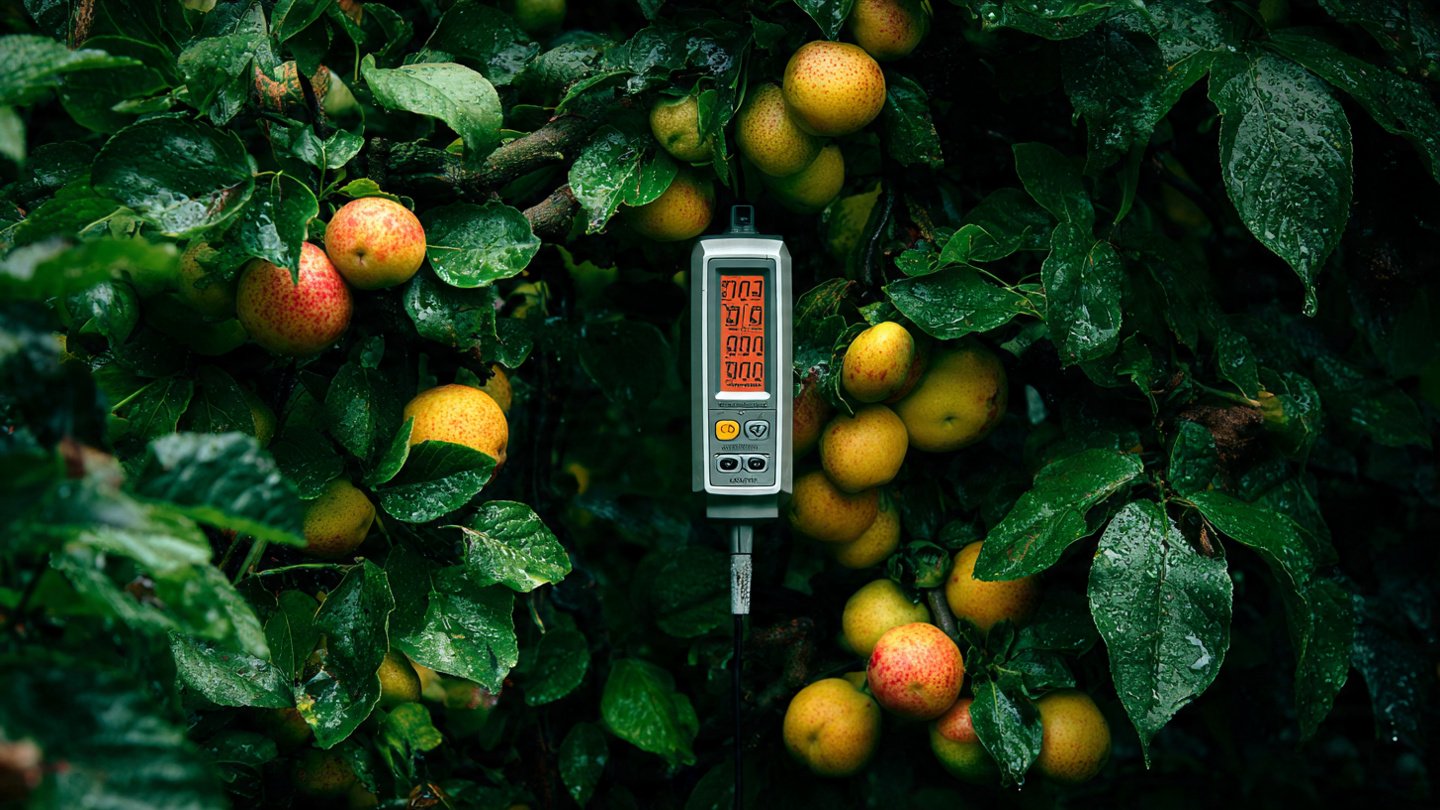
How Can a Brix Meter Transform Your Garden Fruit Harvest?
Yezdi Roadster 2026 Launched: Smooth Engine, Muscular Cruiser Design, Advanced Features
EPFO Pension New Rules 2026: Salary Limit Changed, Pension Will Increase
2026 Rolls-Royce Motorhome Redefining Ultra-Luxury Road Travel With Timeless Elegance
Motorola New Smartphone With 420MP Camera, 7700mAh Battery at ₹9,900
Motorola Razr 50 Ultra New 5G Foldable Smartphone With Attractive Design, 165Hz Display
Nokia 2660 Flip 4G Beautiful Design Flip Keypad Phone With 12MP Camera at Just ₹2,500
Motorola Unveiled Stunning Design Smartphone With 250MP Camera, 16GB RAM and 95W Superfast Charging
Vivo V50 Lite 5G Smartphone Launched With 3 Days Battery Backup, 6.77-Inch AMOLED Display at ₹19,000
Honor X9c Smartphone With 144Hz Display, 70W Charging and Circle Design Camera
Oppo Premium 5G Smartphone With 250MP Camera and 7800mAh Battery
Infinix 5G Smartphone Launched With 12GB RAM, 200MP Camera and Flagship-Level Design
Tata Nano EV 2026: Affordable Electric Car With 300km Range Starting at ₹3.5 Lakh in India
Day Will Turn Slowly to Night During the Longest Total Solar Eclipse of the Century Across Several Regions
Maruti Suzuki Grand Vitara 2026 With 2.8L Petrol Engine Delivers 37kmpl Mileage and Luxury Features
Galaxy S23 Ultra 5G With 108MP AI Camera and Fabulous Design
Yamaha XSR 155 2026 Launched With Smooth Engine, Neo-Retro Design and Advanced Features
Day Will Slowly Turn to Night as the Longest Total Solar Eclipse of the Century Creates a Rare and Spectacular Event
Known as the Black Gold of Agriculture, Chernozem Soil Helped Turn Ukraine, Russia and Kazakhstan Into Global Breadbaskets
Light Will Disappear for Minutes: Experts Warn an Extraordinary Solar Eclipse Is Approaching
Vivo Y21d Budget-Friendly Smartphone With 6000mAh Battery Launched
Triumph Scrambler 400 X 2026 Launched With Rugged Design, Torque-Rich Engine and Modern Features
Oppo A6 Pro Smartphone With 50MP Dual Camera and 256GB Storage
Tecno Pova Slim 5G Smartphone With 6.78-Inch 3D Curved Display at ₹17,000
New Maruti Brezza 2026 Stylish Compact SUV With 35 km/l Mileage, Luxury Features and Smart Tech
Age Pension Update 2026: $1,179 Increase Announced – Who Qualifies
Realme Narzo 90 Smartphone With Sleek Design and 7000mAh Battery
Vivo New Phone With 300MP Camera and 7600mAh Battery at ₹9,600
Poco M7 Plus 5G With Snapdragon Processor and 144Hz Display at Just ₹10,000
OnePlus Nord CE 5 5G Smartphone With 80W SuperVOOC Charging and 256GB Storage at ₹20,000
Redmi New 5G Phone Launched in India With 108MP Camera and Curved AMOLED Screen